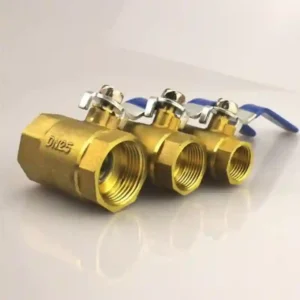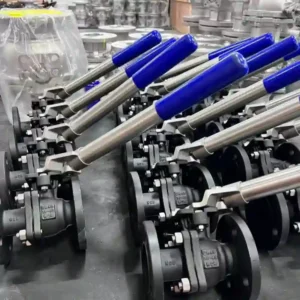











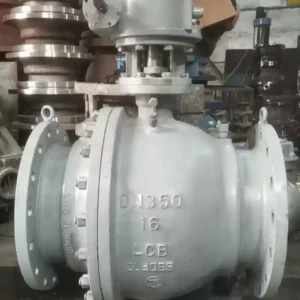
1/4″ Turn Brass Ball Valve – Quick Shutoff, Full Port Low Pressure Drop
Quarter-turn brass ball valve with full port design for minimal pressure drop. 1/4-turn operation enables fast shutoff in instrumentation, gas & liquid control systems.
Description
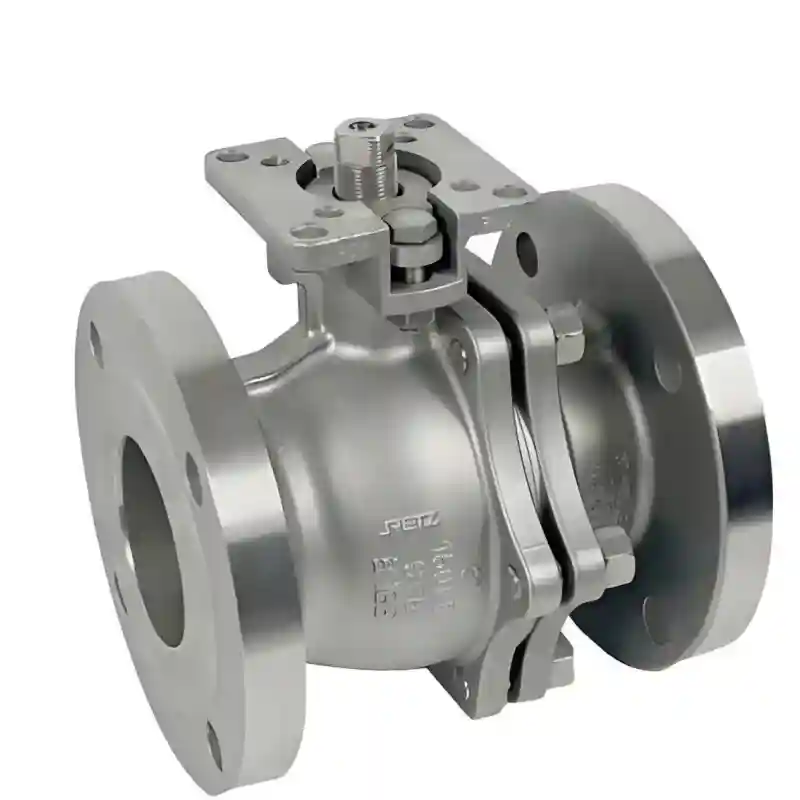
The quarter‑turn brass ball valve represents a standard shut‑off component delivering rapid fluid switching via a 90° handle rotation. It balances fast actuation and favorable flow efficiency: merely a quarter‑turn (completed within one second) shifts the valve between fully open and fully closed positions, vastly outperforming multi‑turn gate and globe valves. Its Full Port bore aligns the ball inner diameter exactly with pipe ID when fully open, bringing about negligible additional pressure drop across the valve body. Widely adopted for instrument pressure‑tap lines, pneumatic circuits, analytical lab hardware and diverse medium‑low‑pressure fluid‑control applications requiring fast response.
Material & Specification
| Item | Parameter |
|---|---|
| Body Material | Forged Brass (CW617N / ASTM B124) |
| Ball Material | Chrome‑plated brass / 304 stainless steel |
| Seat Material | PTFE |
| Seal Material | PTFE + NBR / FKM (optional) |
| Nominal Size | DN6 ~ DN15 (1/4″ ~ 1/2″) |
| End Connection | Female NPT / BSP / Compression / Push‑in fittings |
| Pressure Rating | 600 WOG (water, oil, gas) |
| Temperature Range | -20°C ~ +120°C (PTFE seat) |
| Operation | Lever‑operated quarter‑turn (90°) fast open‑close |
| Operating Angle | 0° ~ 90° (fully closed ↔ fully open) |
| Handle Position Indication | Handle parallel to pipe = fully open; perpendicular = fully closed |
| Port Type | Full Port |
| Flow Resistance Coefficient (K‑value) | Near zero (fully‑open condition) |
| Stem Structure | Blow‑out Proof design |
| Compliance Standard | MSS SP‑110 / ASME B16.34 / API 598 |
Typical Applications
- Instrument pressure‑tap & drain lines: Fast‑acting isolation valves upstream of pressure gauges, differential‑pressure transmitters, pressure switches and level transmitters. Quarter‑turn operation noticeably streamlines instrument maintenance workflows.
- Pneumatic control systems: Branch‑line shut‑offs feeding pneumatic actuators, cylinders, spray guns and push‑in connectors. Swift switching satisfies cycle‑time demands of automated machinery.
- Laboratory & chemical‑analysis instruments: Rapid carrier‑gas and sample‑stream switching for gas chromatographs, TOC analyzers and water‑quality monitoring devices.
- Portable test equipment: Panel‑mount manifold valves for portable flow‑meter and pressure calibration benches, enabling quick flow‑path reconfiguration within compact footprints.
- HVAC & refrigeration systems: Pressure‑tap isolation hardware for pressure gauges and pressure switches, supporting expedited equipment servicing.
- Agricultural spraying & landscape irrigation: Quick‑response shut‑off valves for hand‑held spray wands and drip‑tape branch circuits.
Core Advantages: Ultra‑fast Operation & Minimal Flow Resistance
- Ultra‑fast actuation – under‑1‑second switching for higher productivity Conventional gate or globe valves demand 5‑15 full wheel rotations and 5‑15 seconds to complete stroke travel. By contrast, the quarter‑turn brass ball valve finishes full open‑close transition in under one second with only a 90° handle twist.
This performance edge delivers tangible value in three scenarios:
- Emergency isolation: In case of pipeline leakage or equipment malfunction, every second of delay amplifies losses. Operators achieve immediate flow cut‑off via simple quarter‑turn manipulation.
- High‑frequency cycling: Test rigs and analytical instruments may cycle valves dozens or hundreds of times daily; cumulative time savings become substantial.
- One‑handed operation: Operators toggle valves single‑handedly in cramped enclosures while stabilizing tools or test hardware, with no spanners or extension bars required.
Additionally, handle orientation delivers unambiguous visual status feedback. Operators identify open‑closed states from a distance or under poor lighting without inspecting stem position or counting turns, lowering human‑error risks.
- Minimal flow resistance – Full‑Port geometry yields near‑zero pressure drop Pressure Drop constitutes a non‑trivial source of energy consumption within fluid systems. Unlike reduced‑bore gate and globe valves, this unit adopts Full‑Port construction. Consistent cross‑sectional flow area eliminates abrupt contraction and turbulent acceleration as media passes through.
At full opening, its K‑value approximates zero, matching the resistance level of a straight equal‑diameter pipe segment. Practical benefits include:
- Reduced system‑level energy draw: Pumps and compressors bear no extra load induced by valve‑related pressure loss, cutting long‑run power consumption.
- Sufficient downstream delivery: Maintains stable flow and pressure for end‑use devices under long‑run piping or low‑inlet‑pressure conditions.
- Enhanced measurement fidelity: For calibration and sampling workflows sensitive to flow stability, valve‑originated pressure disturbances are kept minimal, yielding more authentic measurement outcomes.
Field Case: Shenzhen Huawei Metrology Technology Co., Ltd. — Flow‑Path Switching Module for Portable Ultrasonic Flow‑Meter Calibration Unit
Project: Flow‑Path Switching Module for Portable On‑Site Ultrasonic Flow‑Meter Calibration Unit Location: Shenzhen City, Guangdong Province, China
Shenzhen Huawei Metrology Technology Co., Ltd. is a high‑tech SME specializing in flow metrology and calibration. It delivers on‑site inline calibration for custody‑transfer flow meters operated by water utilities, heating corporations and petrochemical plants. Its flagship portable ultrasonic flow‑meter calibrator verifies installed meters without pipeline shutdown or process interruption.
Three standard flow paths (DN25, DN40, DN50) need rapid switching inside the unit to accommodate meters of varied nominal sizes. The control panel measures merely 300 mm × 250 mm, leaving limited mounting space. Moreover, calibration workflows impose strict requirements on flow‑resistance consistency; any unintended pressure deviation will skew flow‑curve readings and impair calibration accuracy.
The project team selected quarter‑turn brass ball valves as core switching components. Fast‑response quarter‑turn manipulation allows technicians to complete flow‑path reconfiguration within two seconds. Single‑meter calibration duration dropped from 30 minutes down to 12 minutes, raising daily completed‑calibration volume from four units up to ten.
Thanks to Full‑Port low‑resistance characteristics, pressure‑loss discrepancies across the three flow paths stay below 0.5 kPa. Measurement uncertainty is controlled within ±0.5 %, complying with the national metrology verification regulation JJG 1030 Verification Regulation of Ultrasonic Flowmeters.
Since commissioning, this portable calibrator has completed over 500 calibration assignments for more than ten entities including Shenzhen Water‑Supply Group, Dongguan Water Supply Company and Huizhou Gas. End‑user feedback confirms that the quarter‑turn brass ball valve’s snappy actuation and marginal pressure loss greatly boost field‑service efficiency and data reliability. These valves form one of the key differentiating technical strengths that set this calibrator apart from competing products.