










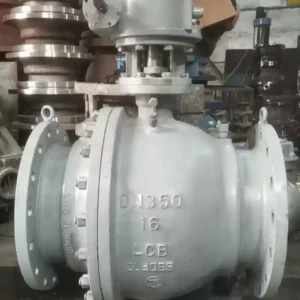
2 Way Brass Ball Valve – Full Port, Quarter-Turn Quick Shutoff

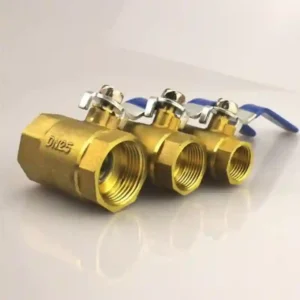
2 way brass ball valve with full port design for low pressure drop. Quarter-turn operation enables fast shutoff in water, air & gas systems. 600 WOG, threaded NPT/BSP.

Description

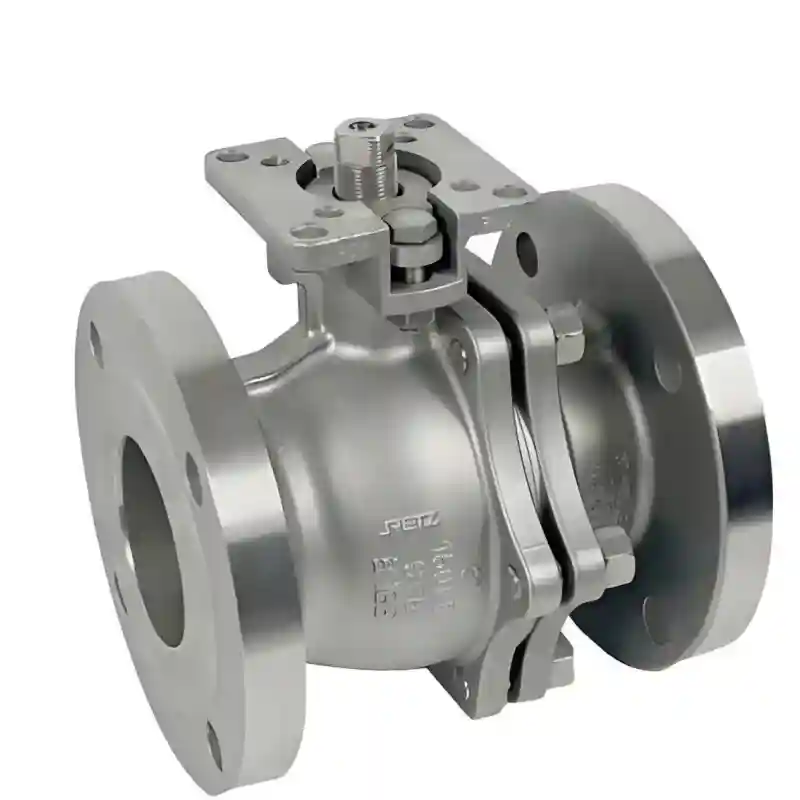
The 2 Way Brass Ball Valve represents one of the most prevalent basic shut‑off valve types within fluid piping networks. Built with one inlet port and one outlet port, it toggles between full‑open and full‑closed states by rotating its internal ball through 90°. Precision‑machined forged‑brass body pairs with PTFE seats to deliver zero‑leak sealing performance. Suited for water, gas, oil and multiple mildly corrosive media, it serves as a critical component for dependable shut‑down and fast isolation across both industrial and residential plumbing installations.

Material & Specification

Item Parameter
Body Material Forged brass (CW617N / ASTM B124)
Ball Material Chrome‑plated brass / 304 stainless steel
Seat Material PTFE
Seal Material PTFE + NBR / Optional EPDM / FKM
Nominal Size DN6 ~ DN50 (1/8″ ~ 2″)
End Connection NPT / BSP female thread on both ends
Pressure Rating 600 WOG (Water, Oil, Gas)
Temperature Range -20°C ~ +120°C (PTFE seat)
Operation Lever‑operated fast 1/4‑turn (90°) open‑close
Operating Angle 0° (fully closed) ↔ 90° (fully open)
Port Type Full Port
Loss Coefficient (K‑value) Near zero under fully‑open condition
Lever Position Indicator Parallel to pipeline = fully open; Perpendicular = fully closed
Sealing Feature Bi‑directional sealing, no installation‑orientation constraints
Stem Design Blow‑out Proof
Design & Test Standards MSS SP‑110 / ASME B16.34 / API 598

Application Scenarios

2‑Way Brass Ball Valves fit nearly all piping circuits requiring manual on‑off regulation. Typical deployment cases are listed below:

  • Residential & commercial plumbing: main household shut‑offs, floor‑level branch lines, isolation for sinks, basins, toilets and water heater inlet‑outlet ports.
  • HVAC systems: on‑off control for chilled‑water, cooling‑water and hot‑water headers and branch pipelines.
  • Industrial cooling & process‑water circuits: sectional shut‑off for equipment cooling loops and process‑water branches.
  • Compressed‑air and pneumatic setups: supply switching for air‑compressor outlets, distribution branches and pneumatic‑tool front‑end connections.
  • Agricultural & landscape irrigation: zone control for drip and sprinkler systems plus field lateral‑line isolation.
  • Fire‑protection and sprinkler networks: isolating valves for fire‑water branches and sprinkler zone headers.
  • Water‑treatment and filtration equipment: inlet‑outlet shut‑off and isolation for filters, water softeners and RO membrane housings.

Core Advantages: Full‑Port Geometry & Ultra‑Fast Actuation

1. Full‑Port design: Minimize system‑wide pressure loss

Featuring Full Port flow‑path construction, the through‑bore inside the ball matches the inner dimension of mating pipework. Flow cross‑section remains unchanged at full opening, eliminating flow constriction, turbulence and extra flow resistance.

When fully opened, its K‑value stays nearly zero, with negligible measured pressure drop below 1 psi. Compared with same‑size globe valves (8‑12 psi pressure drop) or gate valves (3‑5 psi pressure drop), full‑port ball valves cut overall system pressure loss by 50%‑80%. This brings tangible operational benefits:

  • Noticeable energy savings for pumps and compressors;
  • Improved flow volume and pressure for end‑devices on long‑distance pipe runs;
  • Smoother system operation and extended service life of connected hardware.

2. Ultra‑fast switching: Complete open‑close cycle within 1 second

Gate valves demand 8‑15 rotations (5‑15 seconds) for full actuation, while globe valves take 5‑10 rotations (4‑10 seconds). In contrast, the 2‑way brass ball valve achieves full‑open or full‑closed status merely via a 90° quarter‑turn of its lever, finishing the whole operation in under one second.

Such performance generates substantial efficiency gains for frequently cycled irrigation zoning, multi‑equipment switching and emergency maintenance workflows. Besides, visual lever‑position feedback allows field staff to judge valve status from a distance, lowering mis‑operation risks effectively.

3. Bi‑directional sealing: Installation without flow‑direction limits

Self‑energized sealing forms between ball and PTFE seats under fluid pressure. Media can flow in from either port, so no specific flow orientation is required during fitting. This property streamlines on‑site assembly and mitigates valve‑failure risks triggered by reversed installation. It proves especially valuable for projects with complicated piping layouts and confined working space.

Application Case: Select Milk Producers — Water‑Supply Zone‑Isolation Valve Retrofit for Large‑Scale Texas Dairy Farm

Project Name: Texas Dairy Farm Water Supply Zone Isolation Valve Retrofit Location: Texas, USA

Select Milk Producers, Inc. ranks among North America’s largest dairy‑producing cooperatives, running a sizable Texas dairy farm housing approximately 5,000 dairy cattle. Its livestock‑watering network draws water from deep wells through a 2‑mile (3.2 km) 4‑inch PVC main pipeline, delivering supply to 12 separate barn zones. Each barn inlet is equipped with a 1.5‑inch shut‑off valve for independent water‑supply management and fault‑section isolation.

Project Challenges

  • Legacy cast‑iron gate valves were fitted at each barn inlet. Repeated multi‑turn manipulation was needed for switching. Furthermore, high‑humidity conditions plus trace ammonia on‑site caused severe cast‑iron corrosion, leading to frequent jamming of handwheels and valve stems.
  • Cumbersome gate‑valve operation discouraged farm hands from performing routine switching during patrols. Leaking barn‑water pipelines could not be isolated promptly for repair, resulting in water waste plus safety hazards such as slippery ground surfaces.
  • Reduced‑bore structure of gate valves introduced an extra 4‑5 psi pressure drop over long pipe distances. The farthest barn received merely 32 psi water pressure, barely above the 30 psi minimum threshold for livestock drinkers, leading to insufficient water throughput.

Solution

Prior to 2023, all 12 barn‑inlet gate valves were replaced with 1.5‑inch full‑port NPT‑threaded 2‑way brass ball valves.

Project Outcomes

  • Reliable far‑end water delivery: Field testing recorded only 0.8 psi pressure drop for fully‑opened brass ball valves, representing an approximate 82 % reduction versus the original 4.5 psi from gate valves. Water pressure at the remotest barn rose from 32 psi up to 42 psi. Drinkers obtained sufficient outflow volume. Average cattle water intake increased by 12 %, correlating with a roughly 3 % milk‑yield uplift and tangible economic returns for the farm.
  • Higher operational efficiency enabled by rapid actuation: The quarter‑turn lever allows single‑handed fast switching during routine patrols. Per‑valve operating time dropped from 10‑15 seconds down to less than 2 seconds. Daily inspection time for barn water‑supply systems decreased from 45 minutes to 20 minutes, more than doubling maintenance productivity.
  • Corrosion‑resistant long‑term performance: Brass bodies show outstanding corrosion resistance amid high‑humidity and trace‑ammonia farm environments. Operating torque remains stable without jamming. Zero breakdowns and zero maintenance interventions occurred over 12 months of runtime.

The farm facilities supervisor for Select Milk Producers commented: “The Full‑Port design of 2‑way brass ball valves resolved our long‑standing far‑end‑pressure shortage. Meanwhile, its fast quarter‑turn actuation encourages our farm crew to manipulate valves conveniently during daily rounds. These two seemingly modest upgrades have delivered real improvements for farm operational efficiency and livestock welfare.”