









Brass Angle Ball Valve – 90° Shutoff with Fewer Joints & Lower Flow Resistance
Shop brass angle ball valve for tight plumbing spaces. Combines elbow & shutoff in one body, reducing joint points by 50% and lowering flow resistance. Ideal for faucets & toilets.
Description
Within piping systems, when water‑supply pipes extend horizontally out of walls while end‑equipment ports face downward, installers conventionally fit a 90‑degree elbow to alter flow direction, followed by an inline straight ball valve for shut‑off functions. The brass angle ball valve consolidates these two discrete components into a single assembly, completing both flow deflection and media isolation inside one valve body. Thanks to this integrated build, it has become the standard fitting for space‑limited mounting points such as water‑heater ports, toilet angle stops, basin water‑supply connections and wall‑hung boiler joints.
Fewer Connection Joints: Fundamentally Mitigate Leakage Hazards
The traditional “elbow plus inline ball valve” setup requires assembling two separate fittings, generating a minimum of four threaded or welded joints. Every joint represents a potential leakage source, as well as a source of installation labor and sealing‑material consumption. The brass angle ball valve merges elbow and ball‑valve functionality, requiring merely two connection interfaces and cutting joint quantities by half.
This difference delivers substantial cumulative effects for large‑scale residential or commercial developments. Take an apartment complex with 300 water‑heater installation points as an example: removing two joints per unit eliminates 600 potential leak paths across the whole building. It not only cuts on‑site construction workload, but more critically reduces risks of seal degradation and joint seepage throughout the building’s multi‑decade service life, lowering maintenance expenses and indirect losses caused by water damage.
Lower Flow Resistance: Hydrodynamic Advantages of Integrated Flow Path
In the combined “elbow + inline ball valve” assembly, the intermediate section between the elbow outlet and ball‑valve inlet creates abrupt flow‑path transitions and sealing shoulders, triggering extra turbulence and pressure drop as fluid passes through. By contrast, the 90‑degree flow passage of the angle ball valve is cast as an integral part of the valve body. Hydrodynamically optimized smooth bends eliminate internal seams and offset shoulders.
The brass angle ball valve full port variant further removes flow‑path bottlenecks induced by reduced bore sizes. Its internal bore matches pipe inner dimensions, resulting in minimal pressure loss across the valve. For end‑use appliances demanding sufficient inlet flow, such as tank‑less water heaters and commercial coffee machines, low‑resistance flow characteristics directly support equipment to reach rated performance. Smooth internal geometry also alleviates cavitation and flow‑generated noise at directional bends, delivering quieter system operation.
Material & Specifications
Constructed from high‑strength forged brass complying with ASTM B124, the valve features a hydrodynamically tuned 90‑degree angle flow channel with smooth internal transitions to keep pressure drop low. Reinforced PTFE sealing elements ensure low‑torque actuation and dependable long‑term sealing performance.
| Item | Specification |
|---|---|
| Construction | 90‑degree angle pattern, one‑piece forged brass body |
| Sizes | 1/2″, 3/4″ (NPT Female Thread / Compression Ends) |
| Pressure Rating | 400 WOG / 125 WSP |
| Compatible Media | Water, Oil, Gas |
| Operating Temperature | -20°F to 250°F |
| Flow Direction | Horizontal‑in / Vertical‑out (standard); Vertical‑in / Horizontal‑out optional |
| Handle Type | Galvanized‑steel handle, 1/4‑turn operation with memory‑stop function |
| Seat Seal | Reinforced PTFE |
| Stem | Anti‑blow‑out design, stainless‑steel material |
| Certification | NSF/ANSI 61 potable‑water certification |
Typical Applications
‑ Water‑heater installations: cold‑hot inlet‑outlet connections for gas‑fired, electric and tank‑less water heaters, realizing 90‑degree flow transition between wall‑protruding supply pipes and appliance ports. ‑ Sanitary ware angle stops: wall‑mounted water‑supply joints for toilets, wash basins and bidets, redirecting horizontal pipe flow vertically for flexible hose connection. ‑ Wall‑hung boilers & radiators: compact isolation valves for supply‑return piping of wall‑hung heating boilers and radiators. ‑ Commercial foodservice equipment: space‑saving water‑supply connections for commercial coffee brewers, ice makers and combi ovens. ‑ Machinery interfaces: space‑constrained piping connections for air compressors, water pumps and other mechanical devices.
Project Reference
A public‑restroom renovation project was carried out at Market Square, a mixed‑use commercial complex in San Francisco, USA. All wall‑mounted water‑supply angle stops for wash basins and toilets across 12 public restrooms were scheduled for replacement. Outdated legacy fittings adopted a split‑type “elbow plus inline stop valve” structure. Each basin’s cold‑and‑hot water supply setup contained four threaded joints. Limited installation clearance prevented adequate tightening for certain connections during installation. Years of service brought gradual slow seepage, water staining on wall tiles, repeated gasket retightening and part replacement, together with continuously rising maintenance overhead.
While evaluating alternative solutions, the renovation engineering team opted for brass angle ball valve supplied by CHCV to replace all original assemblies. Each sanitary fixture’s water‑supply joint count dropped from four down to two. Halved joint quantities enabled more compact layout, giving plumbers better accessibility for operations beneath cramped wash basins and shortening overall construction duration. Meanwhile, the integrally cast 90‑degree flow passage eliminated abrupt flow‑path shifts existing at elbow‑valve interfaces in older set‑ups, lowering system pressure drop. Flow fluctuation on adjacent basins was noticeably mitigated during peak‑demand periods when multiple fixtures flushed simultaneously.
Upon project completion, property facility managers reported zero joint‑leakage incidents over 12 months of operation. Restroom wall and floor surfaces remained dry, and maintenance tickets related to water‑supply angle stops dropped to zero. The construction supervisor commented in the project acceptance report: “The integrated design of angle ball valves fundamentally resolves chronic seepage troubles originating from excessive connection joints in previous assemblies.”
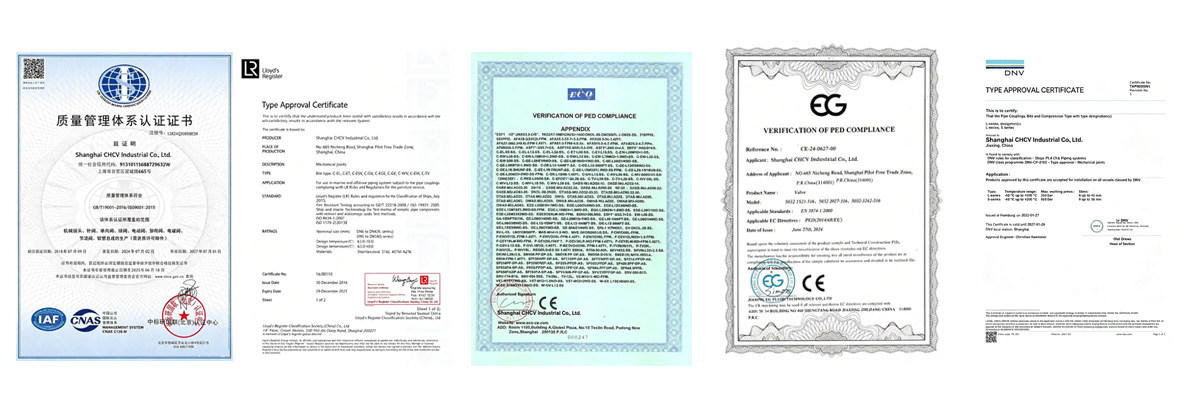
Certifications & Industry Standards
CHCV brass angle ball valve series complies with ASME B16.18 and B16.10 standards. Forged brass bodies hold NSF/ANSI 61 potable‑water certification, making them suitable for residential and commercial drinking‑water plumbing systems. Every unit undergoes 100 % factory air and hydrostatic leak testing to verify sealing reliability and service lifespan.