









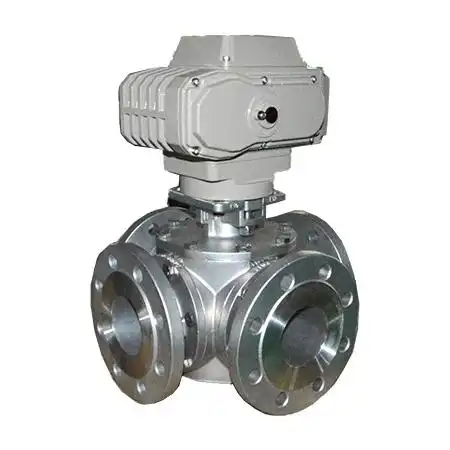
Three Way Control Ball Valve – Characterized V-Port for Precise Control

Three way control ball valve with characterized V-port and equal percentage flow characteristic. Accepts 4-20mA modulating signal for precise temperature and flow control. Ideal for HVAC and process automation.

Description

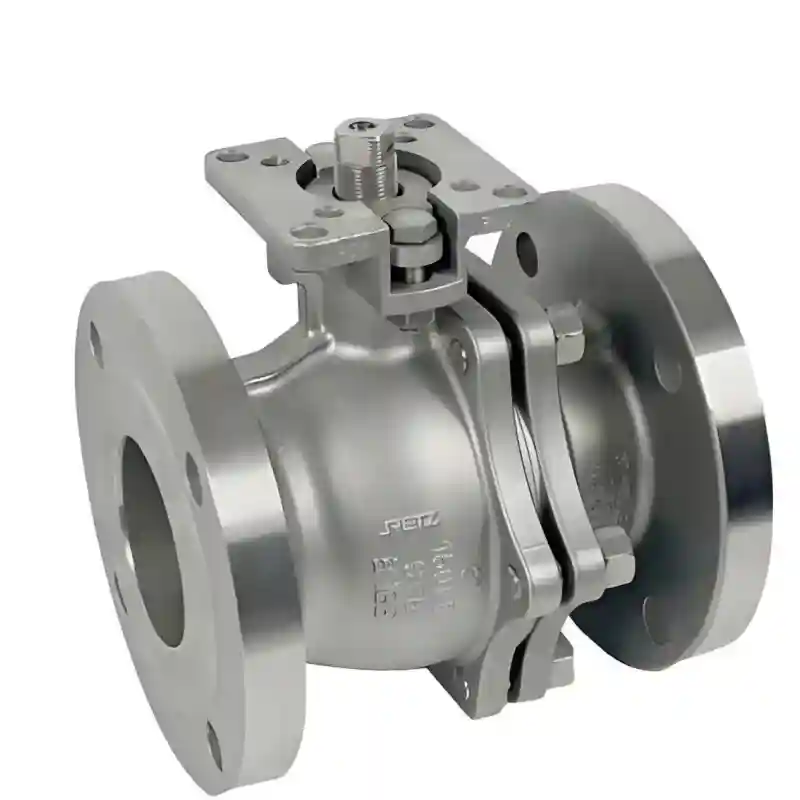
The three‑way control ball valve is a modulating three‑way ball valve engineered specifically for process‑control systems. Receiving 4‑20 mA or 0‑10 V control signals, it continuously modulates valve travel to dynamically regulate fluid flow rate, temperature, pressure or blending ratios. Unlike standard on‑off three‑way ball valves that only operate at fully‑open or fully‑closed positions, this modulating variant is fitted with a smart positioner, enabling stable positioning at any angle within the 0‑90° rotation range for precise process‑parameter tuning.

It integrates native three‑way divert‑mix functionality with high‑precision modulation capacity. By adjusting blending or diversion ratios between two media streams, it enables closed‑loop control over temperature, flow and pressure. One single three‑way control ball valve can replace a dual‑two‑way‑control‑valve assembly with associated pipe fittings. It eliminates timing‑mismatch lag between two independent control valves and cuts potential leak points by over 60 %.

Adjustable Control Characteristics

Its modulating performance is realised through the following design features:

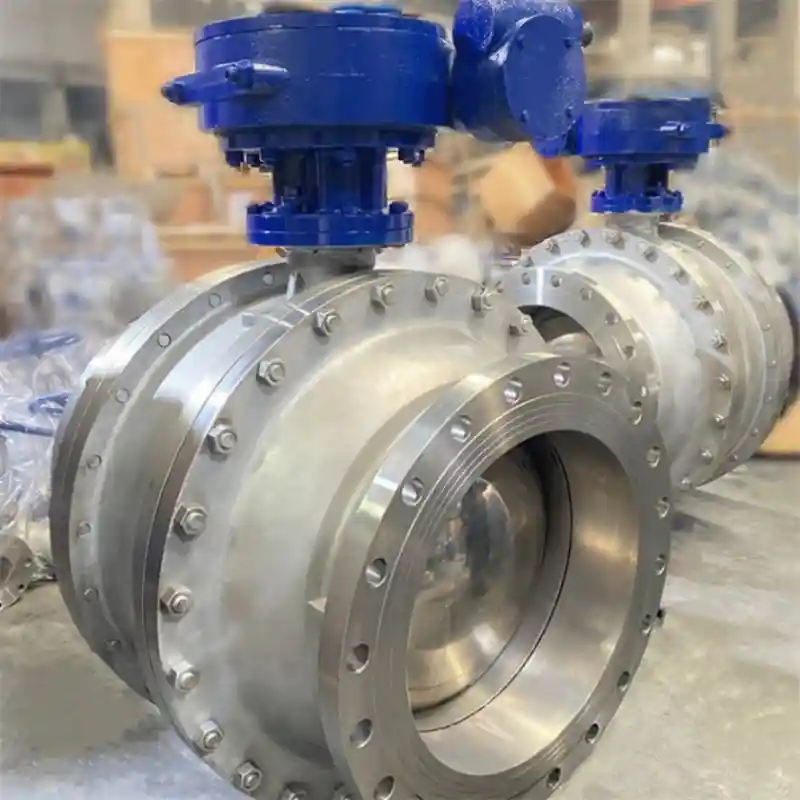
  • V‑notch ball flow characteristic: The ball incorporates a V‑cut profile paired with PTFE or PEEK seats to deliver Equal‑Percentage flow behaviour. It delivers fine modulating resolution at low travel openings while maintaining sufficient throughput under high‑opening conditions, yielding outstanding stability within temperature‑ and pressure‑control loops.
  • Low‑friction seat construction: Reinforced PTFE seats feature a low‑friction coefficient, allowing the actuator to respond accurately to control commands across the full stroke without stick‑slip motion or dead‑zone deviation, which is critical for exact ratio‑control duties.
  • Smart positioner compatibility: Smart positioners with 4‑20 mA input/output are supported, featuring HART, Profibus PA and Foundation Fieldbus communication protocols for high‑accuracy valve‑position feedback and remote diagnostic access.
  • Multiple flow‑characteristic options: Equal‑Percentage, Linear and Quick‑Opening profiles are selectable to match diverse process‑control requirements.

Modulation Performance Parameters

Parameter Specification
Rangeability 50:1 (standard); 100:1 (optional)
Modulation Accuracy ±0.5 % full‑scale
Dead Zone < 0.3 %
Response Time (0‑90°) < 2 seconds (pneumatic); < 15 seconds (electric)
Flow Characteristic Equal‑Percentage / Linear / Quick‑Opening
Shut‑off Class ANSI/FCI 70‑2 Class VI (soft seat)
Control Signal 4‑20 mA / 0‑10 V / HART / Profibus PA

Valve Body Specifications & Parameters

Parameter Specification
Nominal Size 1/2″ ~ 8″ (DN15 ~ DN200)
End Connection Flange (ANSI / EN) / NPT thread / Tri‑Clamp
Pressure Class Class 150 / 300 / 600
Temperature Range ‑20°C ~ 180°C (PTFE seat); ‑46°C ~ 250°C (PEEK seat)
Body Material WCB carbon steel / CF8M (316L) stainless steel / Ductile iron
Ball Material 316L stainless steel (V‑notch ball)
Seat Material Reinforced PTFE / PEEK
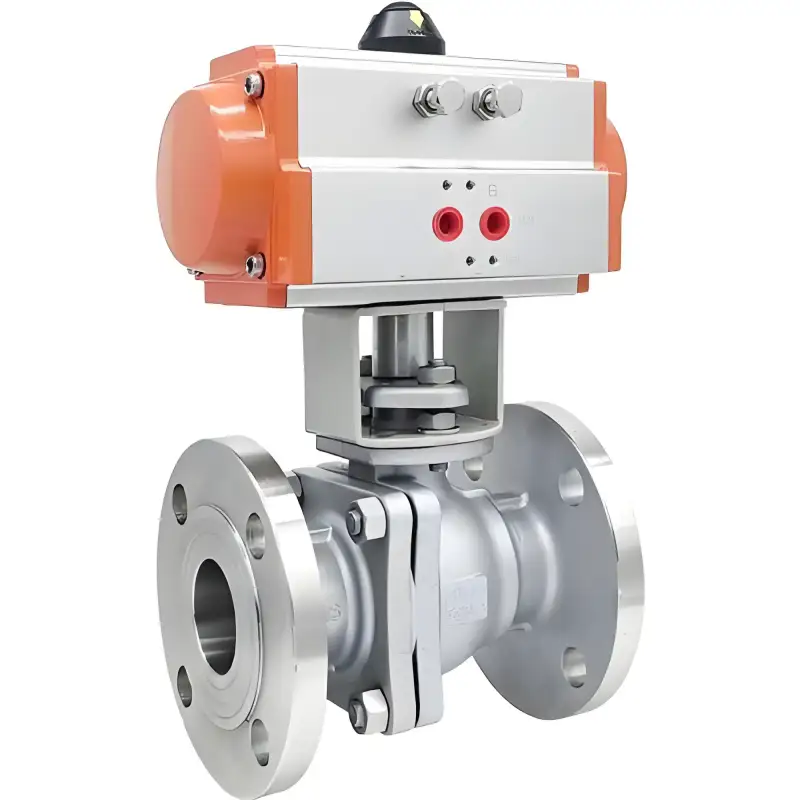
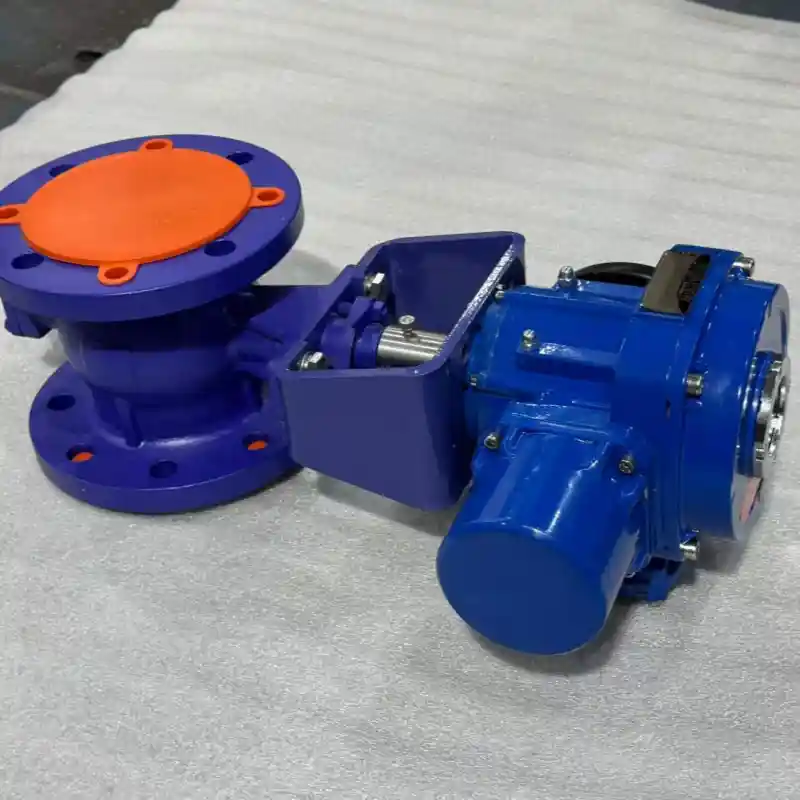
Actuator Type Pneumatic diaphragm / Pneumatic piston / Electric
Actuator Mount Interface ISO 5211 F03 ~ F14
Explosion‑Proof Rating ATEX / IECEx (optional)

Flow‑Pattern Selection Guidance

  • L‑Port: Suited for proportionally diverting one inlet stream toward two separate outlets. Within control loops, L‑Port configurations are commonly deployed for bypass control and proportional‑flow diversion, adjusting downstream flow by modifying split‑stream ratios.
  • T‑Port: Designed for proportional blending of two incoming streams into one combined outlet, or proportional splitting of a single inlet into two discharge branches. T‑Port represents the dominant flow‑path selection for temperature‑ and ratio‑control applications, delivering precise mixed‑temperature regulation by tuning media blending proportions.

Typical Application Sectors

Three‑way control ball valves are widely implemented across continuous‑process and batch‑control workflows:

  • HVAC variable‑flow water systems: Dynamic supply‑return water‑temperature modulation for air‑conditioning circuits, stabilising supply‑return temperatures by adjusting hot‑cold water blending ratios.
  • Industrial‑process temperature control: Ratio adjustment of heating‑cooling media circulating through reactor jackets to achieve accurate reaction‑temperature management.
  • Petrochemical process control: Refinery column reflux‑ratio regulation and high‑precision blending of multi‑component fluid streams.
  • Food‑beverage & pharmaceutical batch processing: Temperature‑control loops for batch‑mode production and accurate ingredient‑ratio blending.
  • Heat‑exchanger outlet‑temperature control: Stabilising discharge‑stream temperature by modulating flow fractions passing through heat‑exchanger hot‑side or cooling‑side circuits.

Reference Application Case

For Johnson Controls International’s HVAC variable‑primary‑flow chilled‑water project within a large‑scale mixed‑use complex in Singapore (Case 1). The building covers more than 500 000 m² floor area and adopts variable‑primary‑flow chilled‑water central‑air‑conditioning architecture. Supply‑return water temperatures for terminal air‑handling units required dynamic adjustment responding to variable indoor thermal loads. The prior solution using two separate modulating two‑way valves plus pipe fittings suffered from asynchronous response and control dead‑zone effects, creating ±3 °C temperature fluctuation that degraded indoor comfort and system energy efficiency.

CHCV three‑way control ball valves were selected for the retrofit, configured with T‑Port flow path, ductile‑iron body, full‑port bore, V‑notch ball with Equal‑Percentage characteristic, 4‑20 mA modulating electric actuator and on‑board PID logic. Drawing feedback signals from return‑water temperature sensors, embedded PID algorithms automatically tune hot‑cold water blending ratios. One single valve fulfils all modulation duties previously handled by dual two‑way control valves and eliminates cross‑valve coordination lag. The V‑notch ball delivers fine resolution at low travel positions while maintaining adequate throughput at high openings, securing stable closed‑loop performance across the full operating span. After commissioning, supply‑return water‑temperature fluctuation was held within ±0.5 °C, and the overall HVAC EER improved by roughly 12 %.

Quality Assurance

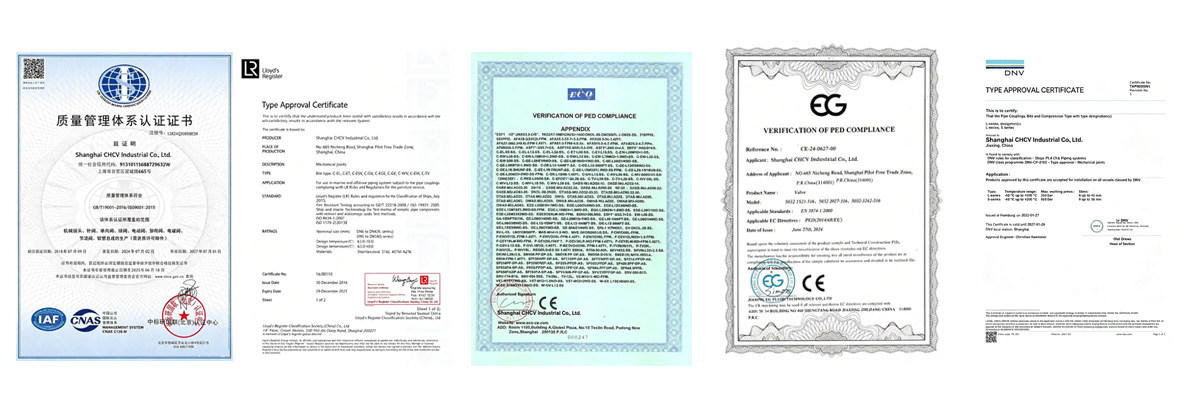
CHCV three‑way control ball valves are designed, manufactured and inspected according to ASME B16.34 and IEC 60534 (industrial‑process control‑valve standard). Every unit undergoes full‑range positioner‑valve combined commissioning testing to validate modulation accuracy and stroke‑response performance. Each finished valve passes hydrostatic shell‑strength testing plus bidirectional seat‑tightness verification complying with ANSI/FCI 70‑2 Class VI. Complete calibration certificates and inspection test reports are supplied alongside each shipment.