
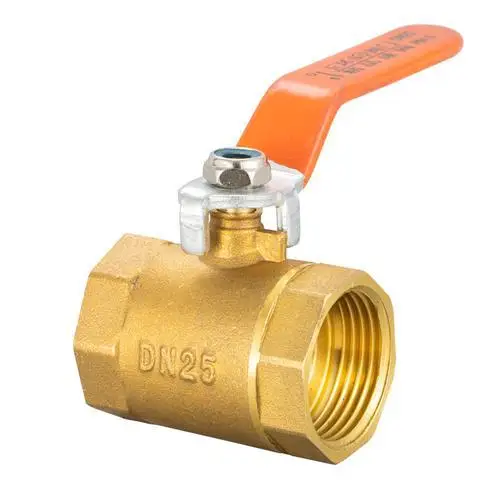
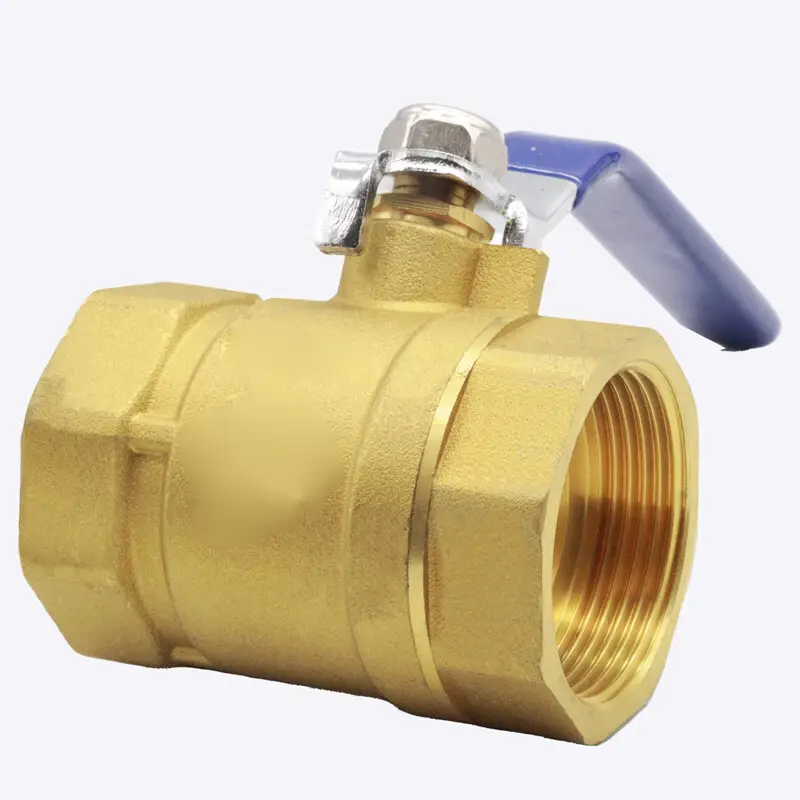
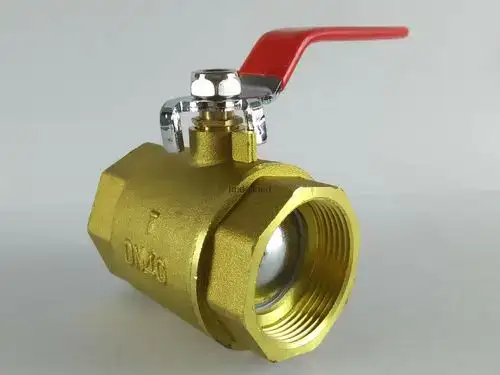
1 1/2″ Brass Ball Valve – Full Port, Easy Install, Low Pressure Drop
1 1/2 inch brass ball valve with full port design for minimal pressure drop. Threaded NPT/BSP connections for easy installation. 600 WOG rated for commercial systems.
Description
The 1.5‑inch brass ball valve ranks among the most widely‑adopted general‑purpose shut‑off valves for commercial buildings, light‑industry facilities and large‑scale agricultural irrigation. It delivers fast on‑off control for water, gas, oil and other media within DN40 piping by rotating its internal ball through 90°.
Precision‑machined forged‑brass body combined with PTFE seat and Blow‑out Proof stem enables zero‑leak sealing while maintaining a compact footprint and 600 WOG pressure rating. With a bore cross‑section roughly 2.25 times larger than a 1‑inch model, it handles flow rates ranging from 50 GPM to 150 GPM. It fills the performance gap between small‑size residential valves and heavy‑duty industrial alternatives, making it ideal for floor‑level water supply in commercial premises, industrial cooling branches and large‑volume agricultural irrigation zones.
Material & Specification
| Item | Parameter |
|---|---|
| Body Material | Forged brass (CW617N / ASTM B124) |
| Ball Material | Chrome‑plated brass / 304 stainless steel |
| Seat Material | PTFE |
| Seal Material | PTFE + NBR / Optional EPDM |
| Nominal Size | DN40 (1 1/2″) |
| End Connection | NPT / BSP female thread on both ends |
| Pressure Rating | 600 WOG (Water, Oil, Gas); 150 WSP (Saturated Steam) |
| Temperature Range | -20°C ~ +120°C (PTFE seat) |
| Operation | Lever‑operated fast 1/4‑turn (90°) open‑close |
| Port Type | Full Port |
| Loss Coefficient (K‑value) | Near zero under fully‑open condition |
| Lever Position Indicator | Parallel to pipeline = fully open; Perpendicular = fully closed |
| Stem Design | Blow‑out Proof |
| Surface Finish | Natural brass / Nickel‑plated |
| Design & Test Standards | MSS SP‑110 / ASME B16.34 / API 598 |
Application Scenarios
- Commercial building main water supply lines: branch points within office towers, shopping malls, hotels and schools for floor‑or‑zone‑based water isolation.
- Industrial cooling circulation systems: flow regulation for inlet and outlet piping serving cooling towers, heat exchangers and air‑compressor water jackets.
- Large‑scale agricultural irrigation mains: diversion control for field irrigation and multi‑greenhouse water supply, covering 50‑150 GPM flow scope.
- Fire‑protection sprinkler branch lines: sectional shut‑off component for light‑hazard sprinkler installations to isolate fire compartments.
- HVAC chilled‑hot water headers: branch isolation for heating‑and‑cooling circuits inside commercial complexes, hospitals and data centers.
- Water treatment and filtration setups: main‑line control for industrial water softeners, sand filters and activated‑carbon filter units.
Core Advantages: Straightforward Installation & Minimal Pressure Drop
1. Easy field assembly: threaded ends, no welding required
The 1 1/2″ brass ball valve comes with standard NPT or BSP female threaded connections. Installation workflow is simplified as follows:
- Wrap PTFE tape or apply thread sealant onto male pipe threads;
- Screw the valve onto pipe fittings and tighten to proper torque with pipe wrenches.
No welding, flange bolting or hot‑work permits are needed. For on‑site deployment within commercial buildings, manufacturing plants and farm sites, this brings tangible benefits:
- Substantial installation‑time savings: one‑valve fitting normally takes 30‑60 minutes, versus 2‑3 hours for flange‑type counterparts.
- Certified welders are not mandatory; regular pipe fitters can complete assembly.
- Operations can be carried out inside confined spaces such as pipe galleries and trenches without bulky installation hardware.
Weighing merely 2‑3 kg, the 1.5‑inch unit can also be handled by one operator, further streamlining mounting work.
2. Negligible pressure drop: Full Port design cuts energy consumption
Pressure Drop constitutes a non‑trivial source of energy loss within fluid circuits. Unlike reduced‑bore gate valves or globe valves, this product adopts a Full Port flow passage. Its ball bore matches pipe inner diameter exactly, so flow cross‑section remains unchanged during service without generating extra turbulence or flow acceleration.
Under typical commercial‑water‑supply or agricultural‑irrigation flow conditions (50‑150 GPM) for 1.5‑inch piping:
- Pressure drop across full‑port ball valves generally stays below 1 psi (~7 kPa);
- Equivalent‑size gate valves deliver roughly 3‑5 psi pressure drop;
- Globe valves may produce as high as 8‑12 psi pressure loss.
For irrigation or circulating‑water systems with pipe runs over 1 km long, replacing gate or globe valves with full‑port ball valves can reduce overall system pressure loss by 30%‑50%. This translates directly into lower pump power draw and extended service life for related equipment.
Application Case: Costa Group, Queensland, Australia — Zone‑Control Upgrade for Large‑Scale Citrus‑Orchard Irrigation Mains
Project Name: Queensland Citrus Orchard Irrigation Main Line Zone Control Upgrade Location: Queensland, Australia
As one of Australia’s leading fruit‑and‑vegetable producers, Costa Group manages a large citrus orchard spanning approximately 1,200 hectares in Queensland. Its irrigation network draws water from a central reservoir and feeds eight independent irrigation zones through DN200 (8‑inch) PVC main piping. Each zone inlet features a 1.5‑inch control valve to start or stop local water supply.
Project Challenges
- The original installation deployed PVC butterfly valves for zone‑inlet regulation. Intense ultraviolet radiation in Queensland accelerated outdoor ageing for both valve bodies and operating levers. 3‑4 units required replacement every year, bringing considerable maintenance overhead.
- Worse still, sand‑laden irrigation water continuously eroded butterfly valve discs, triggering poor shut‑off performance and substantial internal leakage. Even in the “closed” position, measurable flow persisted in certain zones, making reliable sectional isolation impossible.
- The butterfly valves’ inherent reduced‑bore structure introduced an extra 5 psi pressure drop under full‑flow conditions, negatively impacting sprinkler inlet pressure for the farthest zone located roughly 2.8 km away from the reservoir.
Solution
Prior to the 2024 irrigation season, all eight zone‑inlet PVC butterfly valves were replaced with 1.5‑inch brass ball valves.
Project Outcomes
- Streamlined installation: BSP threaded connections allowed on‑site farm technicians to finish each valve swap within one hour without special machinery or external welders. All eight valves were fully fitted within two days with zero disruption to regular irrigation schedules.
- Markedly reduced pressure loss: Field measurement showed merely 0.8 psi (~5.5 kPa) pressure drop at full opening, representing around 84 % reduction compared with the former 5 psi from butterfly valves. Sprinkler inlet pressure for the farthest zone (2.8 km from reservoir) rose from 0.38 MPa up to 0.45 MPa, meeting designed sprinkler throw requirements and greatly improving irrigation uniformity.
- Enhanced long‑term durability: Brass bodies exhibit outstanding weather resistance and sediment‑erosion tolerance under outdoor exposure. Zero breakdowns or repairs occurred throughout the first six‑month irrigation cycle. Service life is projected to far exceed the previous PVC butterfly valves.
The orchard operations manager from Costa Group commented: “Thanks to the low‑pressure‑drop characteristics of 1.5‑inch brass ball valves, we resolved far‑end‑pressure shortages without boosting pump head. Meanwhile, the simple threaded‑connection setup enables our in‑house farm crew to carry out maintenance independently, removing reliance on external contractors.”