
1/2″ NPT Brass Ball Valve – Reliable Seal, 600 WOG Durable
Heavy-duty 1/2″ NPT brass ball valve with PTFE seats, 600 WOG rating. Tapered thread seal provides leak-tight performance for water, air, gas & chemicals.
Description
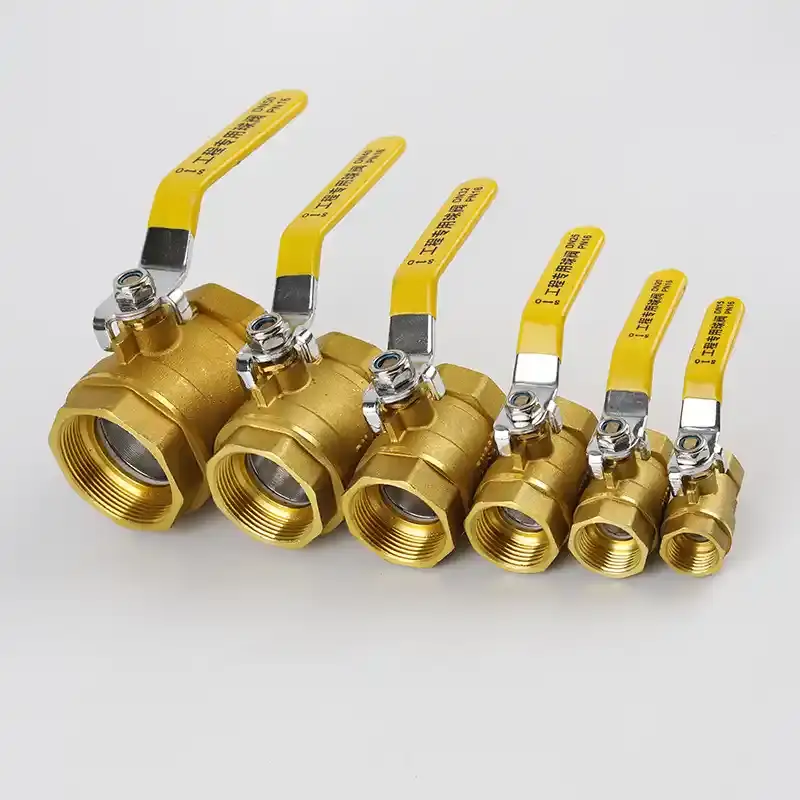
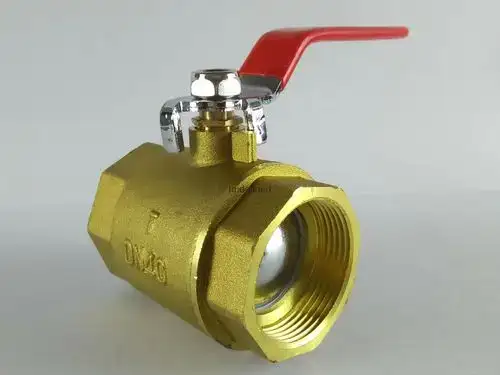
The 1/2″ NPT brass ball valve is a 90‑degree quick shut‑off valve fitted with National Pipe Taper American‑standard tapered pipe threads, widely adopted across North‑American and global industrial piping systems. It delivers rapid on‑off flow control by rotating the internal ball through 90°.
The unique geometry of NPT tapered threads generates dual effects of radial expansion and axial locking during tightening. Under medium pressure, thread flanks wedge tighter against one another to create metal‑to‑metal hard sealing. Combined with PTFE seats, it establishes dual‑layer sealing assurance. Suited for isolating and shutting off water, gas, oil and various chemical fluids, this valve excels in industrial applications demanding strict sealing reliability and long‑term service performance.
Material & Specification
| Item | Parameter |
|---|---|
| Body Material | Forged Brass (CW617N / ASTM B124) |
| Ball Material | Chrome‑plated brass / 304 stainless steel |
| Seat Material | PTFE |
| Seal Material | PTFE + NBR / FKM (optional) |
| Nominal Size | DN15 (1/2″) |
| End Connection | Female NPT (ASME B1.20.1) |
| Pressure Rating | 600 WOG (water, oil, gas); 150 WSP (saturated steam) |
| Temperature Range | -20°C ~ +120°C (PTFE seat) |
| Operation | Lever‑operated 1/4‑turn (90°) fast open‑close |
| Handle Type | Zinc‑plated steel handle (lockable / red / yellow handle optional) |
| Stem Structure | Blow‑out Proof design |
| Surface Finish | Raw brass / nickel‑plated / chrome‑plated |
| Compliance Standard | MSS SP‑110 / ASME B16.34 / API 598 (testing) |
Typical Applications
- Instrument pressure‑tap and sampling lines: Acts as isolation valves upstream of pressure gauges, transmitters, thermometers and level transmitters. NPT threads deliver leak‑tight performance under high‑pressure service.
- Compressed‑air and pneumatic circuits: Serves as branch shut‑offs ahead of pneumatic actuators, cylinders, spray guns and quick‑connect fittings. NPT ends comply with prevailing North‑American pneumatic industry norms.
- Hydraulic and lubrication branches: Controls flow within central lubrication units and hydraulic‑station return lines. Tapered threads exhibit outstanding resistance to vibration‑induced loosening.
- Gas and natural‑gas piping: Terminal isolation valves installed downstream of gas meters and before boilers for residential and commercial premises in North America (yellow handle required).
- Water treatment and chemical dosing systems: Media shut‑off for upstream sections of RO membranes, dosing pump outlets and sampling cooler ports.
- Process‑pipeline blow‑down and venting: Isolation hardware for low‑point drain outlets and high‑point vent ports.
Core Strengths: Reliable Sealing & Extended Service Life
Within industrial piping infrastructure, valve leakage brings not only fluid waste but also potential safety hazards. This product is purpose‑built around two key performance objectives: dependable sealing and durable operation.
- NPT tapered threads‑self‑energized sealing under elevated pressure NPT (National Pipe Taper) threads feature a taper angle of 1°47’. When male and female threads engage, tapered mating surfaces produce radial expansion force. Medium‑driven axial separating force further wedges thread profiles together. This self‑energizing sealing mechanism tightens joints as system pressure rises and lowers leakage probability. Unlike BSP parallel threads which rely on O‑rings or gaskets for sealing, NPT joints achieve sealing purely through metal‑on‑metal interference fit. It removes failure risks caused by elastic‑seal aging, making it ideal for facilities subject to frequent thermal cycling and heavy vibration.
The valve stem adopts Blow‑out Proof construction with a retaining shoulder at its base. Even under abnormal cavity overpressure or accidental seal failure, the stem cannot eject outwards, protecting personnel and preserving system integrity.
- PTFE seats plus brass body‑dual‑source durability guarantee
- PTFE seats possess an ultra‑low friction coefficient ranging from 0.04 to 0.10. After 100 000 switching cycles, the valve still maintains low operating torque and bubble‑tight shut‑off. PTFE also delivers broad chemical compatibility and wide operating temperature coverage from ‑20°C to +120°C, compatible with water, gas, oil and most weak acids and alkalis.
- Hot‑forged brass bodies (CW617N) feature dense metallurgical structures free of shrinkage cavities and demonstrate markedly higher mechanical strength versus cast brass. Brass offers good atmospheric‑corrosion resistance and stress‑corrosion‑cracking tolerance, retaining structural integrity in humid, salt‑laden or mildly corrosive‑gas environments.
Accelerated laboratory aging tests verify zero prominent corrosion spots after 1 000‑hour ASTM B117 salt‑spray exposure. After 50 000 cycle‑life evaluations, seat leakage remains below the Class VI threshold defined by API 598. These test outcomes validate its credibility as a long‑lived industrial valve.
- 600 WOG pressure rating‑robust performance for high‑pressure service The 1/2″ npt brass ball valve carries a 600 WOG rating, meaning it safely withstands 600 psi water‑oil‑gas pressure at ambient temperature. This rating far exceeds the 150‑300 psi specification of ordinary household valves and builds sufficient safety margin for high‑pressure industrial workflows. The self‑sealing property of tapered threads further elevates overall system safety factors.
Field Case: Dow Chemical Company – Freeport, Texas Caustic Sampling System Upgrade
Project: Dow Chemical Company – Freeport, Texas Caustic Sampling System Upgrade Location: Freeport, Texas, USA
Dow’s Freeport site ranks among the world’s largest chlor‑alkali manufacturing hubs. Its chlor‑alkali workshop requires bi‑hourly sampling of 12% sodium hypochlorite solution (pH 11) for quality verification. Previously, sampling branches deployed BSP parallel‑thread brass ball valves sealed with EPDM gaskets.
Strong alkalinity and oxidizing properties degraded EPDM components; gaskets hardened and developed micro‑leaks within merely 2‑3 months. Each maintenance event involved gasket replacement and retorquing, raising labour input and creating chemical‑exposure risks for laboratory staff.
In 2022, the facility retrofitted all 48 sampling points with 1/2″ NPT brass ball valves. Vulnerable elastic gaskets were eliminated entirely, replaced by metal‑to‑metal interference hard sealing from NPT tapered threads. Complemented by brass body alkali‑resistance and PTFE seat oxidation tolerance, these valves completed 24 consecutive months of runtime with zero visible leakage, zero maintenance and zero component replacement. Field operators reported stable operating torque below 5 N·m without jamming or seepage, despite frequent cycling of roughly 4 380 open‑close operations per year (one cycle every two hours).
Encouraged by project outcomes, Dow incorporated the 1/2″ npt brass ball valve into its global‑site engineering document Standard Practice SP‑142‑C, designating it as the preferred sampling‑valve option for caustic liquor, brine and sodium hypochlorite applications. According to site maintenance logs, unplanned maintenance hours triggered by sampling‑valve leakage dropped by 93 %. Laboratory safety‑related incidents were fully eliminated, yielding approximately $18 000‑per‑year savings on maintenance expenditure.