
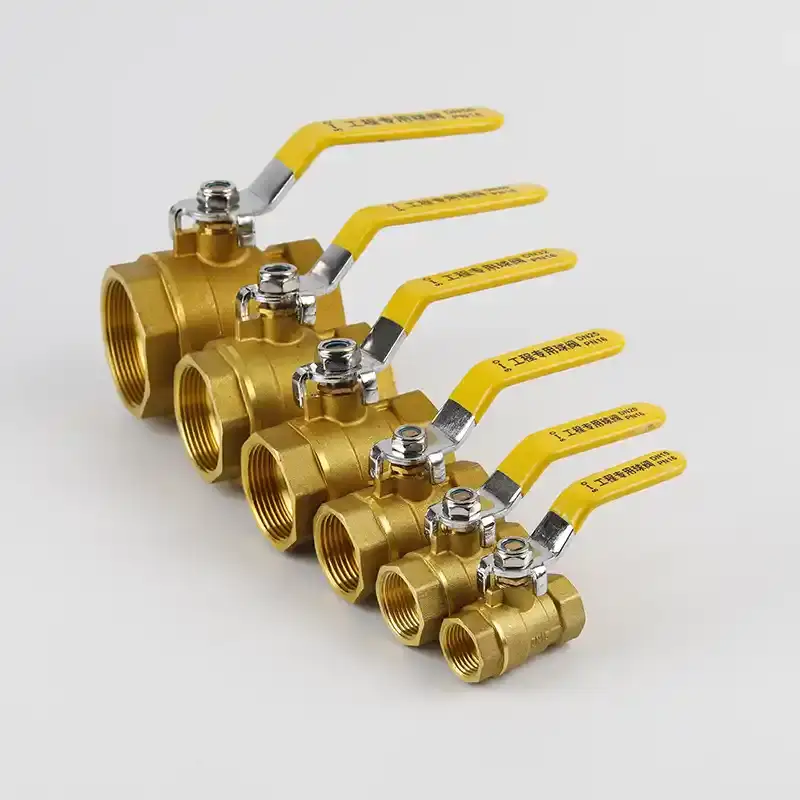
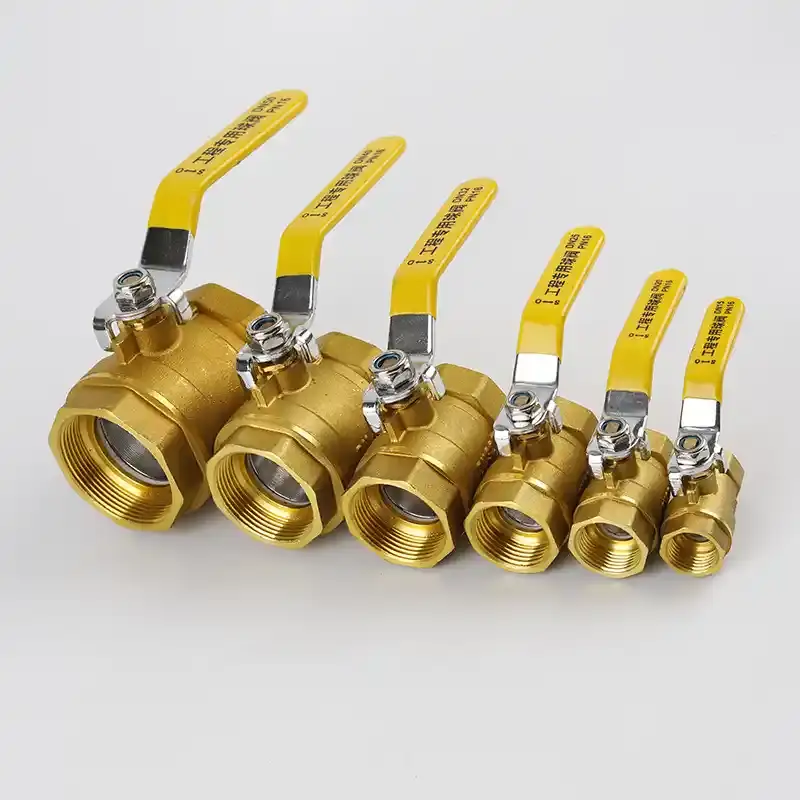
1/4″ Mini Brass Ball Valve – Compact, High Sensitivity for Instrumentation
Compact 1/4″ mini brass ball valve with low torque operation. Ideal for instrumentation panels, gas analyzers & lab equipment. NPT/BSP connection, 3000 psi rating.
Description
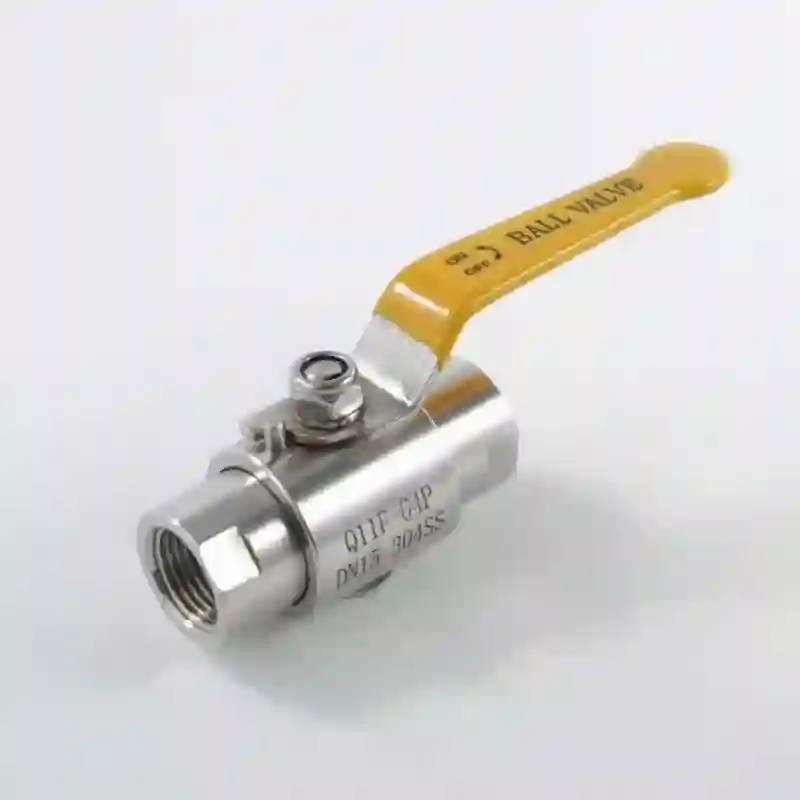
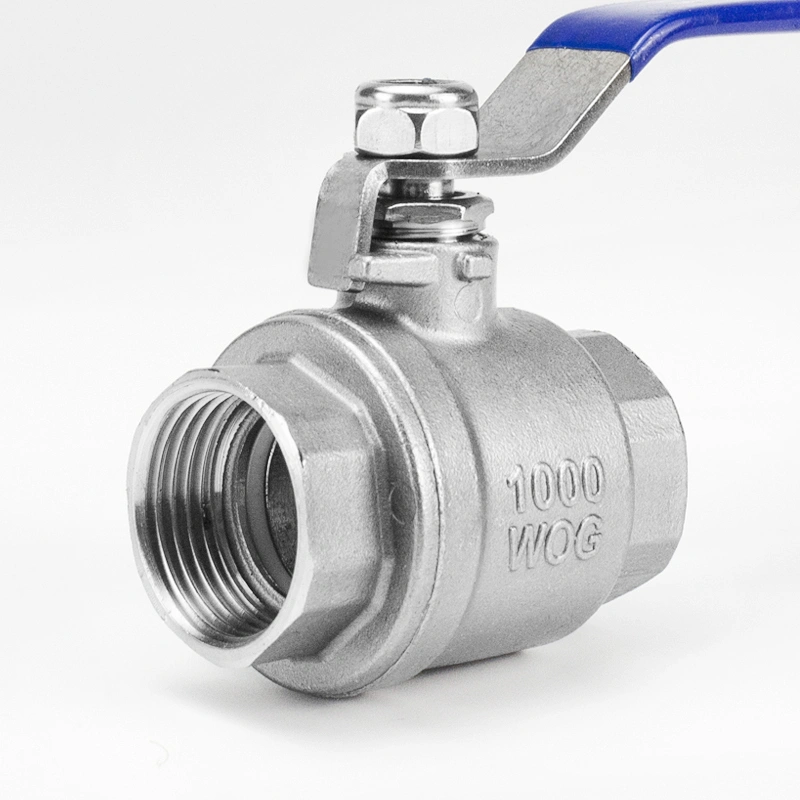
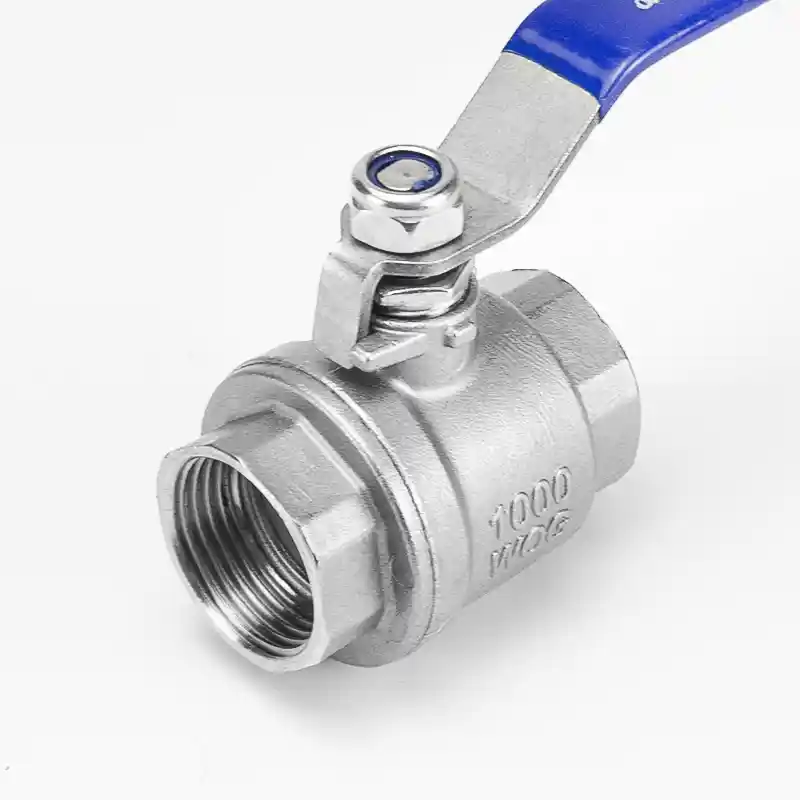
The 1/4″ mini brass ball valve ranks among the most compact‑form‑factor standard ball valves for instrumentation and precision fluid‑control workflows. It delivers fast, dependable on‑off fluid regulation for gas and liquid media within confined enclosures by rotating its internal ball 90°.
Precisely machined from forged brass, the valve body forms bubble‑tight shut‑off via matched ball and PTFE seat assemblies. Purpose‑built for space‑constrained applications requiring responsive actuation, such as instrument pressure‑tap runs, pneumatic control loops, analytical‑instrument flow paths and wellhead instrument manifold assemblies, it serves as a preferred solution for OEM integrators and instrumentation engineers tackling compact‑layout high‑reliability switching challenges.
Material & Specification
| Item | Parameter |
|---|---|
| Body Material | Forged Brass (CW617N / ASTM B124) |
| Ball Material | Chrome‑plated brass / 304 stainless steel |
| Seat Material | PTFE |
| Seal Material | PTFE + NBR / FKM (optional) |
| Nominal Size | DN6 (1/4″) |
| End Connection | Female NPT / BSP / Compression fittings |
| Pressure Rating | 3000 psi (gas), 600 WOG (water, oil) |
| Temperature Range | -20°C ~ +120°C (PTFE seat) |
| Operation | Lever‑operated 1/4‑turn (90°) fast open‑close |
| Operating Torque | < 1.0 N·m (light‑touch high‑sensitivity handle) |
| Body Length | 42 ~ 60 mm (varies by end configuration) |
| Panel‑mount Center‑to‑Center Spacing | ≥ 25 mm for dense side‑by‑side installation |
| Stem Structure | Blow‑out Proof design |
| Compliance Standard | MSS SP‑110 / ASME B16.34 / API 598 (testing) |
Typical Applications
- Instrument pressure‑tap and drain lines: Isolation hardware upstream of pressure gauges, differential‑pressure transmitters, thermometers and level transmitters. Its small footprint fits densely packed instrument tubing bundles.
- Pneumatic control systems: Branch‑line shut‑offs for pneumatic actuators, valve positioners and cylinders. The 1/4″ nominal size matches mainstream pneumatic fitting dimensions.
- Chemical‑analysis and laboratory hardware: Carrier‑gas and sample‑stream switching for gas chromatographs, liquid chromatographs and mass‑spectrometry setups.
- Oil‑field wellhead instrument manifolds: Multi‑port pressure sampling and drain integration modules deployed on water‑injection wells and gas‑production trees, enabling dense component arrangement within limited panel real‑estate.
- Medical and life‑science equipment: Gas‑water branch circuits within dental treatment consoles and fluid modules for IVD devices.
- Semiconductor and precision manufacturing: Branch lines for specialty process gases (N₂, CDA, Ar) and ultrapure‑water (UPW) sampling ports inside clean‑room environments.
Core Advantages: Compact Footprint & High‑Sensitivity Operation
Within instrumentation and precision‑equipment engineering, layout dimensions are tightly constrained, while every actuation cycle directly impacts measurement fidelity. This valve is engineered around two core performance pillars: Compact footprint and High Sensitivity.
- Ultra‑compact dimension — full functionality in limited installation space The 1/4″ mini brass ball valve features a body length ranging from 42 mm to 60 mm, with a minimum 25 mm center‑to‑center pitch for panel‑mounted side‑by‑side arrangement. Two valve layers can fit within a standard 1U (44.5 mm) rack height. Up to 6‑8 units can be mounted without mechanical interference on a 250 mm‑wide wellhead instrument panel.
For OEM equipment integrators, such compact geometry brings tangible commercial benefits: more functional flow channels can be accommodated on panels of identical dimensions, or overall equipment footprint can be shrunk while preserving full functional scope. This translates into reduced enclosure material spend, lower freight charges and smaller on‑site installation footprint.
- High‑sensitivity performance — low‑torque, precise manipulation High‑precision ball‑surface grinding paired with low‑friction PTFE seats restricts full‑cycle operating torque below 1.0 N·m, roughly equivalent to the force required to twist a standard marker pen by hand.
This characteristic delivers three practical operational strengths:
- Manual operation: Operators complete switching motions with one hand; smooth actuation persists even when wearing protective gloves or working in cramped compartments.
- Automated control: Solenoid‑driven miniature motors or cylinder‑actuated manifolds achieve full valve actuation within 0.2‑0.3 seconds per unit.
- Long‑term service life: Minimal friction cuts wear upon ball and seat components. Operating torque rises by no more than 20 % after 100 000 duty cycles, delivering service life exceeding general‑industry benchmarks.
Field Case: Sichuan Kete Petroleum Well‑Control Inspection Center — Wellhead Instrument Manifold Integration
Project: Wellhead Instrument Manifold Integration Project, Sichuan Kete Petroleum Industrial Well‑Control Quality & Safety Inspection Center Location: Guanghan City, Sichuan Province, China
This third‑party testing institute carries out inspection and certification for wellhead assemblies and well‑control hardware (including production trees, gas‑production trees, blow‑out preventers, throttle‑kill manifolds) operated by PetroChina and Sinopec across Southwest China. To guarantee test‑data accuracy and traceability, the center developed an in‑house portable well‑pressure tester for on‑site pressure validation and leak‑detection workflows.
Its handheld control panel required four pressure‑tap valves plus two drain valves integrated within a confined 200 mm × 150 mm footprint, serving pressure sensors, pressure gauges, pressure‑relief and drain piping. The original design adopted conventional 1/2″ ball valves; excessive physical size caused cluttered panel layout and handle interference. Additional tool cabinets were mandatory for field assignments, severely undermining on‑site work efficiency.
After switching to 1/4″ mini brass ball valve, the compact 42‑mm‑long body and 28‑mm mounting pitch allowed all six valves to populate one single panel. Panel overall size dropped to 60 % of the original layout, and total tester weight decreased by approximately 2 kg to achieve genuine portability. Benefiting from its high‑sensitivity low‑torque design, field technicians wearing oil‑resistant gloves can toggle every valve with one hand, eliminating spanners or extension levers.
Since commissioning in 2023, this portable well‑pressure tester has been deployed for field inspections on more than 30 oil‑gas wells across Sichuan‑Chongqing territory. Valves have completed over 5 000 operational cycles with zero leakage and zero sticking issues, earning positive feedback from on‑site inspectors.
According to the institute’s equipment‑selection report, the mini brass ball valve’s compact architecture and responsive actuation deliver an optimized solution for instrument‑manifold integration, boosting both field‑test efficiency and measurement reliability.