
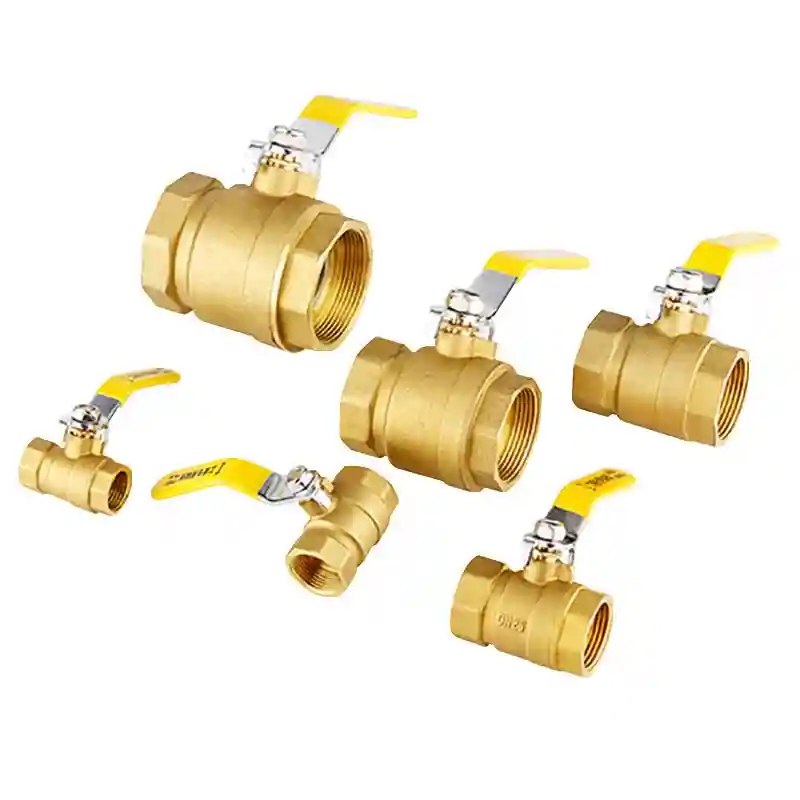
1/8″ NPT Brass Ball Valve – High-Pressure Self-Sealing, Easy Install
1/8″ NPT brass ball valve with tapered thread self-sealing design. 600 WOG rating, compact size for instrumentation panels. Easy install with PTFE tape & wrench.
Description
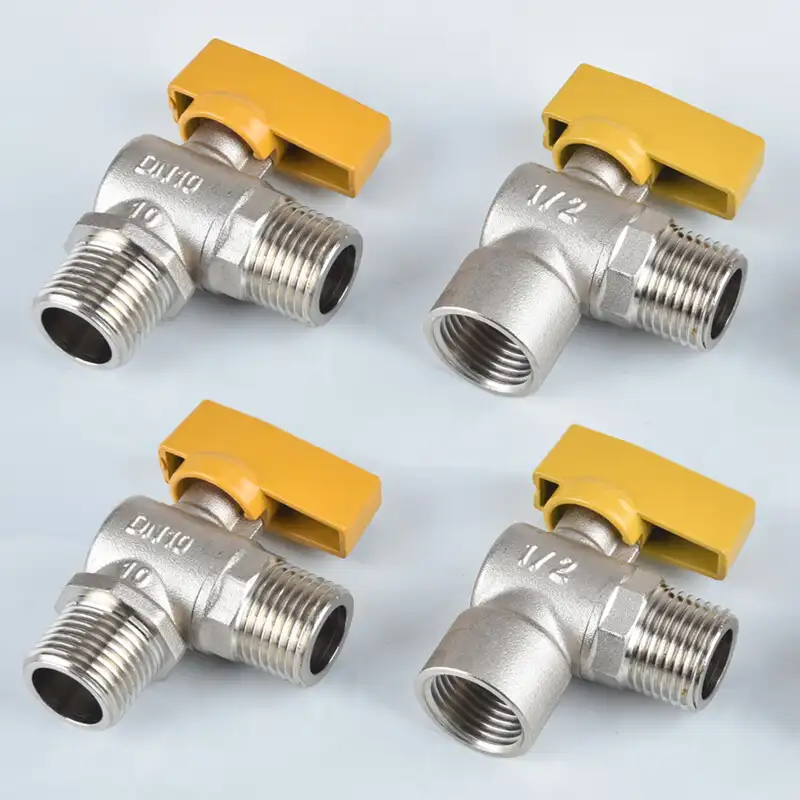
The 1/8″ NPT brass ball valve ranks among the smallest‑bore American‑standard tapered‑thread ball valves engineered for instrumentation and compact high‑pressure micro‑fluid assemblies. It delivers rapid, dependable shut‑off for high‑pressure gas and liquid streams via 90‑degree ball rotation. Built to a 1°47′ taper angle, NPT (National Pipe Taper) threads generate both radial expansion and axial locking forces upon tightening.
Higher system pressure drives tighter thread meshing to form a pressure‑energized metal‑to‑metal seal, eliminating failure risks such as extrusion or aging of elastic sealing components under high‑pressure service. This valve fits instrument pressure‑tap lines, high‑pressure gas facilities and oil‑gas wellhead assemblies where installation space is constrained and sealing performance is mission‑critical.
Material & Specification
| Item | Parameter |
|---|---|
| Body Material | Forged Brass (CW617N / ASTM B124) |
| Ball Material | Chrome‑plated brass / 304 stainless steel |
| Seat Material | PTFE |
| Seal Material | PTFE + NBR / FKM (optional) |
| Nominal Size | DN3 (1/8″) |
| End Connection | Female NPT (ASME B1.20.1) |
| Pressure Rating | 600 WOG (water, oil, gas) |
| Temperature Range | -20°C ~ +120°C (PTFE seat) |
| Operation | Lever‑operated quarter‑turn (90°) fast open‑close |
| Body Length | 30 ~ 40 mm (varies by end configuration) |
| Panel‑mount Center‑to‑Center Spacing | ≥ 20 mm for ultra‑compact side‑by‑side mounting |
| Stem Structure | Blow‑out Proof design |
| Installation | PTFE tape plus pipe‑wrench tightening; no gaskets or O‑rings required |
| Compliance Standard | MSS SP‑110 / ASME B16.34 / API 598 |
Typical Applications
- Oil‑gas wellhead pressure‑tap & drain lines: Isolation valves for pressure gauges, differential‑pressure transmitters and pressure switches on production and gas‑production trees. Its ultra‑compact 1/8″ NPT footprint resolves space shortages within dense instrument tubing bundles.
- High‑pressure gas pipelines & compressor stations: Pressure‑tap valves fitted upstream of pressure transmitters and gauges at natural‑gas transmission compressor and regulator stations, with tapered threads sustaining robust sealing under high‑pressure operating conditions.
- Laboratory & chemical‑analysis instruments: Micro‑flow on‑off control for carrier‑gas and sample streams in gas chromatographs and mass spectrometers.
- Pneumatic pilot control circuits: Miniature branch shut‑offs for supply lines feeding pneumatic positioners and I/P converters.
- Semiconductor & precision manufacturing: Compact branch ports for specialty clean‑room process gases and ultrapure‑water sampling points; minimal dead volume cuts residual sample carry‑over.
- Leak‑detection & vacuum systems: Calibration gas‑line valves for helium mass‑spectrometer leak detectors and bypass isolation units for vacuum hardware.
Core Advantages: High‑Pressure Self‑Sealing & Streamlined Installation
For oil‑gas fields, long‑distance transmission pipelines and high‑pressure gas facilities, reliable sealing and simplified maintenance directly govern operational safety and site‑wide efficiency. This valve is purpose‑optimized around two core strengths: High‑Pressure Self‑Sealing and Easy Installation.
- High‑Pressure Self‑Sealing — tighter sealing under elevated working pressure NPT (National Pipe Taper) tapered threads represent a proven high‑pressure sealing solution widely adopted across North‑American instrumentation industries. Its sealing mechanism works as follows:
- During tightening, the 1°47′ taper geometry creates radial expansion force that presses male and female thread flanks into tight contact.
- Once pressurized process media flows through the assembly, axial separating force further wedges tapered threads radially outward for secondary mechanical interference.
- Greater system pressure amplifies axial separating loads, yielding firmer thread engagement and superior sealing performance.
Thanks to this pressure‑energized sealing principle, the 1/8″ npt brass ball valve achieves bubble‑tight performance at its 600 WOG rating without auxiliary elastic sealing parts. Unlike parallel‑thread ball valves that rely on O‑rings or gaskets, NPT tapered connections remove leakage hazards triggered by seal extrusion, material aging or chemical degradation. It performs reliably under demanding service involving flammable‑toxic media such as natural gas with trace H₂S and high‑pressure hydrogen.
The stem incorporates Blow‑out Proof construction with a retaining shoulder at its base. Even with abnormal pressure spikes inside the valve cavity, the stem cannot eject outwards, delivering enhanced operator safety.
- Streamlined Installation — welding‑free assembly with no specialty sealing hardware Field assembly of the 1/8″ NPT brass ball valve is straightforward:
- Wrap 3‑4 uniform layers of PTFE tape onto male NPT threads.
- Thread the valve onto the female mating port by hand until finger‑tight.
- Apply roughly 1.5‑2 additional thread pitches of tightening torque with a pipe wrench to complete installation.
No welding torches, brazing filler, flux, O‑rings, flat gaskets or thread sealant compound are needed, and hot‑work permits are not required. Single‑valve installation normally finishes within five minutes. This weld‑free connection serves as a practical field‑mounting and maintenance alternative for natural‑gas pipelines and oil‑gas wellheads where hot‑work activities are strictly prohibited. Since vulnerable elastic sealing consumables are eliminated, maintenance crews reduce spare‑part varieties and related inventory costs.
Field Case: PipeChina West‑East Gas Transmission Branch — Pressure‑Tap Valve Replacement at a Compressor Station
Project: Instrument Pressure‑Tap Valve Retrofit for Compressor Unit Outlet at One West‑East Gas Transmission Compressor Station Location: Gansu Province, China
PipeChina West‑East Gas Transmission Branch manages multiple large‑scale natural‑gas trunk pipelines including West‑East Gas Transmission Line I and Line II. One of its compressor stations in Gansu hosts four 15 MW gas‑driven compressor units that boost natural‑gas pressure from 4.5 MPa up to 8.5 MPa for downstream delivery.
Background: Multiple pressure transmitters are fitted on compressor‑unit outlet piping for real‑time pressure monitoring and unit regulation. Each transmitter is protected by a 1/4″ NPT pressure‑tap valve for instrument isolation during routine servicing. However, dense component layout on the DN300 outlet header (housing temperature transmitters, flow meters, safety relief valves and pressure transmitters) created physical interference: the original 1/4″ valve body was overly long and collided with adjacent flange faces. Technicians could not turn wrenches normally, and every transmitter disassembly‑reassembly required removing neighboring hardware, pushing single‑event maintenance duration above two hours.
Solution: In December 2023, after on‑site dimensional survey and comparative product evaluation, station engineers replaced all four transmitter upstream 1/4″ NPT pressure‑tap valves with 1/8″ NPT brass ball valves. At merely 35 mm body length, the new valves are approximately 30 % shorter than the former 1/4″ variants, freeing sufficient clearance for wrench access around adjacent flanged joints.
Project Outcomes:
- Simplified field mounting: Technicians completed online retrofits using only pipe wrenches and PTFE tape via the unit standby bypass; welding qualifications or hot‑work permits were unnecessary. Each valve replacement took less than ten minutes.
- High‑pressure self‑sealing performance: NPT tapered‑thread joints passed a 24‑hour pressure‑decay test under 8.5 MPa natural‑gas operating pressure with zero measurable leakage.
- Improved service accessibility: No adjacent component removal is required for wrench operation. Transmitter maintenance time dropped from over two hours down to 20 minutes.
Since commissioning, this batch of valves has operated stably for more than six months and endured two full heating‑season winter cycles with site minimum ambient temperature of ‑22°C. No leakage or sticking incidents have occurred. The station has added the 1/8″ NPT brass ball valve to its preferred‑specification list for equivalent instrument‑tap applications and plans wider deployment across locations with densely packed piping layouts.