
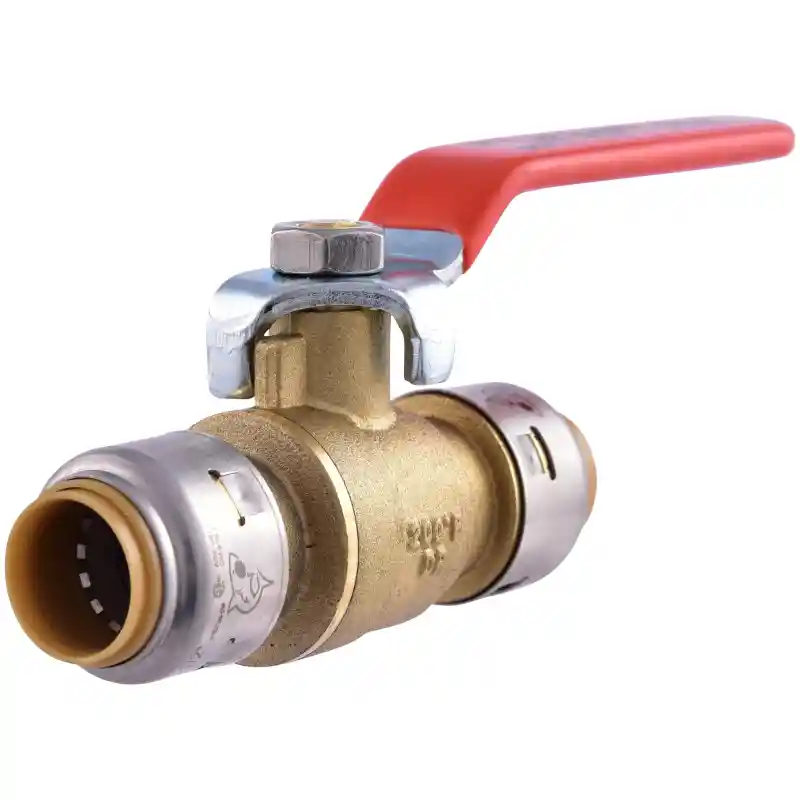
1/2″ Push-to-Connect Brass Ball Valve – Fast Install, Removable
Lead-free 1/2″ push-to-connect brass ball valve for PEX/copper/CPVC. No soldering, quarter-turn shutoff with disconnect clip for easy removal. 200 psi rated.
Description
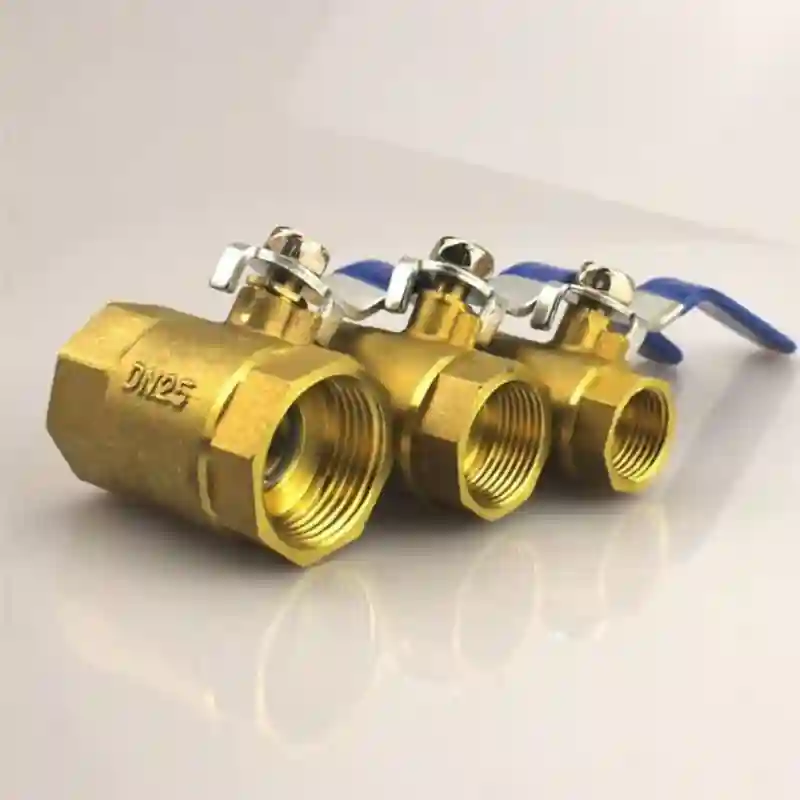
1/2″ Push‑to‑Connect Brass Ball Valve
The 1/2″ push‑to‑connect brass ball valve merges 90‑degree quick shut‑off performance with Push‑to‑Connect joining technology to deliver a modern fluid control solution. It enables fast piping connection and positive shut‑off for water, gas and oil circuits, eliminating welding, thread sealant and heat‑fusion tools. Each end‑fitting integrates stainless‑steel gripping rings and O‑ring seals. Simply insert squarely‑cut pipe ends to form pressure‑resistant joints. A dedicated Disconnect Clip allows non‑destructive pipe release, so the valve can be disassembled and reused without component damage.
Material & Specification
| Item | Parameter |
|---|---|
| Body Material | Forged brass (CW617N / ASTM B124, lead‑free variant available) |
| Ball Material | Chrome‑plated brass / 304 stainless steel |
| Seal Material | EPDM / HNBR (compatible with hot‑cold water and dilute chemical media) |
| Grip Ring Material | 301 spring‑tempered stainless steel |
| Nominal Size | DN15 (1/2″) |
| End Connection | Dual‑ended Push‑to‑Connect fittings |
| Compatible Tubing | PEX (Type A/B/C), copper tube (Type K/L/M), CPVC (CTS standard) |
| Pressure Rating | 200 psi (water), 150 psi (gas), 600 WOG |
| Temperature Range | 33°F ~ 200°F (0°C ~ 93°C) |
| Operation | Lever‑operated, 1/4‑turn (90°) fast open‑close |
| Disassembly | Depress fitting collar with Disconnect Clip to release pipe |
| Compliance Standard | ASTM F1960 / ASSE 1061 / NSF/ANSI 61 (lead‑free version) |
Typical Applications
- Rapid repair for residential water branches: When replacing faucets, water‑heater flex connectors or toilet stop valves, technicians can establish new pipe connections within 30 seconds without main‑valve shutdown or welding. It performs especially well in older buildings with mixed copper and PEX piping layouts.
- Installation in confined and fire‑restricted zones: One‑hand insertion fits ceiling plenums, cabinet interiors and shaft spaces where torches are prohibited. It satisfies OSHA hot‑work safety requirements for overhead jobs.
- Retrofit for multi‑tenant and commercial properties: Hotels, apartments and office buildings can execute partial piping upgrades while premises remain operational. Push‑to‑connect joints remove the need for full‑building system draining and reduce revenue loss from water outages.
- Temporary water supply and emergency field repairs: Deployed by municipal maintenance crews for quick isolation, bypass setup and service restoration following pipe rupture incidents.
- Data centers and precision manufacturing facilities: Suited for fire‑hazard‑prone zones where welding sparks or mechanical vibration must be avoided, serving as fast‑acting isolation valves for sprinkler branches and cooling‑water circuits.
Core Advantages: Fast Installation & Re‑Usable Disassembly
Time directly translates to operational cost for pipeline maintenance and emergency repairs. This valve is engineered around two core practical requirements: rapid assembly and convenient disassembly.
- Tool‑free connection for fast installation Traditional threaded joints demand PTFE tape wrapping and wrench tightening, consuming 8‑12 minutes on average. Welded connections require surface preparation, flux application, heating and cool‑down, taking 15‑20 minutes. The 1/2 in push to connect brass ball valve simplifies work into three straightforward steps: cut pipe to a flat square end, insert fully into the fitting until seated, actuate the lever to restore flow. Complete assembly finishes in under 45 seconds, boosting installation efficiency 10‑20 times, with zero fire risk, welding fumes or lead‑related contamination.
- Re‑usable design lowers spare‑part expenditure Conventional welded or threaded ball valves become permanently fixed once mounted. Adjusting or rerouting piping normally calls for pipe cutting and discarding the old valve. By pressing the fitting collar with the matching Disconnect Clip, technicians can free tubing and extract the intact valve in roughly one second. Since internal components sustain no harm, the hardware may be redeployed at subsequent work sites. For property‑service and municipal emergency teams handling frequent repairs, re‑utilization rates can exceed 90 %, greatly cutting spare‑parts procurement spend.
Further supported by Full Port internal geometry paired with high‑flow push‑to‑connect ends, this 1/2‑inch unit delivers a flow‑resistance coefficient comparable to a short straight pipe of equal diameter, preserving ample pressure at system outlets. It directly accepts three mainstream tubing types — PEX, copper and CPVC — without intermediate adapters, shrinking overall inventory diversity.
Field Case: City of Austin Water Utility – Emergency Main Break Rapid Response Program
Project: City of Austin Water Utility – Emergency Main Break Rapid Response Program Location: Austin, Texas, USA
Austin Water Utility’s emergency response division responds to over 200 underground pipe bursts and service‑line failures annually across its service territory. Traditional soldered or crimped copper repairs presented safety hazards within damp, muddy field conditions and involved lengthy shutdown cycles; one typical incident would take more than four hours to resolve, driving high volumes of resident complaints.
Starting in 2023, the utility standardized on 1/2″ push‑to‑connect brass ball valves as field repair stock. Upon arriving at failure sites, crews cut out damaged pipe segments and fit the push‑to‑connect valves, restoring water service within two minutes. For sections requiring permanent reconstruction, technicians remove the push‑to‑connect valves non‑destructively using Disconnect Clips and reuse them for subsequent emergency assignments. Each field crew saves over $5,000 per year on replacement‑valve purchases.
One year after program roll‑out, average residential outage duration dropped from four hours to under 30 minutes. Municipal service satisfaction scores climbed from 72 % up to 94 %. This initiative received the 2024 Innovation Award issued by the Texas Water Conservation Association (TWCA).