
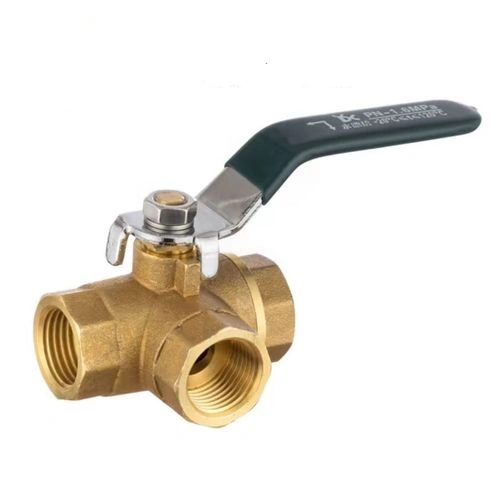
3/4″ 3-Way Brass Ball Valve – Full Port, Fast Flow Switching
3/4 inch 3-way brass ball valve with L/T-port for diverter & mixing. Full port design for low pressure drop, 1/4-turn switching for fast operation. 600 WOG rated.
Description
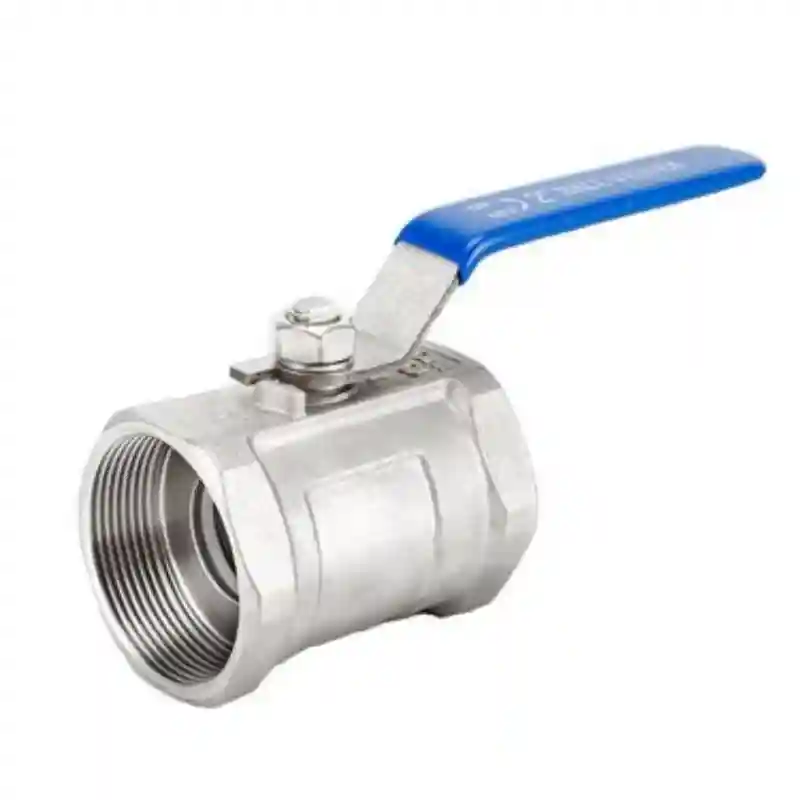
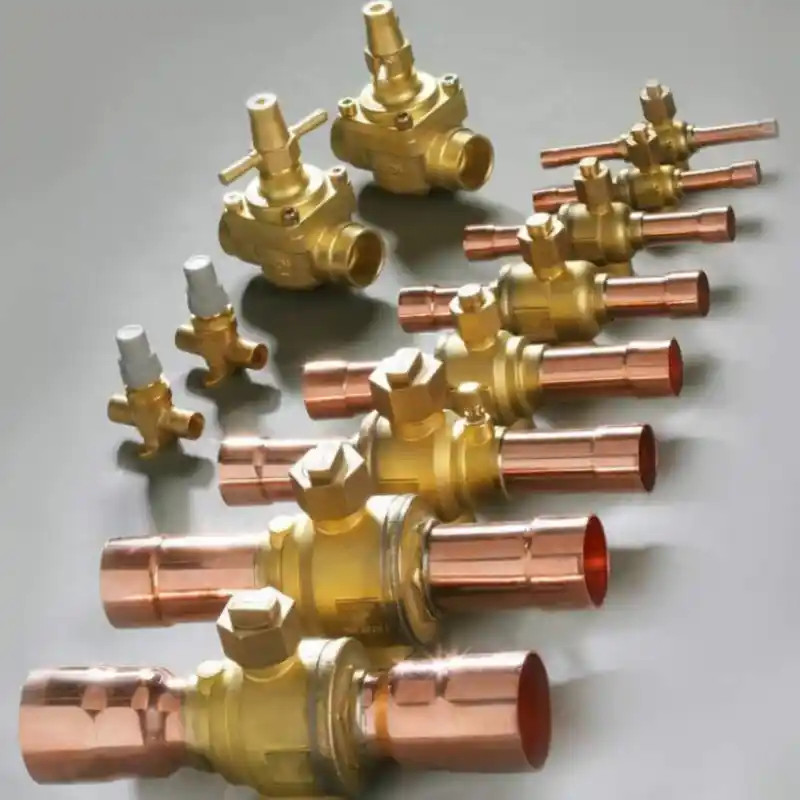
The 3/4‑inch 3‑way brass ball valve functions as a compact multi‑port control component with three flow passages. By rotating its internal ball through 90°, it diverts, mixes or switches media among separate piping branches. Internally, the ball can be configured as an L‑port for flow selection / diversion or a T‑port for media splitting / combining. Purpose‑built for applications requiring frequent flow‑path transitions, such as HVAC hot‑cold fluid switching, water‑treatment membrane backwashing, swimming‑pool filter loop adjustment and solar collector array modulation, it delivers an all‑in‑one efficient alternative to the traditional split assembly of “two separate 2‑way valves plus a tee fitting”.
Material & Specification
| Item | Parameter |
|---|---|
| Body Material | Forged brass (CW617N / ASTM B124) |
| Ball Material | Chrome‑plated brass / 304 stainless steel |
| Seat Material | PTFE |
| Seal Material | PTFE + NBR / Optional EPDM |
| Nominal Size | DN20 (3/4″) |
| End Connection | NPT / BSP female threads on all three ports |
| Ball Port Configuration | L‑port (diversion / selection) or T‑port (splitting / mixing) |
| Pressure Rating | 600 WOG (Water, Oil, Gas) |
| Temperature Range | -20°C ~ +120°C (PTFE seat) |
| Operation | Lever‑operated quarter‑turn (90°) flow‑path switching |
| Port Type | Full Port |
| Loss Coefficient (K‑value) | Near zero under fully‑open condition |
| Lever Indicator | Lever position corresponds to active flow‑path status |
| Stem Design | Blow‑out Proof |
| Design & Test Standards | MSS SP‑110 / ASME B16.34 / API 598 |
Application Scenarios
- HVAC hot‑cold water switching: cold‑hot supply‑return transition for FCU and AHU units plus seasonal energy mode adjustment.
- Water‑treatment membrane forward‑flush / back‑flush switching: flow‑path toggle between normal operation and back‑wash regeneration for UF, NF and RO membrane skids.
- Swimming‑pool & SPA water‑treatment systems: suction‑source selection and back‑wash transition for circulation filter pumps.
- Filter bypass assemblies: divert media into or out of filter loops to enable cartridge replacement without system shutdown.
- Solar thermal collector array control: reconfigure collector series‑parallel connections or toggle different heating circuits on and off.
- Residential & commercial zoned heating: loop switching for floor‑heating manifolds and mode transition for wall‑hung boilers.
- Food‑beverage and pharmaceutical CIP cleaning: divert cleaning fluid across different process tanks and pipeline branches.
Core Advantages: Low Flow Resistance & Rapid Switching
1. Low pressure drop: Full‑port geometry preserves downstream flow capacity
Conventional split setups consisting of two valves plus a tee incorporate multiple joints and flow constrictions. Media undergoes repeated direction shifts and cross‑section changes, generating substantial pressure loss. This valve adopts Full Port construction; the through bore inside the ball matches pipe inner dimensions precisely, creating minimal hydraulic resistance inside the 3‑way body. Under fully‑open or any selected‑port status, its K‑value stays nearly zero, with measured pressure drop typically below 0.5 psi.
For flow‑sensitive equipment including swimming‑pool circulation loops, HVAC terminal units and water‑treatment membrane modules, this feature guarantees hardware operates at design‑rated conditions, preventing insufficient throughput and hydraulic imbalance triggered by reduced‑bore valve designs.
2. Fast transition: Complete mode change within seconds via quarter‑turn actuation
Legacy split diversion assemblies demand sequential manual operation over two independent valves: close valve A first, then open valve B. This multi‑step workflow consumes considerable time, while incorrect operating sequence may trigger instantaneous flow cutoff or destructive pressure shock across the system.
The 3/4″ 3 way brass ball valve completes full flow‑path reconfiguration merely by rotating its lever 90° (quarter‑turn), finishing the whole transition within 2 seconds. Visual lever‑position marking clearly indicates active flow paths, removing the need to memorize complex multi‑valve operation sequences and eliminating human‑error‑driven mis‑switching risks.
Application Case: Ascott Group Singapore — Suction‑Source Switch Retrofit for Serviced‑Residence Swimming‑Pool Circulation Pump
Project Name: Singapore Ascott Serviced Residence – Swimming Pool Pump Suction Manifold Retrofit Location: Singapore
As one of the world’s leading international serviced‑apartment operators, Ascott Group manages a high‑end 38‑storey serviced residence in Singapore equipped with a 150 m³ outdoor infinity rooftop swimming pool. Its water‑circulation system runs 24‑hour continuous filtration. A circulation pump (25 m³/h flow rate, 18 m head) draws pool water and feeds it back to the pool after sand‑filter treatment.
Project Challenges
- The circulation pump suction required alternation between two intake sources: main pool floor drain and surface skimmer. Operators needed to select appropriate suction paths according to seasonal water‑quality conditions — heavy floating debris accumulates on the water surface during rainy seasons, while sediment builds up on the pool bottom in dry seasons — to optimize filtration performance.
- The original installation deployed two separate butterfly valves for each suction branch. Each switching cycle took 30‑45 seconds, requiring operators to close one valve before opening the other. Wrong sequence (opening the secondary valve prior to closing the primary) pulled air into pump suction, inducing cavitation and potentially damaging pump impellers.
- The split‑valve layout occupied substantial footprint. The rooftop mechanical room for pool equipment occupied less than 6 m² total floor area. Multiple discrete valves and fittings resulted in congested piping and narrow maintenance access.
Solution
In 2024, the property engineering team replaced the two butterfly valves plus tee fittings with a single 3/4‑inch 3‑way brass ball valve installed upstream of the pump suction inlet. Configured with an L‑port ball core, this single unit selects between floor‑drain or skimmer suction sources to complete flow‑path transition.
Project Outcomes
- Low hydraulic loss: Post‑retrofit field measurement recorded merely 0.3 psi (~2.1 kPa) pressure drop at full opening, delivering an approximate 88 % reduction versus the original 2.5 psi pressure loss from dual butterfly‑valve assembly. Pump suction pressure remained stable at its design value of 0.25 MPa; flow shortage caused by valve‑induced flow restriction no longer occurred.
- Streamlined switching: Transition time dropped from 30‑45‑second dual‑valve manipulation to under 3 seconds via single‑hand lever rotation. Facility technicians can adjust suction modes daily based on pool‑water‑quality test results without scheduling dedicated maintenance windows.
- Cavitation risk eliminated: Single‑valve transition prevents air ingress during switching. No cavitation incidents or pump failures appeared throughout 8‑month runtime, compared with 1‑2 cavitation‑related repair events per year previously caused by human operating mistakes.
- Space‑saving footprint: The integrated 3‑way ball valve cuts installation footprint by roughly 40 % compared to the former split configuration, widening service passages inside the mechanical room and simplifying future maintenance work.
Ascott Singapore property engineering manager commented: “The low‑pressure‑drop characteristics of the 3/4‑inch 3‑way brass ball valve allow our pool circulation pump to operate at its optimal performance point. Its 3‑second fast‑switch capability encourages our staff to adjust suction modes flexibly responding to real‑time water‑quality readings. Both improvements have noticeably lifted overall pool‑water‑management efficiency.”