
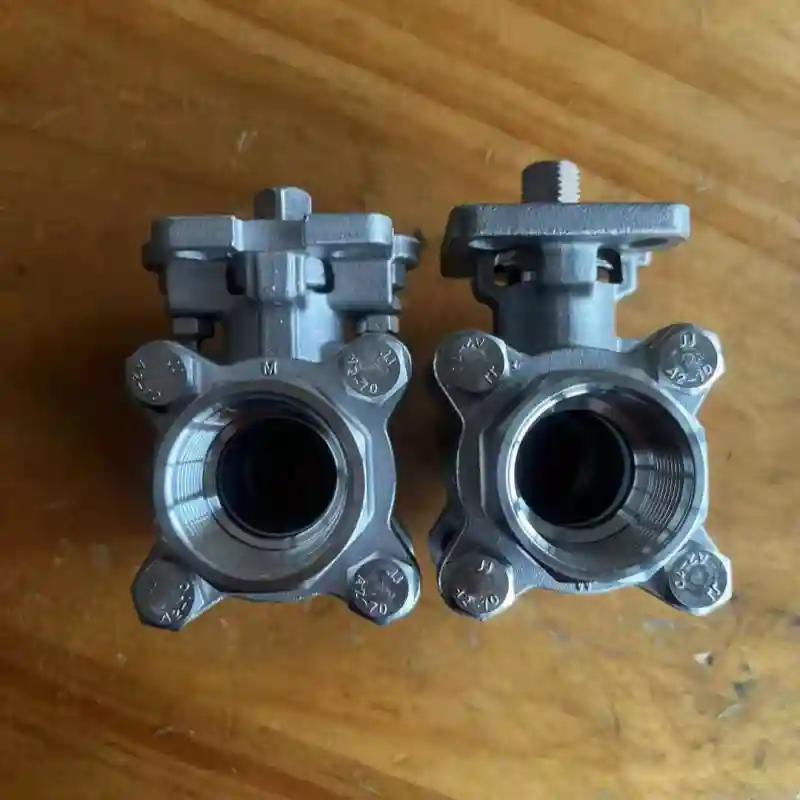
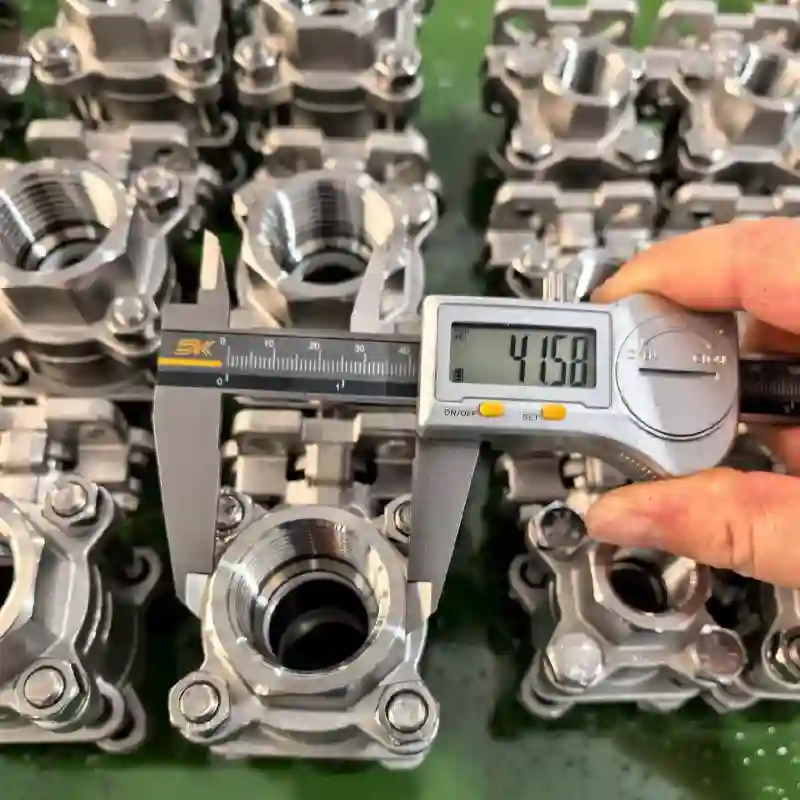
3 Piece Design Ball Valve – Floating Type for In-Line Maintenance
3 piece design ball valve with floating type construction for in-line seat replacement without unpiping. Available in stainless steel 316L, butt weld / flanged ends.
Description
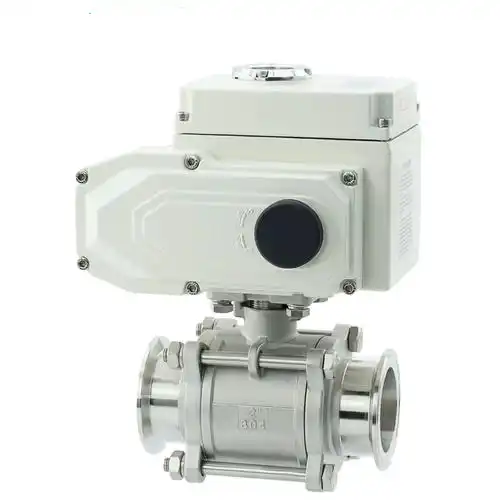
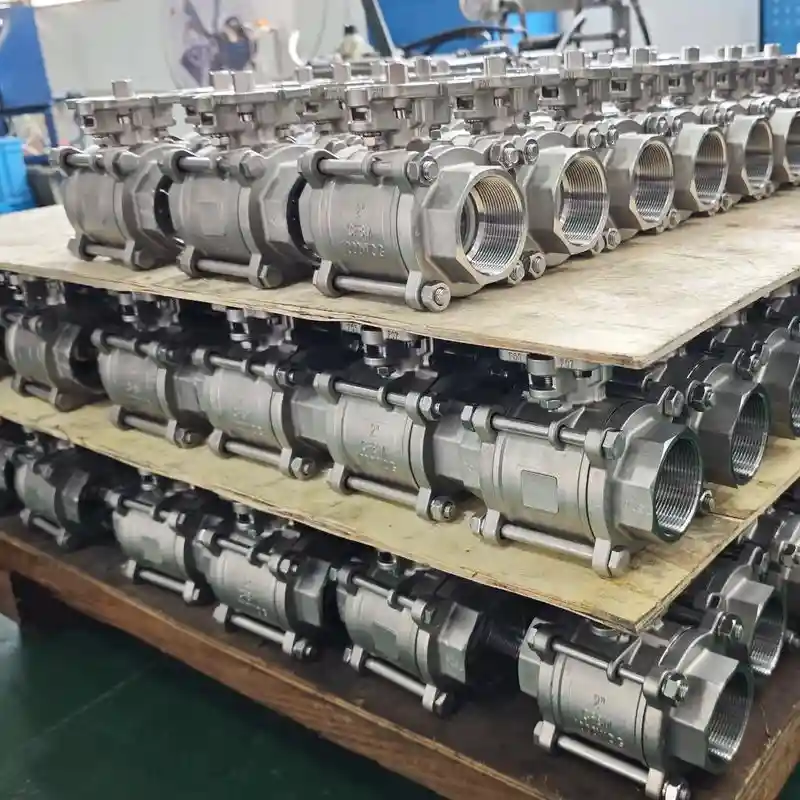
A 3 piece design ball valve comprises three standalone segments: left‑hand body, central body and right‑hand body, securely fastened by bolts. The ball and valve seats are housed inside the central‑body cavity. Stem actuation rotates the ball through 90° to block or enable media flow. Once the bolts on both sides are loosened, the central‑body assembly together with ball and seats can be axially pulled out from the piping. Seal renewal can be accomplished without removing the full valve assembly from the line.
For welded piping systems, this construction eliminates pipe cutting and subsequent re‑welding work entirely. On flanged pipelines, it removes cumbersome steps including flange decoupling, heavy‑lifting of the complete valve, flange gasket replacement and realignment. Thanks to this architecture, single seat‑replacement cycles are shortened from several hours under conventional schemes to less than one hour.
Materials and Specifications
| Parameter Item | Specification Range |
|---|---|
| Valve Body Material | WCB (Carbon Steel) / CF8 (304) / CF8M (316) / 316L / 2205 Duplex Stainless Steel / Alloy 20 |
| Ball Material | Body‑matching grade / 316L / Stellite hard‑faced overlay |
| Stem Material | 316L / 17‑4PH / Monel alloy |
| Seat Material | PTFE / RPTFE / TFM / PEEK / Metal seat with Stellite hard‑faced overlay |
| Nominal Size | DN15 ~ DN600 (1/2″ ~ 24″) |
| Pressure Class | Class 150 / 300 / 600 / 900 / 1500 / 2500 |
| Body Style | floating type — DN ≤ 200 / Class ≤ 600; trunnion mounted — DN ≥ 250 / Class ≥ 900 |
| End Connection Types | Flanged (ASME B16.5 / EN 1092‑1) / butt weld / socket‑welded / threaded (NPT/BSPT) / Tri‑Clamp |
| Face‑to‑Face Standard | ASME B16.10 / EN 558 |
| Fire‑Safe Design | API 607 / ISO 10497 (optional) |
| Anti‑Static Feature | Standard anti‑static assembly fitted between stem and ball |
| Actuator Mounting Pad | ISO 5211 direct‑mount platform (F03/F05/F07/F10/F12) |
| Fugitive Emission Performance | ISO 15848‑1 (optional) |
| Internal Surface Treatment | As‑cast / mechanical polishing / electropolishing (sanitary grade) / pickling‑passivation |
| Material Certificates | EN 10204 3.1 / 3.2 (available upon request) |
Structural Highlight: On‑Line Maintenance
The core merit of the ball valve three piece design lies in its extractable central‑body cartridge. The on‑site service procedure is outlined below:
- Isolate and depressurise: Close upstream and downstream isolation valves and vent residual pressure trapped within the valve cavity.
- Loosen fasteners: Release the bolts connecting the central body to left‑ and right‑hand bodies.
- Extract central cartridge: Pull the full central‑body unit inclusive of ball and seats out along the pipe axis.
- Renew internal components: Clean the ball, replace worn seats and gaskets at a service workbench.
- Reassemble: Slide the cartridge back into position and torque the connecting bolts.
Throughout servicing, the left‑hand and right‑hand bodies remain permanently coupled to process piping. No weld cutting is required for welded circuits; flange disconnection is unnecessary for flanged installations. For identical nominal sizes, labour consumption for one seat replacement on a 3‑piece unit accounts for merely 30%‑40% of the workload involved in full‑valve disassembly and repair for 2‑piece alternatives.
Application Sectors
- Coatings & ink manufacturing: Pipelines carrying pigment slurries, resins and solvents with solid particulates or high viscosity, where seats suffer abrasive wear and require periodic renewal.
- Food & beverage processing: Lines transporting syrups, fruit juices, dairy products and other viscous or particle‑laden media requiring regular cavity cleaning.
- Pharmaceutical & biotechnology: Distribution networks for sterile active pharmaceutical ingredients, Water‑for‑Injection and Purified Water, demanding scheduled seat and seal replacement.
- Fine‑chemical production: Service for scaling‑prone or seat‑aggressive media such as polymers, surfactants and adhesives.
- Petrochemical & energy industries: High‑temperature high‑pressure steam, H₂S‑containing sour fluids and high‑pressure natural‑gas pipelines (trunnion‑mounted plus metal seats are generally specified).
Field Application Case
Within the water‑borne acrylic‑coating tinting section at AkzoNobel AB (Carlshällsvägen 1, 291 22 Kristianstad, Sweden), 316L stainless‑steel 3 piece design ball valves with butt weld ends were installed as shut‑off devices for pigment‑slurry transfer piping. Units are DN50 at Class 150 pressure rating, fitted with RPTFE seats, deployed to isolate individual pigment‑slurry tanks during colour‑formula change‑overs.
Abrasive particles including titanium dioxide and iron‑oxide pigments are suspended inside these water‑based coating streams. After 12‑18 months of continuous operation, progressive wear occurs across RPTFE sealing surfaces, giving rise to cross‑contamination and colour bleeding between different pigment batches when valves are closed. The relevant process piping adopts fully‑welded pickled‑passivated stainless‑steel construction. If 2‑piece ball valves had been selected, every seat replacement would require plasma cutting of weld seams, full‑valve removal, off‑workshop disassembly for RPTFE seat renewal, followed by re‑welding onto the pipeline. Such maintenance entails hot‑work permits, post‑weld penetrant testing and repeated pickling‑passivation for piping, often resulting in over 8 hours of total downtime per repair event.
The on‑line‑serviceable architecture of the ball valve 3 piece design resolves this maintenance bottleneck. While welded pipework stays intact, site technicians simply loosen connecting bolts on both sides, extract the central‑body assembly with ball and RPTFE seats, perform seat swap and ball cleaning at the workshop, then re‑insert and torque the cartridge. No pipe cutting‑welding operations, hot‑work permits, weld inspection or re‑passivation of piping are needed. According to three‑year on‑site maintenance records, zero unplanned outages triggered by seat degradation have occurred within the tinting area. All seat‑swap activities are completed within scheduled monthly maintenance windows; practical on‑site RPTFE‑replacement duration averages around one hour. Site plant engineers noted in internal maintenance bulletins that the three‑piece layout makes preventive valve servicing feasible without disrupting tinting production schedules.