










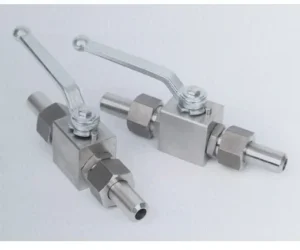
90 Degree Brass Ball Valve – Space-Saving Angle Shutoff for Tight Installations

Shop 90 degree brass ball valve for tight spaces. Combines elbow & shutoff in one compact body. Saves space & reduces installation cost. Ideal for water heaters, faucets & more.

Description

During plumbing installation, when water‑supply pipes extend out from walls while equipment ports sit in vertical orientation, installers conventionally fit a 90‑degree elbow to alter flow direction, followed by a straight‑through ball valve for shut‑off duties. The 90 degree brass ball valve merges these two separate components into a single unit, accomplishing both flow deflection and media isolation within one integrated body. Its compact footprint makes it ideal for space‑constrained connection points such as water‑heater inlet and outlet ports, toilet angle stops, basin water‑supply connections, wall‑hung boiler joints and machine equipment interfaces.

Space‑Saving: Optimized for Compact Installation Conditions

The most distinct merit of the 90‑degree brass ball valve lies in its integrated construction that drastically cuts installation footprint. A traditional “elbow plus straight ball valve” assembly combines two discrete fittings; its overall dimension equals the sum of individual component lengths plus intermediate connection sections. By contrast, this angle‑type ball valve has the elbow‑shaped flow passage cast directly into its body, yielding much reduced overall depth and height. For confined spots behind appliances, inside wall cabinets and along wall corners, it delivers several inches of extra installation clearance. For depth‑sensitive applications like water‑heater fitting, such space savings often determine whether equipment can be mounted without wall or cabinet modification.

Lower Installation Expense: Fewer Parts, Faster Assembly and Reduced Leak Risks

The one‑piece 90‑degree ball valve also brings tangible gains in assembly efficiency and system dependability. Conventional set‑ups assemble separate elbows and ball valves, creating a minimum of four connection joints. This angle‑style valve only requires two connection interfaces. Every eliminated fitting and paired joints shortens field‑assembly time, cuts sealing‑material consumption and removes two potential leakage points. When hundreds of pieces are deployed across large‑scale residential or commercial developments, such efficiency improvements produce considerable cumulative benefits.

From an operational perspective, it is equipped with a 1/4 turn brass ball valve handle. Full opening or closing is achieved merely through a 90‑degree rotation, offering clear visual status indication. Compared with multi‑turn gate‑valve operation, commissioning and routine maintenance work become far more efficient.

Material & Specifications

Fabricated from high‑strength forged brass complying with ASTM B124, the valve features a fluid‑dynamically optimized 90‑degree internal flow path with smooth transitions to maintain low‑pressure drop. Reinforced PTFE sealing components guarantee low‑torque actuation and long‑term sealing performance.

Item Specification
Construction 90‑degree angle pattern, one‑piece forged brass body
Sizes 1/2″, 3/4″, 1″ (NPT female thread / compression ends)
Pressure Rating 400 WOG / 125 WSP
Compatible Media Water, Oil, Gas
Operating Temperature -20°F to 250°F
Flow Direction Horizontal‑in / Vertical‑out (standard); Vertical‑in / Horizontal‑out optional
Handle Type Galvanized‑steel handle with memory‑stop function
Seat Seal Reinforced PTFE
Certification NSF/ANSI 61 potable‑water certification

Typical Applications

‑ Water‑heater installations: cold‑hot inlet‑outlet connections for gas‑fired, electric and tank‑less water heaters, delivering 90‑direction transition between wall‑mounted supply piping and appliance ports. ‑ Sanitary ware angle stops: wall‑mounted supply connections for toilets, wash basins and bidets, redirecting horizontal pipe flow vertically for hose hook‑ups. ‑ Wall‑hung boilers & radiators: compact isolation valves for supply‑return circuits of wall‑hung heating units and radiators. ‑ Machinery interfaces: space‑saving piping connections for air compressors, water pumps and commercial kitchen equipment. ‑ Instrument impulse lines: compact combined shut‑off and direction‑change fittings for pressure‑gauge and thermometer sensing piping.

Project Reference

A full renovation project took place at The Pearl, a 40‑storey high‑end residential tower in New York City, where tank‑less gas‑fired water heaters were retrofitted across all 348 dwelling units. Each unit’s heater was housed inside custom kitchen or bathroom cabinets, leaving merely 4‑inch clearance between wall‑protruding supply pipes and appliance inlet ports.

Plumbing contractors initially planned to adopt the conventional “elbow plus straight ball valve” solution. On‑site measurement revealed this combination demanded a minimum of 6‑inch clearance to accommodate two fittings plus intermediate joints. Installation within existing cabinet depth proved impossible, and cabinet rework would incur tens of thousands of extra construction costs.

The final solution adopted 90 degree brass ball valve supplied by CHCV. Its integrated angle‑type design consolidates elbow and valve functions, bringing overall installation depth down to only 2.5 inches, so retrofitting proceeded without cabinet alterations. Assembly time for each water‑heater unit dropped from 45 minutes to 28 minutes, saving nearly 100 man‑hours across all 348 apartments. Moreover, two threaded joints were eliminated per unit, removing a total of 696 potential leak paths throughout the building and lowering after‑sales maintenance expenditure. In the construction summary report, the general contractor highlighted selecting this valve as “one of the key decisions for cost control and schedule assurance for this project”.

Certifications & Industry Standards

CHCV 90‑degree brass ball valves comply with ASME B16.18 and B16.10 standards. Bodies hold NSF/ANSI 61 potable‑water approval, making them suitable for residential and commercial potable‑water plumbing networks. Every unit undergoes 100 % factory air and hydrostatic leak testing to validate sealing integrity and operational service life.