









1PC Ball Valve – One-Piece Threaded Ball Valve 1000WOG for Instrumentation
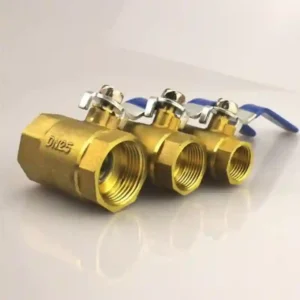
1PC ball valve with one-piece body, zero body joint leakage, low-cost solution for instrumentation, pneumatic, and lubrication lines. Available in SS304, SS316, brass.
Description
A 1‑piece ball valve features a valve body machined directly from a single‑piece casting or forging. Its ball component is inserted through one end of the body and secured by a threaded end cap, leaving no detachable body joints across the complete valve assembly. The stem drives the ball to rotate 90°, enabling pipeline opening and shut‑off. Among all ball‑valve categories, the 1‑piece variant delivers the simplest component layout and shortest assembly workflow.
Unlike 2‑piece and 3‑piece ball valves, the 1‑piece design contains no mid‑body assembly joints. This structural trait removes one potential external leakage path, limiting medium escape risks solely to end‑of‑pipeline connection interfaces. Suited for small‑bore, low‑pressure, non‑critical shut‑off duties such as instrument impulse lines, pneumatic circuits and lubrication networks, it delivers dependable on‑off performance with minimal procurement expense and compact footprint. Since its monolithic body cannot be disassembled for servicing, the whole valve must be replaced once seats or the ball suffer wear — this functional limitation shall be taken into full account during component selection.
Materials and Specifications
| Parameter Item | Specification Range |
|---|---|
| Valve Body Material | 304 Stainless Steel (CF8) / 316 Stainless Steel (CF8M) / Brass (CW617N) |
| Ball Material | 304 / 316 Stainless Steel |
| Stem Material | 304 / 316 Stainless Steel |
| Seat Material | PTFE / RPTFE |
| Nominal Size | DN6 ~ DN50 (1/8″ ~ 2″) |
| Pressure Rating | 600 WOG / 1pc ball valve 1000wog |
| End Connection | Female Thread (NPT / BSPP / BSPT) |
| Face‑to‑Face Dimension | Short pattern, per manufacturer’s standard dimensions |
| Operating Temperature | ‑20 ℃ ~ 180 ℃ (PTFE seat) |
| Body Construction | One‑piece forged / cast construction |
| Surface Finish | Pickling & passivation (stainless‑steel versions); nickel‑plated or natural finish (brass variants) |
| Handle Type | Zinc‑coated steel handle / stainless‑steel handle / aluminium handle |
| Anti‑Blow‑Out Stem | Standard configuration |
Structural Advantages: Reduced Leak Points & Cost‑Efficiency
Built as a joint‑free monolithic body, the ball valve 1 piece eliminates mid‑body sealing joints commonly seen on 2‑piece and 3‑piece alternatives. For shut‑off applications handling non‑hazardous media such as instrument air, compressed air and low‑pressure water‑steam mixes, this architecture minimises external leakage pathways and removes routine joint‑leakage inspection from maintenance checklists.
From an economic perspective, fewer constituent parts allow full machining of internal bores and threads in a single clamping operation. Additional procedures such as bolt tightening and gasket installation are eliminated, cutting assembly labour to roughly 60 % of that required for equivalent 2‑piece ball valves. These manufacturing‑related savings translate directly into commercial benefits: identically‑sized one piece ball valves typically cost 30‑40 % less than 2‑piece counterparts and over 50 % less than 3‑piece models. For bulk‑procurement projects covering hundreds or thousands of units, such price gaps yield substantial overall budget savings.
Note that type 1 ball valves are intended for low‑cycle‑frequency duties with mild, non‑critical process fluids. 2‑piece or 3‑piece configurations are recommended for circuits with frequent actuation, severe pressure fluctuation or hazardous‑medium service.
Typical Application Sectors
- Instrumentation & control systems: Root shut‑off valves (impulse valves) for impulse lines feeding pressure transmitters, temperature transmitters and flow meters.
- Pneumatic piping networks: Branch isolation valves linking main compressed‑air headers to pneumatic actuators and control devices.
- Centralised lubrication installations: Shut‑off valves for individual lubrication points within lubricant‑distribution manifolds.
- Laboratory and analytical instrumentation: Gas‑path switching for carrier gas and sample streams in GC, HPLC and other analytical equipment.
- Low‑pressure water supply and irrigation: Branch shut‑off points for garden irrigation and compact water‑treatment machinery.
- Fire‑protection installations: End‑of‑line test valves and drain‑isolation components for sprinkler systems.
Field Application Case
During compressed‑air‑system retrofits at the PepsiCo Guadalajara bottling plant (Av. Vallarta 6500, Guadalajara, Jalisco 45010, Mexico), 304 stainless‑steel 1‑piece ball valves were deployed as branch isolation valves between main compressed‑air headers and individual packaging‑line equipment. The facility operates eight packaging lines, each fitted with 15‑20 pneumatic actuators and control valves. In total, nearly 130 units of 1/2″ NPT 1‑piece ball valves at 600 WOG pressure rating were installed.
Located in western Mexico’s humid subtropical zone, the plant sustains relative humidity above 70 % year‑round, and trace condensate exists within compressed‑air streams. The joint‑free monolithic body of the 1‑piece ball valve prevents moisture accumulation at assembly interfaces and mitigates crevice‑corrosion risks. Compared with previously‑adopted multi‑component ball‑valve products, zero external‑leakage incidents were logged across this valve batch over an 18‑month in‑service period. Site maintenance supervisors confirmed that gasket ageing and minor fugitive‑leakage issues triggered by high ambient humidity no longer occurred with this new valve fleet.
For cost optimisation, the bottling plant standardised on 1‑piece ball valves for pneumatic‑branch isolation duties. Each unit delivers roughly 35 % procurement savings versus the former 2‑piece ball‑valve specification. Across the full population of over 130 valves, total project‑procurement expenditure was cut by more than USD 4,000. Since these valves experience low actuation cycles (no more than 20 operations annually, triggered only during production‑line changeovers or equipment maintenance), seat wear progresses far slower than overall valve service life. The non‑repairable feature exerted no adverse impact on site‑maintenance workflows. Site operational practice requires one full open‑close cycle per quarter to preserve operational flexibility. Once abnormal actuation or leakage arises, technicians replace the whole valve directly. Removal and refitting only involves loosening threaded end connections; single‑valve replacement takes less than five minutes and demands no spare sealing‑component stock, keeping overall maintenance overhead low. Since retrofit completion in 2023, production‑line downtime caused by valve malfunctions has fallen by approximately 60 %.