
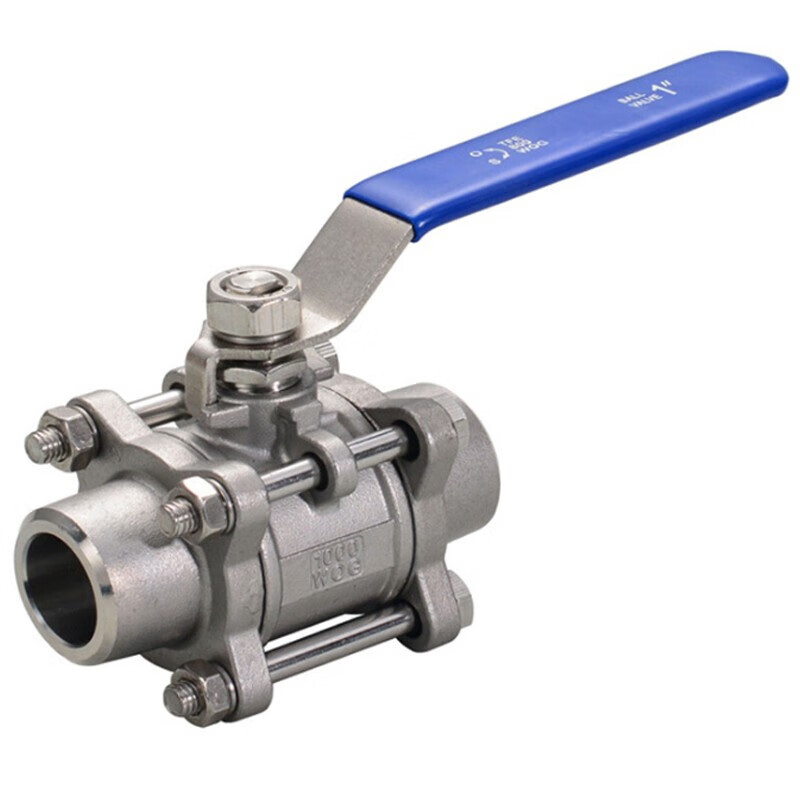
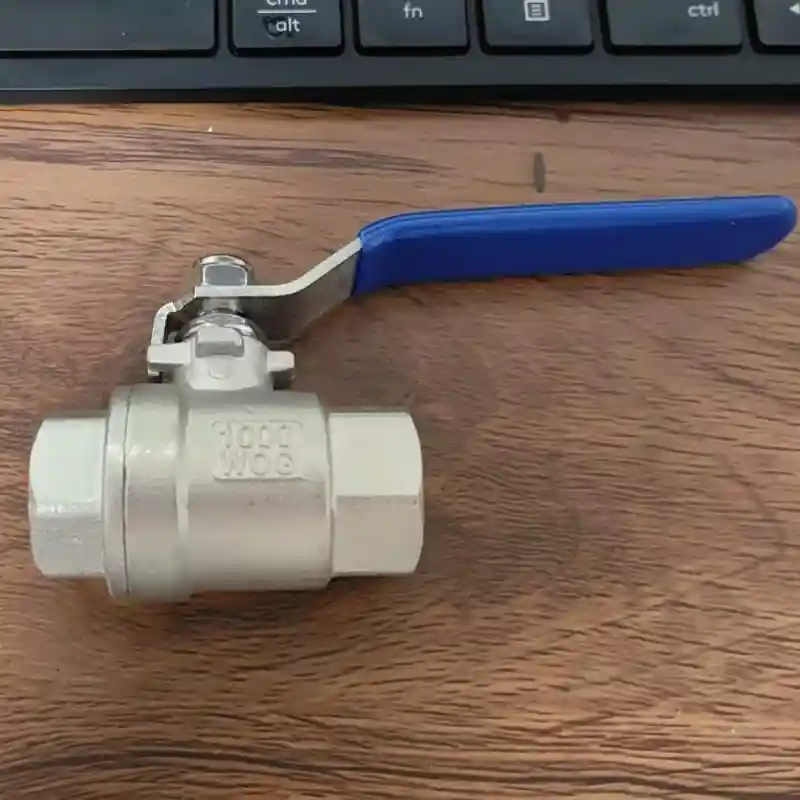
2-Piece Ball Valve – Compact Floating Design Full Port
Explore the 2-piece ball valve with floating design, reduced leakage paths, and compact dimensions. Available in threaded, socket weld, and flanged ends for industrial piping systems.
Description
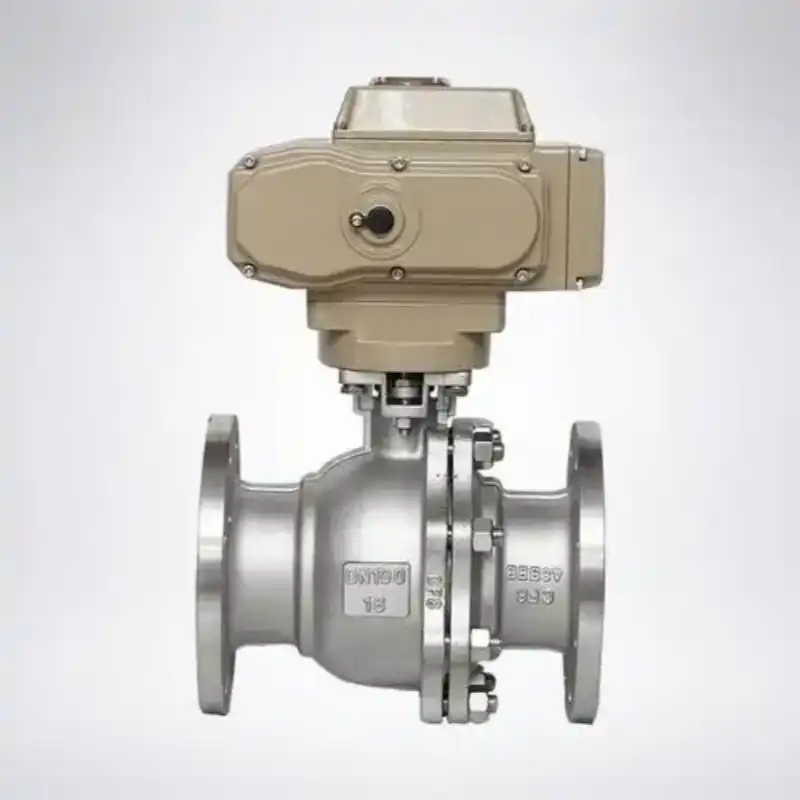
A 2‑piece ball valve consists of two assembled components: a main valve body and a bonnet, fastened together via threads or bolts. The ball and valve seat are enclosed inside the valve body.
Serving for media shut‑off and flow regulation in piping systems, it achieves fast opening and closing by rotating the stem at 90° to drive the ball. Designed to deliver demountable maintainability with minimized overall dimensions and fewer external sealing joints, the 2‑piece variant ranks among the most widely‑used shut‑off valves for industrial piping.
Materials and Specifications
Common body materials for 2‑piece ball valves:
- Carbon steel (WCB/A105): Suitable for general‑service media including water, oil and natural gas.
- Stainless steel (CF8/304, CF8M/316): Applied for mildly corrosive fluids, as well as sanitary conditions in food and pharmaceutical processing.
- Low‑temperature carbon steel (LF2): Intended for operating conditions below ‑46 °C.
Valve seat sealing components are mostly manufactured from PTFE or reinforced PTFE (RPTFE), covering temperature ranges from ‑29 °C to 180 °C. For high‑temperature or heavy‑wear service, PEEK or metal seats are available as alternatives.
End Connections and Pressure Ratings
| Parameter Item | Specification Range |
|---|---|
| Nominal Size | DN15 ~ DN300 (1/2″ ~ 12″) |
| Pressure Class | Class 150 / 300 / 600 / 1500 |
| Common Pressure Marking | 2pc ball valve 1000wog |
| End Connection Types | NPT/BSPT threaded, socket‑welded, flanged to ASME B16.5, butt‑welded |
| Face‑to‑Face Dimension Standard | ASME B16.10 (short‑pattern series) |
| Flange Standards | ASME B16.5 / EN 1092‑1 / 2pc flanged ball valve din standard |
| Seat Material | PTFE / RPTFE / PEEK / metal seat |
| Operating Temperature | ‑46 °C ~ 260 °C (subject to seat material) |
| Anti‑Static Feature | Standard stem anti‑static assembly |
| Mounting Platform | 2pc ball valve thread end iso 5211 (optional, for pneumatic or electric actuator mounting) |
Structural Advantages: Fewer Leak‑Points and Compact Footprint
The 2‑piece construction creates merely one primary sealing joint between the main body and bonnet. Compared with 3‑piece ball valves which feature two sealing interfaces, it cuts potential external leakage paths by half and mitigates the risk of medium escape.
Its face‑to‑face dimension complies with the ASME B16.10 short‑pattern standard, around 12%‑15% shorter than equivalent 3‑piece ball valves. This compact profile simplifies piping layout and reduces support modification costs for projects constrained by narrow pipe‑rack space or limited equipment‑floor headroom.
Typical Applications
- Utility piping for circulating water, compressed air and steam condensate inside refinery and petrochemical facilities.
- Medium‑low pressure chemical transfer pipelines in chemical plants.
- Gas shut‑off for city gas gate stations and pressure regulating skids.
- Chilled‑ and cooling‑water circuits for refrigeration plants, data centres and district cooling networks.
- Auxiliary piping for air compressor stations and hydraulic power units.
Application Case
At the Changi Airport District Cooling Plant, Singapore, 2‑piece flanged full‑port ball valves (DN80 to DN200, Class 150) were installed as isolation valves on discharge pipelines of primary chilled‑water pumps. With equipment‑floor headroom restricted to only 2.6 m, pipes were arranged in double‑stacked layers with very limited vertical clearance. Thanks to the short face‑to‑face length of type 2 ball valves, old valves could be replaced directly without reworking pipe supports. Since commissioning in 2019, zero joint leakage has been recorded for these installed valves, proving long‑term sealing reliability of this structural design.
Sizing Selection Guidance
During procurement, many buyers compare 2 piece ball valve vs 3 piece ball valve. General selection guidelines are as follows: The 2‑piece design offers cost benefits when valves can be fully removed from flanged or threaded pipelines and routine maintenance is anticipated.
Select a 3‑piece ball valve for fully welded piping where valve removal entails high labour expense and in‑situ replacement of internal trim is required. For most general‑purpose industrial piping, 2‑piece ball valves satisfy standard shut‑off performance and routine maintenance requirements.