








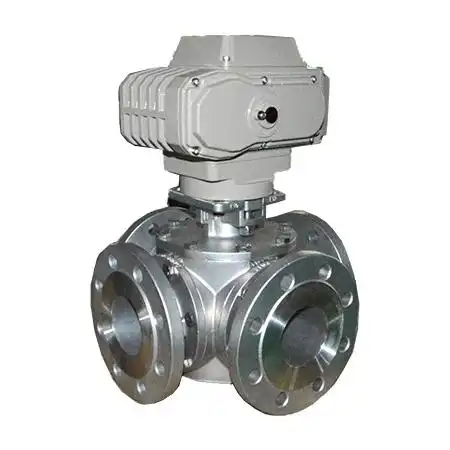
Stainless Steel Three Way Ball Valve – SS316 Sanitary L/T Port

Stainless steel three way ball valve in SS316L, L-port and T-port designs for flow switching and mixing. Full port, electropolished surface, PTFE seats. FDA compliant for sanitary and corrosive media applications.

Description

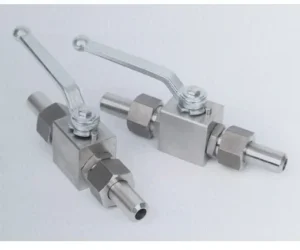
Three‑way ball valve stainless steel refers to multi‑port ball valves constructed entirely from stainless‑steel components. Flow direction switching, media diversion and flow convergence are realised by rotating its internal ball element. Stainless‑steel grades such as CF8M / 316L deliver superior corrosion resistance, high mechanical strength and hygienic properties, making this valve type widely adopted within food‑beverage, pharmaceutical‑biotech, chemical processing and water‑treatment sectors.
Compared with conventional three‑way ball valves built from brass or carbon steel, stainless‑steel variants (particularly 316L) bring distinct operational advantages. Chromium (Cr) and molybdenum (Mo) in their metallurgy form a dense chromium‑oxide passivation layer on metal surfaces, offering reliable defence against acids, alkalis, salts and chloride‑rich fluids.
When paired with electropolished surface finishes, the hardware inhibits microbial colonisation and particle adhesion, satisfying stringent sanitary requirements for food‑grade and pharmaceutical processing. Furthermore, one three‑way ball valve stainless steel can replace the traditional assembly of two 2‑way ball valves plus three T‑fittings, cutting potential leak points from above six down to 2‑3.

Sanitary and Anti‑Corrosive Design Features

The valve’s hygienic performance and corrosion resilience stem from targeted design configurations:
  • Corrosion‑resistant SS316L construction: Valve bodies, balls and major wetted internals are manufactured to ASTM A351 CF8M (316L) specification. Molybdenum alloying improves resistance to chloride‑induced pitting and crevice corrosion, delivering stable service in saline, acidic and alkaline process fluids. The stainless‑steel substrate avoids rust formation and harmful metallic‑ion leaching, preserving product purity.
  • Sanitary surface finishing: Wetted surfaces undergo mechanical polishing followed by electropolishing, achieving surface roughness down to Ra ≤ 0.4 μm (Ra ≤ 0.8 μm available as an alternative option). Ultra‑smooth surfaces minimise microbial attachment and proliferation while reducing hard‑to‑clean crevices. The hardware complies with FDA 21 CFR 177.1550 for food‑contact materials and meets ASME BPE sanitary engineering standards.
  • Optional crevice‑free configuration: Optimised internal flow‑path geometry eliminates residual‑media dead zones. Complete drainage and cleaning are achieved throughout CIP/SIP cycles, effectively preventing cross‑contamination between production batches.
  • SIP‑capable PEEK seats: PEEK seat material withstands repeated steam‑in‑place sterilisation cycles between 121°C and 135°C without thermal deformation, sustaining long‑term sealing integrity for sterile pharmaceutical and bioprocess workflows.

Valve Specifications and Technical Parameters

Parameter Specification Details
Nominal Size 1/4″ ~ 6″ (DN8 ~ DN150)
End Connection Tri‑Clamp sanitary clamp / NPT thread / BSP thread / Flange (ANSI/EN)
Pressure Rating 600 PSI WOG / 300 PSI Steam (stainless‑steel body)
Temperature Range -20°C ~ 180°C (PTFE seat); -46°C ~ 250°C (optional PEEK seat)
Flow Path Type L‑Port (flow switching) / T‑Port (mixing & diversion)
Body Material CF8M (316L) stainless steel / CF8 (304) stainless steel
Ball Material 316L stainless steel
Seat Material Reinforced PTFE / PEEK
Surface Treatment Mechanical polish / Electropolish (Ra ≤ 0.8 μm / ≤ 0.4 μm)
Actuation Manual lever / Pneumatic actuator / Electric actuator
Certifications FDA 21 CFR 177.1550 / ASME BPE / 3‑A Sanitary Standards (optional)

Flow‑Path Selection Guidance

  • L‑Port: Engineered for switching a single incoming stream toward one of two separate outlet lines. Typical applications include sequential rerouting of CIP cleaning fluid across processing equipment and directed delivery of sterile media to individual reactors.
  • T‑Port: Suited for merging two incoming streams into one outlet, or splitting one feed stream into two discharge branches. Common use‑cases comprise blending of multi‑formulation process materials and distributing finished product across multiple filling lines.

Typical Application Scenarios

ss three way ball valve finds extensive deployment across industries with strict hygiene and corrosion‑control requirements:
  • Food & Beverage Processing: Sequential conveyance of cleaning solutions within CIP circuits, batch‑wise flow redirection across product piping, and stream splitting for filling lines. Stainless‑steel construction resists corrosive cleaning chemicals and satisfies FDA food‑contact requirements.
  • Pharmaceuticals & Bioengineering: Flow switching for sterile media transfer, feed‑line modulation for reactor vessels, and redirection of cell‑culture fluids. 316L hardware combined with electropolished finishes fulfils GMP and ASME BPE sanitary design criteria.
  • Fine Chemicals: Pipeline switching for corrosive process fluids including acids, alkalis and organic solvents, leveraging stainless‑steel resistance to diverse chemical environments.
  • Desalination & Offshore Engineering: Flow regulation for seawater cooling loops and ballast‑water treatment systems. Molybdenum‑bearing 316L mitigates chloride‑driven pitting triggered by seawater exposure.

Field Application Reference

Case 7 documents a sauce‑production upgrade project at a Sara Lee Corporation food‑processing plant located in Illinois, USA. The facility required reliable switching for multi‑formulation sauces containing acidic ingredients such as tomato paste and vinegar across different filling stations. The application demanded corrosion resistance while minimising product hold‑up and inter‑batch cross‑contamination.
The project implemented three‑way ball valve stainless steel with T‑Port geometry, 316L stainless‑steel body, Tri‑Clamp sanitary connections, full‑port bore, electropolished finish at Ra ≤ 0.8 μm and PTFE seats. The 316L alloy withstands organic acids present in tomato‑based sauces, whereas electropolished wetted surfaces prevent solid‑particle entrapment and residual sauce build‑up, eliminating cross‑contamination between batches. Full‑port internal geometry enables unobstructed passage of high‑viscosity sauce (~2,000 cP) without introducing excessive pressure drop.
Following commissioning, water consumption for inter‑batch flushing fell by roughly 30 %, and production change‑over efficiency improved substantially. Flavour cross‑contamination stemming from residual product carry‑over was fully eliminated. This valve solution has since been adopted as the standard switching hardware for sauce processing lines across multiple Sara Lee food manufacturing sites throughout North America.

Quality Assurance

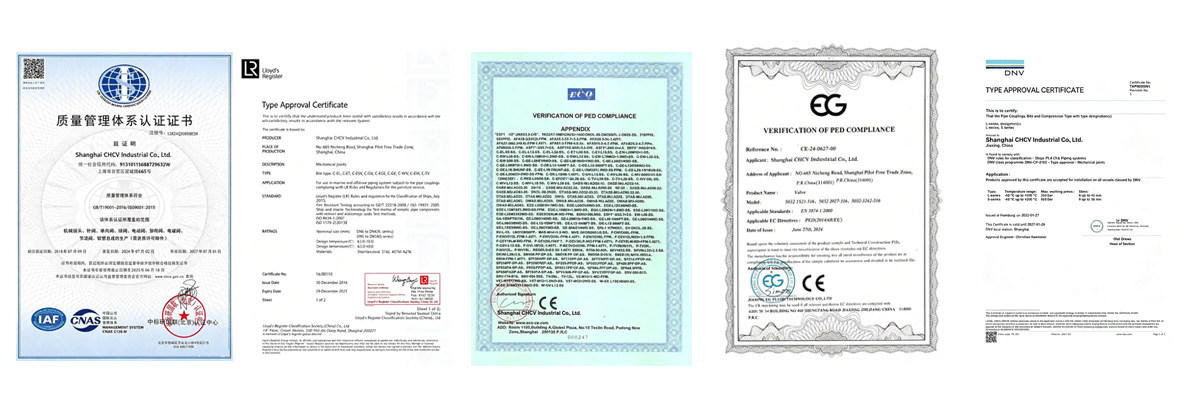
CHCV three‑way ball valve stainless steel is manufactured and tested in compliance with ASME B16.34 under the ISO 9001 quality‑management framework. Sanitary‑grade units satisfy FDA 21 CFR 177.1550 requirements for food‑grade PTFE seats, with surface‑finishing documentation and material traceability available per ASME BPE upon request. Every valve undergoes mandatory 100 % hydrostatic shell strength testing plus bi‑directional seat tightness inspection conforming to API 598 prior to dispatch. Complete EN 10204 3.1 material certificates and full test reports are supplied alongside each shipment.