
1. Introduction: Why Focus on the 2″ Full Port Ball Valve
In industrial piping, water treatment, HVAC and irrigation systems, the 2″ full port ball valve is a very common control component.
The full port design means the internal bore diameter of the valve is basically consistent with the pipe inner diameter. Fluid passes through with low resistance and low pressure drop, which is especially suitable for applications requiring high flow rates or sensitive to pressure drop.
However, faced with various materials, structures and connection types on the market, many people get confused: should I choose stainless steel or brass? How to read the Cv value? How to measure dimensions? Which is more suitable, threaded or welded ends?
This article will clarify your selection ideas from several aspects: material, flow coefficient, dimensions, connection type and price.
2. What is a Full Port Ball Valve? What Does 2 Inch Mean?
“Full port” refers to a ball valve whose internal ball bore diameter is the same as or very close to the pipe inner diameter. When the valve is fully open, the fluid encounters almost no extra obstruction, resulting in extremely low pressure drop. In contrast, reduced port ball valves have lower costs but narrower bores, which cause obvious pressure loss.
2 inch (approx. DN50) is a common medium size, widely used in water treatment equipment, industrial cooling water, main HVAC pipelines and agricultural irrigation. When selecting this size, you cannot only look at the dimension, but also comprehensively consider the Cv value, material, pressure class and connection type.
3. Material & Construction: 304 Stainless Steel vs Brass
Material directly determines the corrosion resistance, strength and service life of the valve.
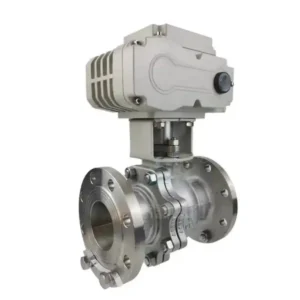
2-piece 304 stainless steel If your conveyed medium is somewhat corrosive, or the valve is installed outdoors or in humid environments, a 2-piece 304 stainless steel material will be a good choice.
A combination such as 2″ full port ball valve 2 piece 304 stainless steel retains the low pressure drop advantage of full port design. Meanwhile, the 2-piece structure facilitates maintenance and replacement of internal parts in the future. Stainless steel ball valves (2 inch ball valve Stainless Steel) feature high overall strength, yet their price is usually higher than brass.
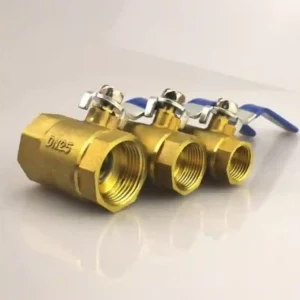
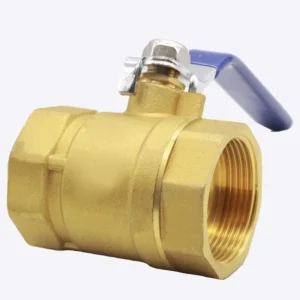
Brass material Brass ball valves have lower costs and are suitable for water, HVAC and general civil pipelines. Threaded brass ball valves, namely 2″ Brass Ball Valve threaded, are easy to install and widely applied. Nevertheless, brass has poorer corrosion resistance and strength than stainless steel, so caution is required under corrosive media, high temperature or high pressure working conditions.
Selection Recommendations
- Strongly corrosive medium, outdoor or industrial environment: prioritize 304 stainless steel.
- Limited budget, mild medium, civil or commercial water supply: threaded brass ball valves are more economical.
- Frequent disassembly and maintenance required: 2-piece structure is more convenient than 1-piece.
4. Cv Value: How Flow Coefficient Affects Valve Selection
The Cv value (flow coefficient) is a key parameter to measure the flow capacity of a valve. It is defined as: with the valve fully open, the US gallons per minute (GPM) of 60°F water passing through when the differential pressure across the valve is 1 psi. The higher the Cv value, the stronger the flow capacity and the lower the pressure drop.
For a 2″ full port ball valve cv, thanks to the full port design, its Cv value is normally much higher than that of a reduced port ball valve of the same size. The specific value varies by brand and model and can generally be found in the manufacturer’s selection manual.
For comparison, the 1/2″ full port ball valve cv is obviously much smaller because a smaller bore brings a smaller flow area.
When selecting, do not only refer to the nominal size. Instead, calculate the required Cv based on actual flow rate, allowable pressure drop and medium density. If the selected Cv is too low, the valve will become a bottleneck of the system; if too high, it may lead to degraded regulation accuracy and unnecessary cost waste.
5. Dimensions & Installation Space: 2″ Full Port Ball Valve Dimensions
Before installation, you must check the 2″ full port ball valve dimensions, mainly including:
- Face-to-face length
- Overall valve height
- Handle length and space required for rotation
- Port connection size (thread specification or weld end outer diameter)
Valve dimensions may differ among brands and connection types. For example, face-to-face lengths differ between threaded and welded ends. If the pipe spacing is already fixed, wrong dimension selection will result in failed installation. Besides, you need to reserve space for handle operation and future maintenance.
6. Connection Types: Threaded, Welded/Sweat, Test Port
The connection type determines installation difficulty, sealing performance and maintainability.
Threaded connection 2″ Ball Valve Threaded is one of the most common connection types. It allows easy installation and disassembly, suitable for occasions requiring frequent repair or replacement. Brass ball valves with threaded ends (2″ Brass Ball Valve threaded) are especially common in civil and commercial piping.
Welded / Sweat connection 2″ brass ball valve sweat refers to brass ball valves adopting sweat connection. This connection delivers good sealing performance and fits fixed piping systems, yet it is hard to disassemble after installation. Stainless steel valves also often use welded connections.
With test port 2 inch ball valve with test port has an additional test port on the valve body, which can be used for pressure detection, sampling, flushing or air venting. If you need to monitor system status or perform maintenance, a ball valve with test port will be more convenient.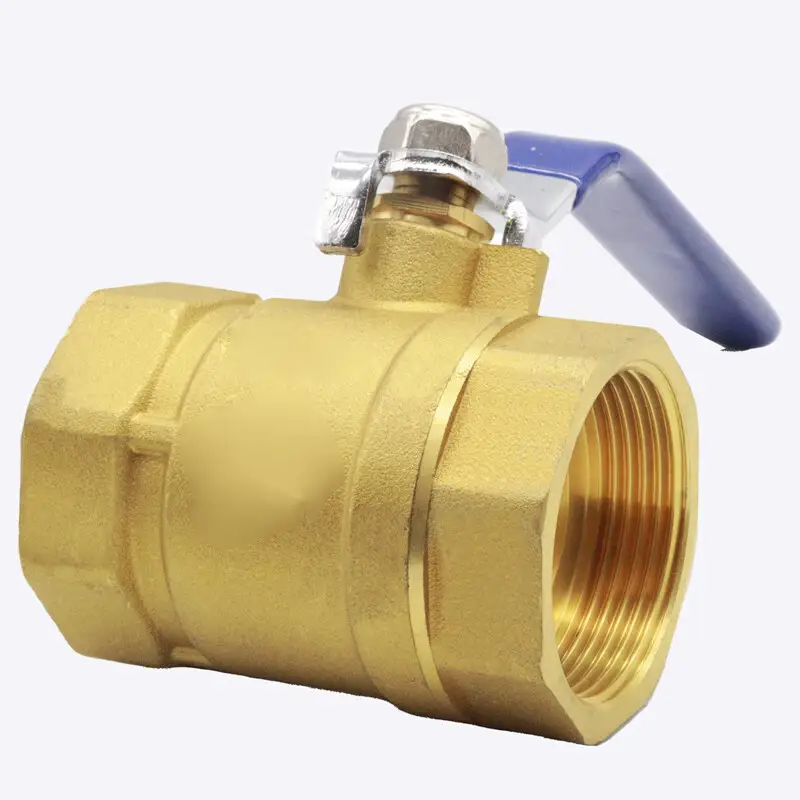
Selection Recommendations
- Frequent disassembly required: choose threaded connection.
- Long-term fixed installation with zero leakage requirement: choose welded or sweat connection.
- Pressure detection or sampling needed: consider models with test port.
7. Price & Budget: What Is the Difference Between Brass and Stainless Steel
The 2 inch Brass Ball Valve Price is affected by copper price, processing cost, brand and certifications. It is usually cheaper than stainless steel valves. However, brass valves may have shorter service life in corrosive environments, so the long-term replacement cost may not be low.
Stainless steel valves have a higher initial procurement cost, but feature good corrosion resistance and strength. Under harsh working conditions, their total cost of ownership may be lower. 2-piece structures are generally more expensive than 1-piece ones, yet easier to maintain. It is recommended not to only look at the purchase price, but also consider installation cost, maintenance frequency and downtime loss.
8. Frequently Asked Questions FAQ
Q: What is the difference between full port and reduced port ball valves? A: Full port has a bore inner diameter close to the pipe, with low pressure drop; reduced port has a narrower bore, lower cost but higher pressure drop.
Q: What is the typical Cv value for a 2″ full port ball valve? A: Values vary widely among brands. It normally has a high Cv at full opening; specific data must be checked against the manufacturer’s datasheet. Selection should be calculated based on flow rate and differential pressure.
Q: How to choose between 304 stainless steel and brass ball valves? A: Choose 304 stainless steel for corrosive media, outdoor or industrial environments; choose brass for mild media and limited budgets.
Q: Threaded connection vs welded connection, which is better? A: Choose threaded for disassembly and maintenance; choose welded or sweat for long-term fixed installation and high sealing requirements.
Q: Is a ball valve with test port necessary? A: A test port is practical if you need pressure detection, sampling or air venting; otherwise, a standard model is sufficient.
Q: How to measure the dimensions of a 2 inch ball valve? A: Mainly measure face-to-face length, overall height, handle rotation clearance and port size, and cross-reference with manufacturer drawings.
9. Conclusion
When selecting a 2″ full port ball valve, five factors need to be comprehensively considered: material, Cv value, dimensions, connection type and budget. The full port design brings advantages of low pressure drop and high flow capacity, but the specific selection should match medium characteristics, pressure & temperature, installation space and maintenance requirements.
If corrosion resistance and long service life are required, 2-piece 304 stainless steel is worth considering; if the budget is limited and the medium is mild, threaded brass ball valves are more economical. Whichever type you select, always verify the Cv value, dimension drawings and pressure class before purchase to ensure compatibility with your system.