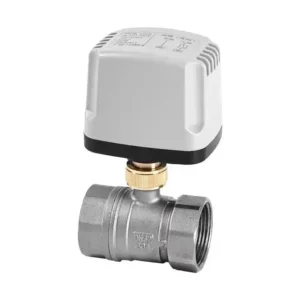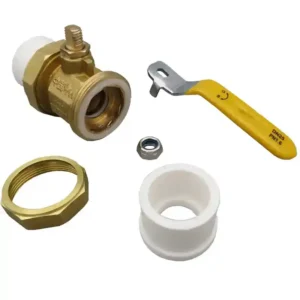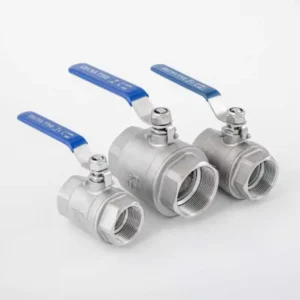

In valve selection, many engineers will directly ask: “How much pressure can this ball valve withstand?”
The pressure capacity of a ball valve depends on the pressure rating standard, body material, working temperature, sealing material, end connection type, ball structure, and testing standard.
For the same 2-inch ball valve, a Class 150 flanged ball valve may have a pressure capacity of only 285 psi at room temperature, while a Class 2500 ball valve can reach 6,170 psi; if a 2000 WOG threaded ball valve is used, the nominal pressure is about 2,000 psi, but its high-temperature performance is completely different.
Therefore, to understand ball valve pressure capacity, the key is to understand the concept of “pressure-temperature rating”, rather than looking at only one number.
In ball valve manufacturing and export selection, CHCV often encounters customers who provide only size and pressure but ignore temperature and medium. In fact, correct selection must simultaneously provide design pressure, design temperature, medium, connection standard, size, and operation method to match a safe ball valve pressure capacity.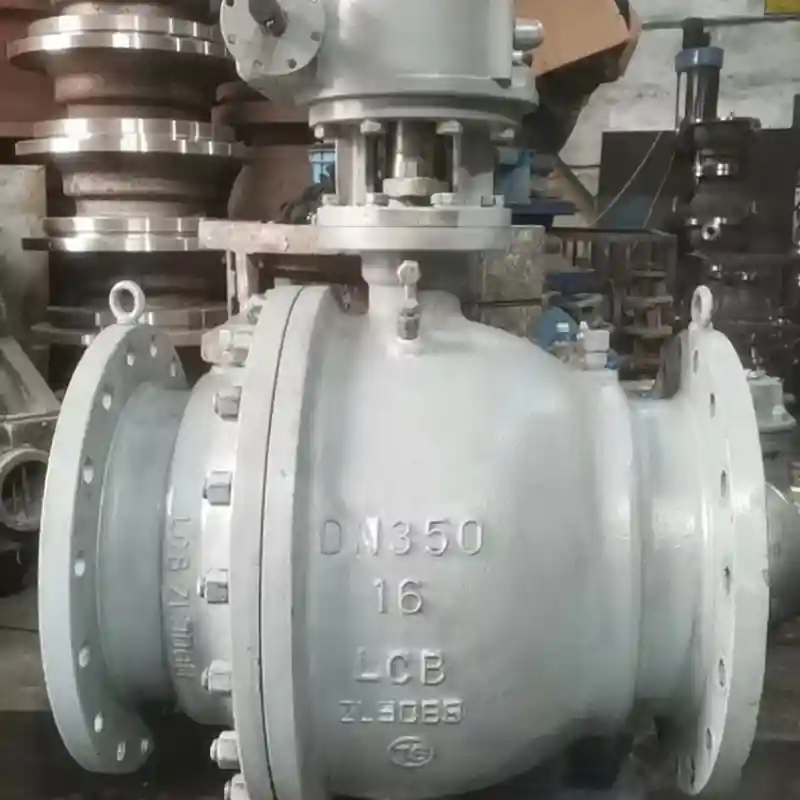
I. ball valve pressure rating standards: The standard system for ball valve pressure ratings
The pressure capacity of a ball valve is first determined by the standard system. The most commonly used basic international standard is ASME B16.34, which specifies pressure-temperature ratings, minimum wall thickness, material requirements, and pressure testing principles for valves at different temperatures. Ball valve product standards usually also reference:
-
API 608: metal ball valves, suitable for general industrial ball valves;
-
API 6D: pipeline ball valves, suitable for long-distance oil and gas transmission pipelines;
-
API 6A: wellhead equipment and Christmas tree ball valves, with pressure ratings up to 5000 psi, 10000 psi, or even higher;
-
ISO 17292: industrial ball valve standard;
-
API 598: valve pressure testing standard;
-
ISO 5208: industrial valve leakage class;
-
API 607 / API 6FA: fire-safe test standards.
In ASME B16.34, common pressure classes include Class 150, 300, 600, 900, 1500, 2500, and 4500. Taking carbon steel material Group 1.1 as an example, the maximum working pressures at room temperature 100°F are as follows:
| Pressure class | Maximum working pressure at room temperature psi | Maximum working pressure at room temperature bar |
|---|---|---|
| Class 150 | 285 | 19.6 |
| Class 300 | 740 | 51.0 |
| Class 600 | 1,480 | 102.0 |
| Class 900 | 2,220 | 153.1 |
| Class 1500 | 3,705 | 255.5 |
| Class 2500 | 6,170 | 425.4 |
| Class 4500 | 11,100 | 765.3 |
It should be emphasized that these values are reference values at room temperature and cannot be directly used for high-temperature operating conditions. As temperature increases, the allowable stress of the material decreases, and the pressure capacity of the ball valve decreases accordingly.
II. ball valve pressure temperature ratings: How temperature changes pressure capacity
The pressure capacity of a ball valve must be viewed together with temperature. ASME B16.34 does not provide a single pressure value, but a pressure-temperature rating table. Taking carbon steel Group 1.1 as an example:
-
Class 150 ball valve is 285 psi at 100°F and about 170 psi at 500°F;
-
Class 600 ball valve is 1,480 psi at 100°F and about 1,200 psi at 500°F;
-
Class 2500 ball valve is 6,170 psi at 100°F and about 4,990 psi at 500°F.
It can be seen that high-temperature derating is very significant. In addition to body material, sealing material also directly affects pressure capacity:
-
PTFE / RPTFE: corrosion resistant and good sealing, but easily softens and creeps at high temperature; the upper temperature limit is usually about 450°F to 500°F, depending on the manufacturer;
-
PEEK: better high-temperature performance and mechanical strength, often used for high-pressure high-temperature ball valves;
-
Metal sealing: suitable for high-temperature, high-pressure, and wear-resistant conditions, but the leakage class may be lower than that of soft sealing;
-
Nylon, Delrin, UHMWPE: suitable for specific low-temperature or medium-pressure conditions.
Therefore, if a customer only asks “How much pressure can a ball valve withstand?”, the professional answer should be: “Please provide the working temperature; we need to check the pressure-temperature rating for the corresponding material and seal.”
III. 2000 wog ball valve pressure rating: What pressure does 2000 WOG actually represent?
2000 wog ball valve pressure rating is a question that many buyers care about. WOG is the abbreviation of Water, Oil, Gas, indicating that the valve is suitable for non-shock media such as water, oil, and gas at room temperature. 2000 WOG usually means that the cold working pressure of the ball valve at room temperature is 2000 psi, approximately equal to 138 bar.
Common WOG nominal ratings include:
| WOG nominal | Room-temperature pressure psi | Approx. bar |
|---|---|---|
| 1000 WOG | 1,000 | 69 |
| 2000 WOG | 2,000 | 138 |
| 3000 WOG | 3,000 | 207 |
| 6000 WOG | 6,000 | 414 |
But note: WOG is not an ASME pressure class. 2000 WOG is not equal to Class 2000, nor is it completely equivalent to Class 900. A Class 900 carbon steel ball valve is about 2,220 psi at room temperature, while 2000 WOG is a manufacturer’s nominal cold working pressure. The two systems are different and cannot be simply interchanged.
In addition, the actual pressure capacity of a 2000 WOG ball valve is also limited by the following factors:
-
End connection: threaded, socket weld, butt weld, flanged;
-
Body material: brass, carbon steel, stainless steel;
-
Sealing material: PTFE, PEEK, metal;
-
Temperature: WOG usually refers to room temperature; high temperature must be derated;
-
Structure: one-piece, two-piece, three-piece, floating ball or fixed ball.
In hydraulic, gas, water treatment, compressed air, and other systems, 2000 WOG ball valves are very common, but when used for high-temperature steam or high-pressure hydrogen, they must be re-evaluated.
IV. class 2500 ball valve pressure rating: Pressure capacity of Class 2500 ball valves
class 2500 ball valve pressure rating is a core question in high-pressure ball valve selection. According to ASME B16.34, the maximum working pressure of a carbon steel Class 2500 ball valve at room temperature 100°F is 6,170 psi, about 425 bar. At 500°F, the pressure capacity drops to about 4,990 psi.
Class 2500 ball valves are typically used for:
-
High-pressure oil and gas pipelines;
-
High-pressure chemical plants;
-
High-pressure steam and feedwater systems in the power industry;
-
Wellhead equipment and high-pressure test benches;
-
High-pressure water jet and hydraulic systems.
Common structures of Class 2500 ball valves include trunnion-mounted ball structure, metal seat or PEEK seat, flanged connection, butt weld connection, etc. Due to high pressure and high torque, gearboxes, pneumatic actuators, or electric actuators are usually required. During selection, also confirm:
-
Whether the flange class matches Class 2500;
-
Whether the body material meets low-temperature or high-temperature requirements;
-
Whether the seal meets medium compatibility;
-
Whether fire-safe, anti-static, DBB double block and bleed are required;
-
Whether the testing standard is API 598, API 6D, or API 6A.
Therefore, although the pressure capacity of a Class 2500 ball valve is high, it must be comprehensively confirmed in combination with temperature, material, and connection type.
V. 2″ ball valve pressure rating: Why the pressure capacity of a 2-inch ball valve cannot be generalized
2″ ball valve pressure rating is a long-tail question with high search volume. The pressure capacity of a 2-inch ball valve is not determined by size alone, but jointly determined by pressure class, material, temperature, and connection type.
Taking a 2-inch carbon steel ball valve as an example:
| Type | Reference pressure capacity at room temperature |
|---|---|
| 2″ Class 150 flanged ball valve | Approx. 285 psi |
| 2″ Class 300 flanged ball valve | Approx. 740 psi |
| 2″ Class 600 flanged ball valve | Approx. 1,480 psi |
| 2″ Class 900 flanged ball valve | Approx. 2,220 psi |
| 2″ Class 1500 flanged ball valve | Approx. 3,705 psi |
| 2″ Class 2500 flanged ball valve | Approx. 6,170 psi |
| 2″ 2000 WOG threaded ball valve | Approx. 2,000 psi at room temperature |
| 2″ 3000 psi high-pressure ball valve | Approx. 3,000 psi at room temperature |
In addition to pressure class, connection type is also critical:
-
Threaded connection: suitable for small and medium sizes and relatively high pressure, but sealing and strength are limited under large-size high-pressure conditions;
-
Flanged connection: suitable for Class 150 to Class 2500, easy to install and maintain;
-
Butt weld / socket weld: suitable for high-pressure, high-temperature, and buried pipelines, with fewer leakage points;
-
Clamp / sanitary connection: suitable for food, pharmaceutical, and bioengineering applications; pressure is usually lower than that of flanged and welded connections.
Therefore, when purchasing a 2-inch ball valve, do not write only “2 inch ball valve pressure rating”; instead, specify: “2 inch, Class 600, flanged, carbon steel, PTFE seat, design temperature 200°C, medium natural gas.” Only then can accurate pressure capacity be obtained.
VI. Other key factors affecting ball valve pressure capacity
In addition to standards and temperature, the following factors also change the actual pressure capacity of a ball valve:
-
Body material: brass ball valves are often used in low-pressure water and gas systems; carbon steel WCB/A105 is suitable for medium and high pressure; stainless steel CF8M/316 is suitable for corrosive conditions; Duplex and Inconel are used in special high-pressure corrosive environments.
-
Ball structure: floating ball structure is suitable for medium and low pressure and small sizes; fixed ball/trunnion structure is suitable for high-pressure large sizes and has lower torque.
-
Port design: full-port ball valves have low pressure loss but larger body dimensions; reduced-port ball valves are lower in cost but have limited flow.
-
Sealing type: soft sealing has good zero-leakage performance but is limited in temperature and pressure; metal sealing withstands high temperature and high pressure, but its leakage class may be higher.
-
Testing standard: API 598 requires shell test at 1.5 times CWP, high-pressure seat test at 1.1 times CWP, and low-pressure seat test with 6-10 psi air.
-
Fire-safe and anti-static: oil and gas, hydrogen, and chemical conditions usually require API 607 / API 6FA fire-safe certification and anti-static construction.
-
Actuators and accessories: high-pressure ball valves have high torque; actuator selection must calculate torque based on pressure, temperature, medium, and differential pressure.
VII. Common misunderstandings in ball valve pressure capacity selection
In actual projects, the following misunderstandings are very common:
-
Only looking at WOG, not temperature: 2000 WOG is a room-temperature nominal rating; at high temperature, pressure capacity will drop significantly;
-
Treating WOG as Class: WOG and ASME Class are different systems and cannot be directly equated;
-
Ignoring sealing material limitations: PTFE seals may fail under high temperature and high pressure; PEEK or metal seals are more suitable;
-
Ignoring end connections: the pressure capacity of a threaded ball valve may be limited by the threaded connection, not the body itself;
-
Using ball valves for long-term throttling: ball valves are suitable for quick opening and closing and isolation; long-term throttling will accelerate seal wear;
-
Ignoring medium specificity: oxygen, hydrogen, natural gas, ammonia, chlorine, etc. require special materials, degreasing, fire-safe, or anti-static designs.
Conclusion: Ball valve pressure capacity is a comprehensive result of “pressure-temperature-material-connection”
Returning to the original question: What is the pressure capacity of a ball valve?
The answer depends on the standard system, pressure class, working temperature, body material, sealing material, end connection, and testing requirements.
From 285 psi for Class 150 to 6,170 psi for Class 2500, and from 2,000 psi for 2000 WOG to 11,100 psi for Class 4500, the pressure capacity range of ball valves is very wide.
The key to correct selection is: provide design pressure, design temperature, medium, size, connection standard, operation method, and certification requirements, then consult the corresponding pressure-temperature rating table.
In ball valve selection and manufacturing, CHCV recommends that customers not focus only on a single pressure number, but evaluate pressure capacity within the complete operating conditions. Only in this way can the ball valve operate safely, stably, and long-term in the system.