
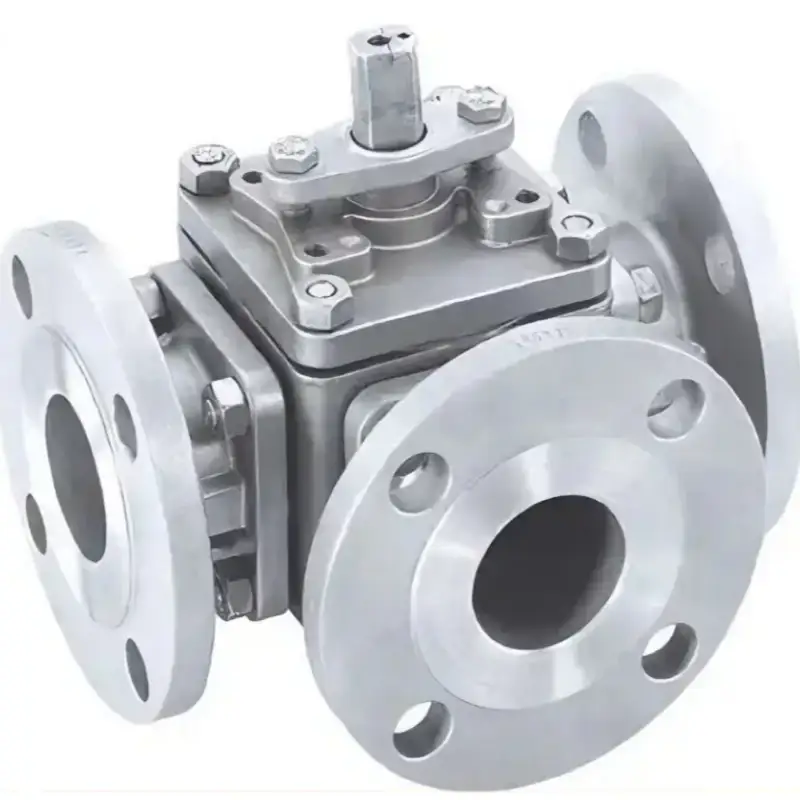
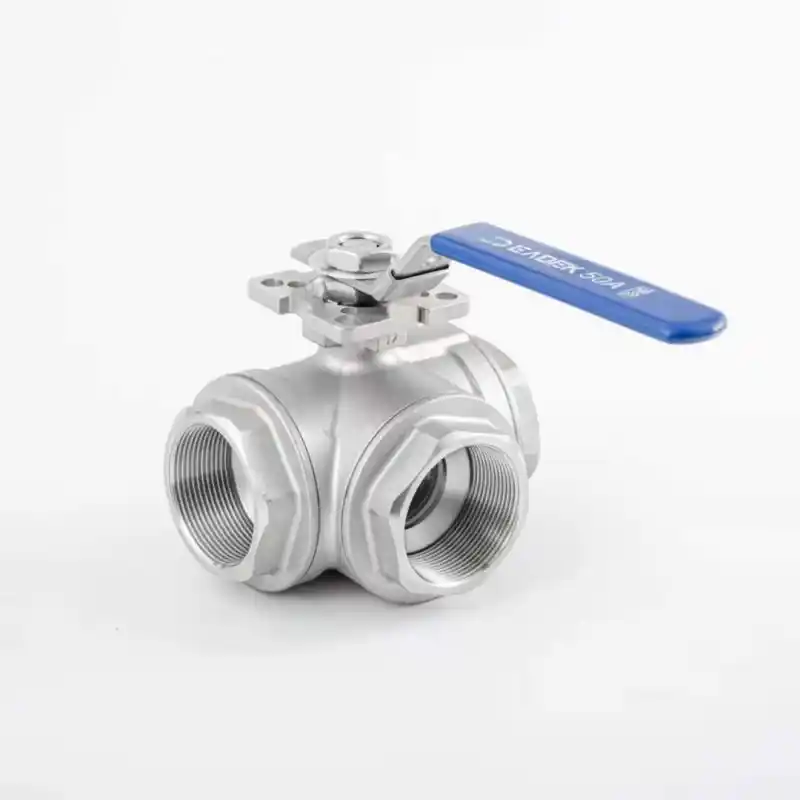
1/4″ 3 Way Stainless Steel Ball Valve – SS316 L/T Port Full Port
1/4″ 3 way stainless steel ball valve in SS316L, L-port and T-port designs for flow switching and mixing. Full port minimizes pressure drop, corrosion-resistant for chemical injection and instrumentation.
Description
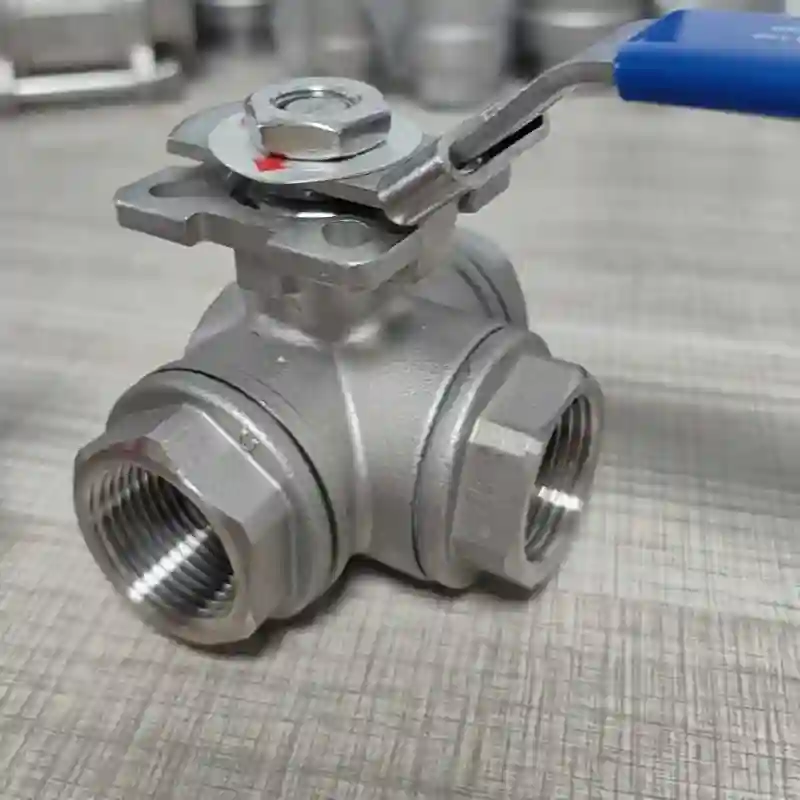
The 1/4″ 3 way stainless steel ball valve is a compact small‑bore three‑way ball valve with nominal size 1/4 inch (DN8) and stainless‑steel construction. By rotating its internal ball component, it realises flow switching, diversion and media confluence inside three‑way pipelines. It serves low‑flow control duties within instrument tubing, chemical dosing packages, laboratory analytical instruments and high‑pressure gas or liquid process lines.
Distinct from brass or carbon‑steel three‑way ball valves, its core strengths stem from SS316L stainless‑steel construction and Full‑Port design. SS316L delivers outstanding resistance against acids, alkalis, salts and diverse chemical media.
The Full‑Port configuration aligns ball‑passage inner diameter with pipe inner diameter, eliminating abrupt flow‑section changes and bringing negligible pressure drop. This combined performance makes it ideal for applications demanding strict material cleanness and stable flow behaviour.
Corrosion‑Resistance & Full‑Port Design Features
Its reliable anti‑corrosion performance and unobstructed full‑bore flow are realised via the following design highlights:
- Corrosion‑resistant SS316L material: Valve body, ball and major internal trims are manufactured from ASTM A351 CF8M (316L) stainless steel. Molybdenum‑alloyed 316L improves resistance against chloride‑induced pitting and crevice corrosion, performing reliably in saline, acidic and alkaline chemical services. Lead‑free stainless‑steel hardware complies with potable‑water and food‑grade requirements, avoiding metal‑ion leaching and medium contamination for high‑purity process applications.
- Full‑Port flow path: The ball bore matches pipe inner dimensions, eliminating flow‑section discontinuities and minimising pressure loss. Within instrument tubing, full‑port geometry guarantees fast, delay‑free transmission of pneumatic control signals. For chemical‑dosing systems, it supports smooth passage of high‑viscosity reagents. In analytical equipment, it stabilises flow rates during sample or carrier‑gas switching cycles.
- Material traceability: EN 10204 3.1 material test certificates are supplied for every batch of stainless‑steel raw stock. Traceable material documentation satisfies material‑compliance requirements across pharmaceutical, food‑processing and semiconductor industries.
Valve Body Specifications & Parameters
| Parameter | Specification |
|---|---|
| Nominal Size | 1/4 inch (DN8) |
| End Connection | NPT thread / BSP thread / Tube‑end compression fittings / VCR metal‑gasket face‑seal |
| Pressure Rating | 3000 PSI / 6000 PSI (optional) |
| Temperature Range | ‑20°C ~ 180°C (PTFE seat); ‑46°C ~ 250°C (PEEK seat optional) |
| Flow Pattern | L‑Port (flow switching) / T‑Port (mixing & diversion) |
| Body Material | CF8M (316L) stainless steel |
| Ball Material | 316L stainless steel |
| Seat Material | Reinforced PTFE / PEEK |
| Thread Options | NPT / BSP / Tube compression fitting |
| Operation Mode | Lever manual / Lockable handle / Pneumatic actuator / Electric actuator |
| Special Configurations | Anti‑static device (standard) / Panel‑mount design (optional) / Low‑emission packing (optional) |
Flow‑Pattern Selection Guidance
- L‑Port: Directs incoming fluid alternately toward two separate outlet ports. Typical applications include supply‑vent switching for pneumatic actuators within instrument‑air lines, isolation and blow‑down switching for pressure‑transmitter impulse tubing, and chemical‑injection point change‑over.
- T‑Port: Merges two incoming fluid streams for combined output or divides one inlet flow across two outlets. Common duties cover sequenced transfer of different CIP cleaning agents (acid / alkali / water), multi‑path carrier‑gas distribution inside laboratories, and blended injection of dual‑component chemical reagents.
Typical Application Sectors
The 1/4″ three way ball valve is widely deployed for small‑bore, high‑cleanness and corrosion‑resistant process requirements:
- Instrumentation & control systems: Impulse‑line isolation and blow‑down for pressure and differential‑pressure transmitters; pneumatic‑actuator supply‑line switching; branch‑circuit control for instrument‑air networks.
- Chemical injection & dosing systems: Precise switching of micro‑dose chemical injection points for corrosion inhibitors, scale inhibitors and antifreeze agents in water‑treatment and petrochemical facilities.
- Laboratory & analytical instrumentation: Carrier‑gas and sample‑stream switching for GC (Gas Chromatography) and HPLC (High‑Performance Liquid Chromatography) analytical workflows.
- Food & beverage processing: Sequenced delivery of CIP cleaning fluids. Stainless‑steel hardware resists corrosive cleaning chemicals and prevents product contamination from dissolved metal ions.
- Refrigeration & HVAC systems: Flow‑path switching, bypass regulation and sample‑tap service within refrigerant pipelines, compatible with multiple refrigerant media.
- Semiconductor & high‑purity gas service: Flow‑path switching for high‑purity gas circuits. VCR connections and electropolished finishes prevent particulate contamination.
Reference Application Case
At a Carlsberg Group brewery in Denmark (Case 9), the plant’s CIP system required sequenced diversion of cleaning media to multiple parallel fermenters. Cleaning fluids included 1.5 % sodium hydroxide solution at 80 °C and 1 % nitric acid at 70 °C, imposing heavy corrosion demands on valve hardware. Previously deployed brass valves suffered body pitting and seal failure under alkaline cleaning conditions, requiring replacement every 18 months.
The site adopted 1/4″ 3 way stainless steel ball valves, built in SS316L with Full‑Port geometry, L‑Port flow pattern, sanitary clamp ends and hygienic surface finishing. SS316L material delivers robust corrosion resistance against both alkaline and acidic cleaning liquors. No body corrosion or seal degradation was detected after 24 months of continuous field operation.
Full‑Port internals combined with hygienic surface finish (Ra ≤ 0.8 μm) preserve cleaning efficiency without flow‑path constriction or rough‑surface interference. Cleaning‑fluid velocity and turbulence levels remain at design targets, delivering microbial‑test pass rates exceeding 99.9 %. This valve solution has been standardised across multiple Carlsberg production lines throughout Denmark.
Quality Assurance
CHCV 1/4″ 3 way stainless steel ball valves are manufactured and inspected in compliance with ASME B16.34 and ISO 9001 quality‑management standards. Every unit undergoes 100 % hydrostatic shell‑strength testing plus bidirectional seat‑tightness examination per API 598 prior to shipment. EN 10204 3.1 material certificates and full inspection reports are supplied with each order. Third‑party witnessing services from BV, SGS, TÜV and other authorised bodies are available upon client request.