
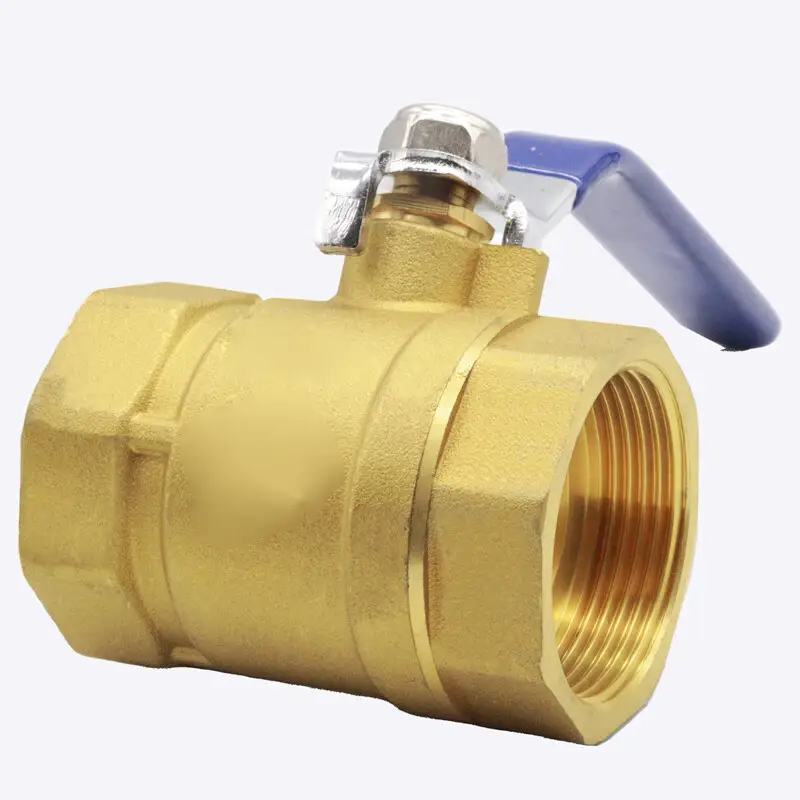
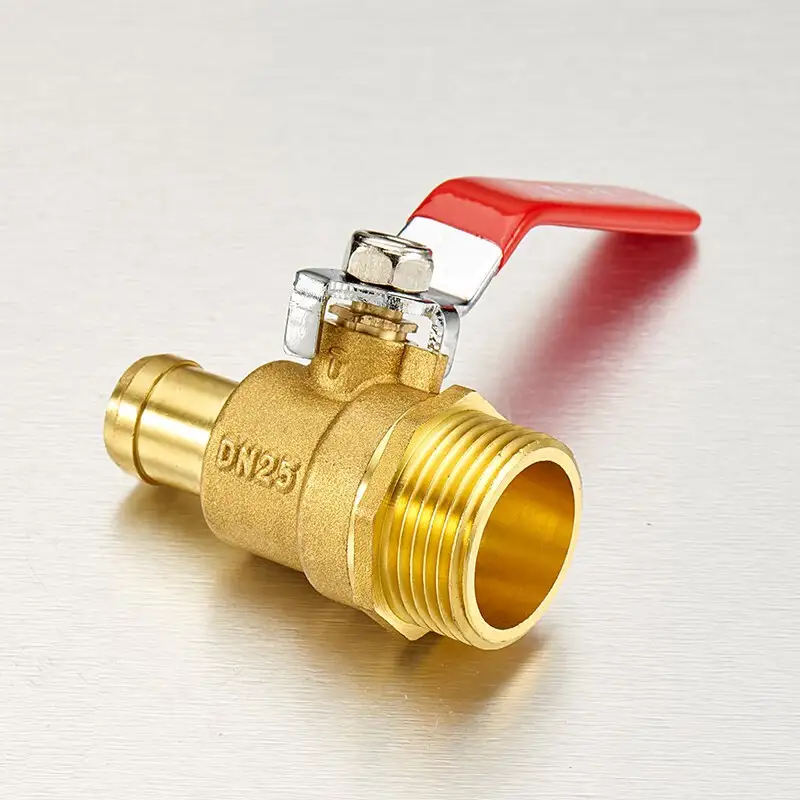
1″ Brass Ball Valve for Sprinkler – Full Port, Quarter-Turn Shutoff
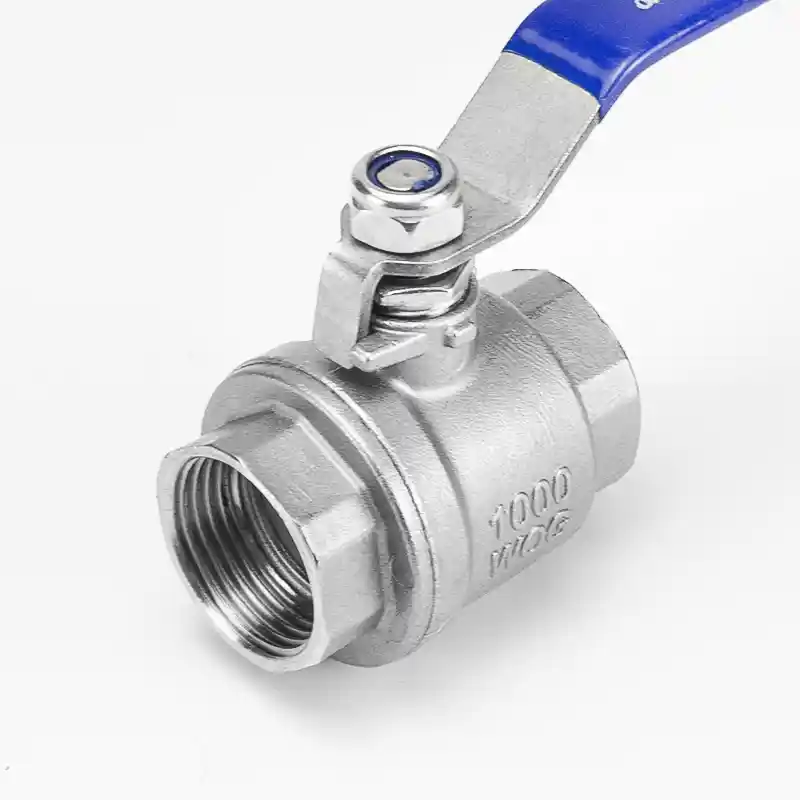
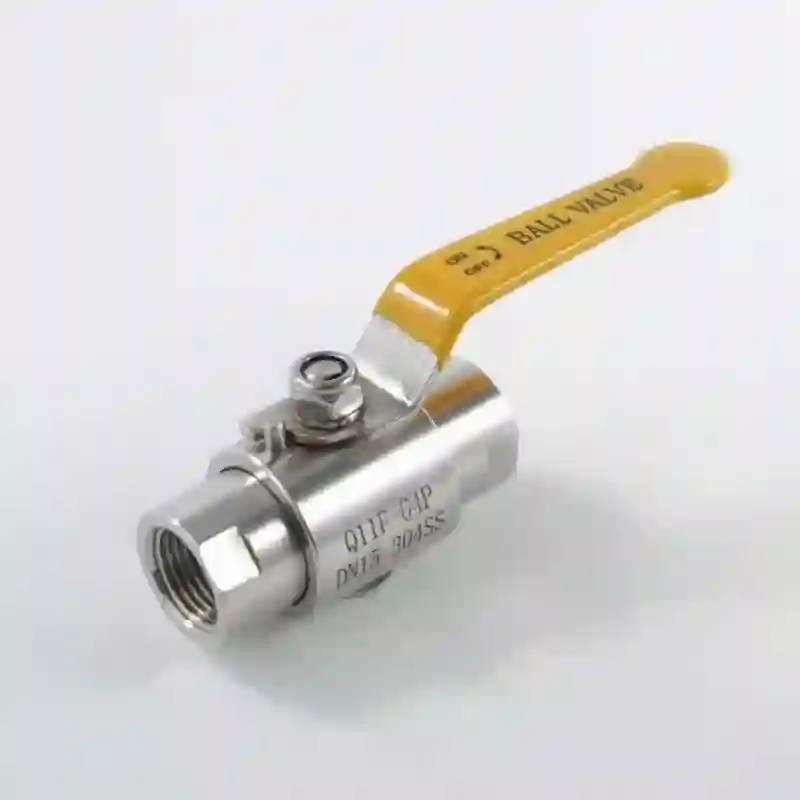
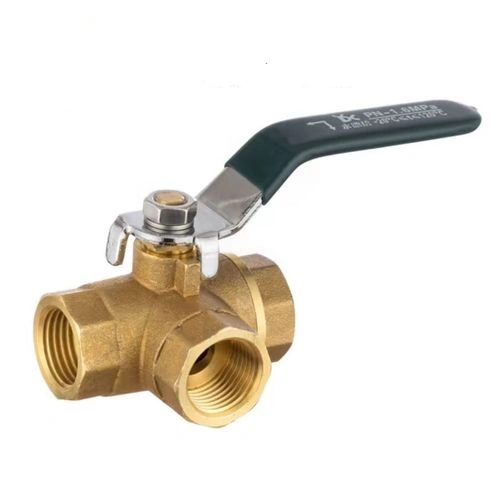
1 inch brass ball valve for sprinkler & irrigation systems. Full port design for low pressure drop, quarter-turn operation for fast zone switching. 600 WOG rated.
Description
Engineered for agricultural farming, landscape gardening and automatic sprinkler networks, this quick‑shutoff ball valve delivers sectional on‑off control for irrigation pipelines. It completes opening and closing via 90° ball rotation, supporting rotational zone irrigation, system servicing and emergency line isolation. Built on a Full Port flow path, the valve generates negligible extra pressure drop over lengthy irrigation runs, preserving adequate operating pressure and spray range for distant sprinklers and drip emitters. Its brass body delivers outstanding weather‑proof and anti‑corrosion performance, capable of outdoor exposure or underground burial. It serves as a premium upgrade substitute for PVC ball valves, gate valves and butterfly valves.
Material & Specification
| Item | Parameter |
|---|---|
| Body Material | Forged brass (CW617N / ASTM B124) |
| Ball Material | Chrome‑plated brass / 304 stainless steel |
| Seat Material | PTFE |
| Seal Material | PTFE + NBR / Optional EPDM |
| Nominal Size | DN25 (1″) |
| End Connection | NPT / BSP female thread on both ends |
| Pressure Rating | 600 WOG (Water, Oil, Gas) |
| Temperature Range | -20°C ~ +120°C (PTFE seat) |
| Operation | Lever‑operated fast 1/4‑turn (90°) open‑close action |
| Operating Angle | 0° (fully closed) ↔ 90° (fully open) |
| Port Type | Full Port |
| Loss Coefficient (K‑value) | Near zero under fully‑open condition |
| Lever Position Indicator | Parallel to pipeline = fully open; Perpendicular = fully closed |
| Stem Design | Blow‑out Proof |
| Surface Finish | Natural weather‑resistant brass |
| Design & Test Standards | MSS SP‑110 / ASME B16.34 / API 598 |
Application Scenarios
- Section control for large‑scale farm irrigation: shut‑off component for field laterals and drip tape zones to implement rotational irrigation schedules.
- Golf course and landscape sprinkler systems: supply control for main lines and zone branches, enabling localized isolation during maintenance work.
- Greenhouse and protected agriculture: flow switching for irrigation lines or mist cooling circuits within separate growing compartments.
- Automatic spray systems for dust suppression / fire protection: sectional isolation for mining yards and stockyard dust‑reduction sprinklers or fire‑protection sprinkler branches.
- Municipal landscaping & highway maintenance: zone management for irrigation piping serving roadside green belts and public parks.
- Farm reservoir and pump station outlets: fast‑acting isolation valve fitted at reservoir discharge ports or irrigation pump exits.
Core Advantages: Fast Quarter‑Turn Operation & Full‑Port Flow Path
1. Rapid actuation: 1/4‑turn operation fits frequent rotational‑irrigation cycles
Irrigation facilities commonly adopt rotational‑zone watering schemes, requiring repeated valve manipulation across multiple zones every day. Conventional gate valves demand 8‑12 full rotations for full opening or closure, which accumulates substantial labor hours across large farm sites.
This 1‑inch brass ball valve uses 1/4‑turn (90°) lever operation, completing open‑close transitions within 2 seconds. For large‑scale irrigation installations requiring 40‑80 switching cycles daily, total manual workload can drop by 1.5‑2 working hours each day and cut labor expenditure significantly. Besides, the lever provides intuitive visual status feedback: operators can quickly judge valve status from a distance during field patrols by checking whether the lever runs parallel or perpendicular to piping.
2. Full‑port geometry sustains working pressure for far‑end emitters
Irrigation piping networks often stretch for hundreds of meters up to several kilometers. Any flow‑restricting point inside the circuit introduces extra pressure loss, which directly weakens sprinkler throw distance and alters drip emitter discharge volume.
Adopting Full Port construction, the internal ball bore matches the inner dimension of connected pipework. Flow cross‑section stays unchanged at full opening, bringing K‑value close to zero with measured pressure drop below 0.002 MPa. This hydraulic performance guarantees practical operational outcomes:
- Sprinkler nozzles at line terminals deliver their designed spray radius;
- Drip emitters maintain consistent flow output, keeping irrigation uniformity coefficient (CU) above 90 %;
- Pump power consumption remains unaffected by additional valve‑induced pressure loss.
Application Case: Large‑Scale Cotton Plantation in Xinjiang — Drip‑Irrigation Rotational Zone System
Project Name: Drip Irrigation Zone Retrofit for Cotton Plantation, Shihezi, Xinjiang Location: Shihezi City, Xinjiang Uygur Autonomous Region, China
Covering roughly 8,000 mu of cotton cultivated land, this farm runs a subsurface drip irrigation setup. Water is supplied from a central pumping station (flow rate: 1,200 m³/h, total head: 80 m). Main pipelines distribute water to 40 independent irrigation zones, each regulated by a 1‑inch valve. Field staff carry out 2‑3 rounds of zone switching every day under rotational irrigation schedules, with roughly 40 valve operations for each round.
Project Challenge
Cast‑iron gate valves were originally deployed as zone control units. Each gate valve needed 8‑10 wheel rotations (8‑12 seconds) to complete opening or closing. With 80‑120 valve manipulations per day, valve operation alone consumed 20‑30 minutes of on‑site labor. Furthermore, outdoor exposure caused hand‑wheel rusting, and operating torque kept rising year‑by‑year.
Solution
Prior to the 2023 irrigation season, all 40 zone control valves across the plantation were replaced with 1‑inch brass ball valves.
Project Outcomes
- Enhanced operating efficiency: the 1/4‑turn mechanism finishes each switch within 2 seconds, representing a 4‑6‑fold speed improvement compared to legacy gate valves. Daily valve‑handling time fell from 20‑30 minutes down to under 5 minutes. Field crews can redirect saved time to inspect drip tapes and fine‑tune irrigation timetables.
- Stable far‑end hydraulic performance: post‑retrofit field measurement confirmed inlet pressure at the farthest zone (2.3 km away from pump station) remained steady above 0.08 MPa, fully meeting drip emitter working requirements. The full‑port design preserved the original hydraulic balance of the whole irrigation network.
- Proven long‑term reliability: after two full irrigation seasons and more than 5,000 operational cycles, zero leakage, jamming or lever fracture incidents occurred. No obvious corrosion signs were observed on brass bodies under outdoor operating conditions.
The farm’s technical supervisor commented: “The fast‑switch capability and Full‑Port profile of 1‑inch brass ball valves resolved two long‑standing pain points: excessive manual workload and insufficient terminal water pressure. We plan to phase‑out all existing gate valves site‑wide and adopt brass ball valves in future upgrades.”