
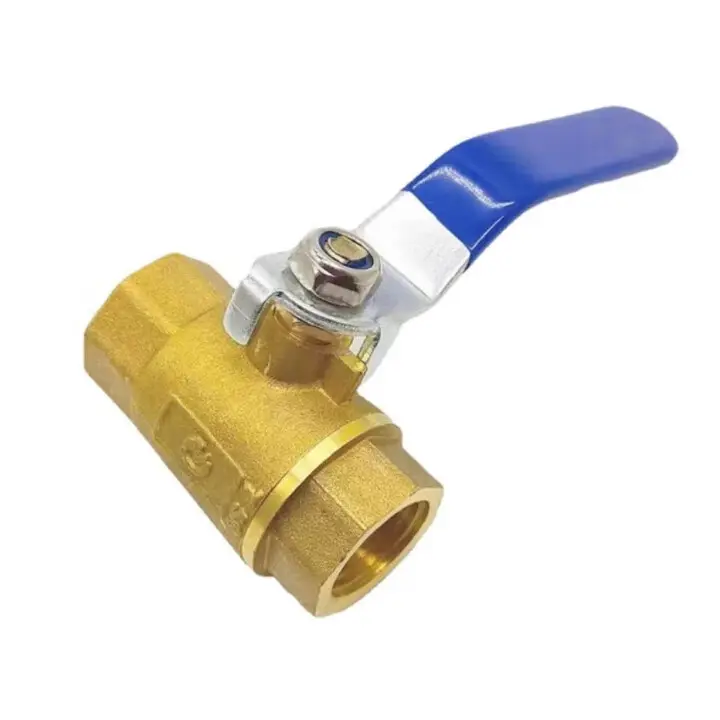
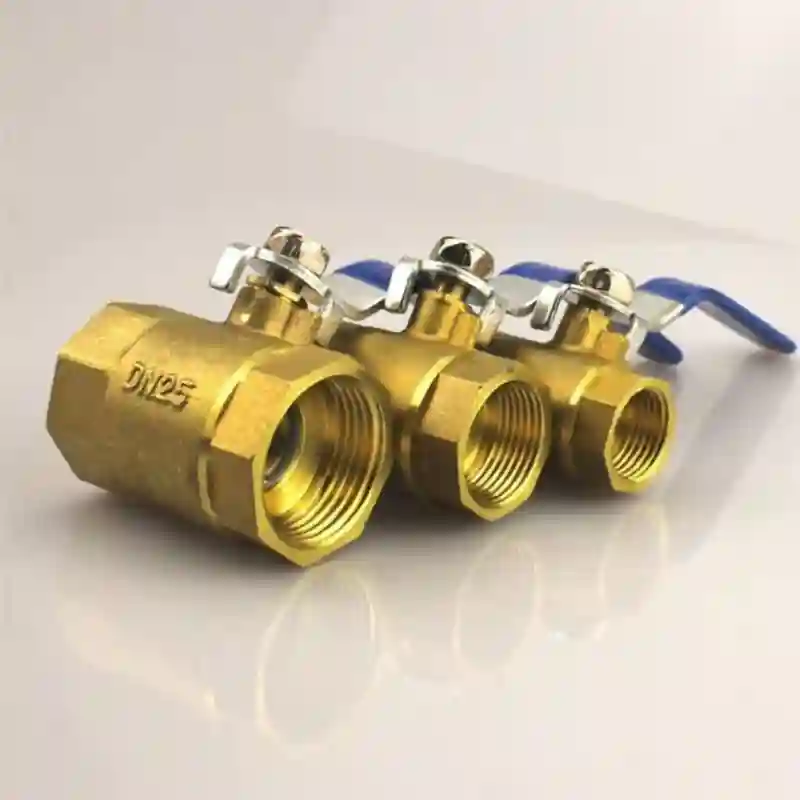
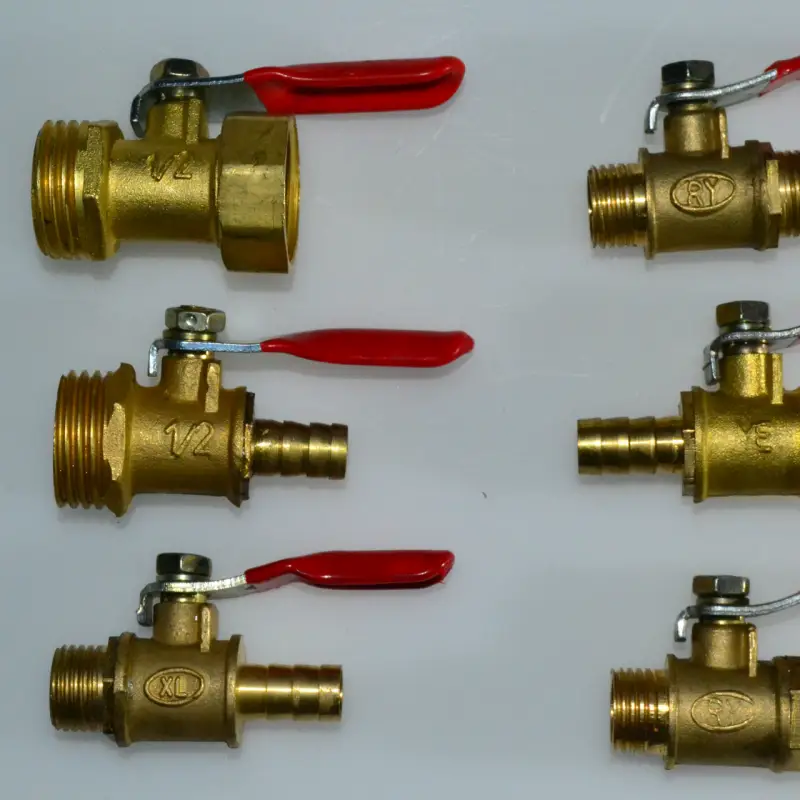
3/8″ Mini Brass Ball Valve – Compact Full Port Design
Compact 3/8″ mini brass ball valve with full port for low pressure drop. Ideal for instrumentation panels, gas analyzers & pneumatic systems. 600 WOG, NPT/BSP.
Description
The 3/8‑inch brass mini ball valve serves as an optimal shut‑off component for instrumentation, pneumatic circuits and precision fluid‑control applications, balancing compact footprint with adequate flow capacity. It delivers fast, reliable on‑off control for gas and liquid lines within confined spaces via 90‑degree rotation of its internal ball core. Its bore cross‑sectional area is roughly 2.25 times larger than that of a 1/4‑inch unit, while body dimension only increases by approximately 20%. This delivers a well‑balanced intermediate solution between the under‑sized 1/4″ and over‑bulky 1/2″ valves.
Purpose‑built for instrument impulse lines, pneumatic control loops, analytical‑instrument flow paths and wellhead instrument manifolds in oil‑gas fields, this valve stands as the preferred option for OEM equipment integrators and instrumentation engineers seeking substantial flow performance within limited installation envelopes.
Material & Specification Parameters
表格
| Item | Specification |
|---|---|
| Valve Body Material | Forged Brass (CW617N / ASTM B124) |
| Ball Material | Chrome‑plated Brass / SS304 Stainless Steel |
| Seat Material | PTFE (Polytetrafluoroethylene) |
| Sealing Material | PTFE + NBR (Nitrile Butadiene Rubber) / FKM (optional) |
| Nominal Size | DN10 (3/8″) |
| End Connection | Female NPT / BSP / Compression / Push‑to‑Connect |
| Pressure Rating | 600 WOG (Water, Oil, Gas) |
| Temperature Range | -20°C ~ +120°C (PTFE seat applied) |
| Operation Mode | Handle‑equipped quarter‑turn (90°) fast opening & closing |
| Operating Torque | < 1.5 N·m (low‑torque actuation) |
| Body Length | 45 ~ 65 mm (subject to end‑connection style) |
| Panel Mount Center‑to‑Center Spacing | ≥ 30 mm for compact side‑by‑side mounting |
| Flow Path Type | Full Port |
| K‑factor (Flow Resistance Coefficient) | Near 0 under fully‑open condition |
| Stem Design | Blow‑out Proof structure |
| Applicable Standards | MSS SP‑110 / ASME B16.34 / API 598 |
Application Scenarios
- Instrument impulse and blow‑down piping: isolating impulse/blow‑down circuits upstream of pressure gauges, differential‑pressure transmitters, thermometers and level transmitters. The 3/8″ bore delivers higher flow capacity versus 1/4″ alternatives while retaining compact form factors.
- Pneumatic control systems: switching supply branches for pneumatic actuators, valve positioners and cylinders. 3/8″ ranks among the most common interface sizes within industrial pneumatic installations.
- Chemical‑analysis and laboratory apparatus: carrier‑gas or sample‑gas stream switching for gas chromatographs, liquid chromatographs and TOC analyzers.
- Oil‑gas‑field wellhead instrument manifolds: multi‑path impulse and blow‑down integrated valve assemblies on injection‑well and production‑tree instrument panels, supporting dense component layout within constrained panel space without sacrificing flow performance.
- Semiconductor and precision manufacturing: branch lines for specialty process gases (N₂, CDA, Ar) and sampling points for UPW (ultra‑pure water) inside clean‑room environments.
- Medical and life‑science hardware: gas‑water branch regulation inside dental treatment units, anesthesia machines and ventilators.
- High‑pressure cleaning and surface‑treatment equipment: fluid or compressed‑air branch switching for commercial high‑pressure washers and sand‑blasting systems.
Core Advantages: Compact Size & Full Port
Within instrumentation, pneumatic and precision‑equipment sectors, every millimeter of panel real‑estate carries high priority, meanwhile equipment performance imposes strict requirements on flow delivery and pressure stability. This valve is engineered around two core merits: Compact Size and Full Port.
1. Compact Size — Realize more functions within confined installation space
A 3/8″ brass mini ball valve features a body length ranging from 45 mm to 65 mm depending on end‑fitting configuration. It only requires a minimum 30 mm center‑to‑center spacing for side‑by‑side panel mounting. Compared with standard 1/2‑inch ball valves (typically 45‑50 mm center‑to‑center spacing), this mini‑sized variant cuts panel footprint by roughly 40 % while preserving notable flow capability.
For equipment integrators, such compact geometry brings tangible practical benefits:
- Up to six valves can be fitted onto a 280 mm‑wide instrument panel, versus merely four to five units for 1/2‑inch counterparts.
- For outdoor hardware wrapped in thermal‑insulation layers, the slim valve profile enables complete insulation coverage to mitigate freeze‑blockage risks in winter conditions.
- Within rack‑mounted devices, additional fluid‑circuit channels can be accommodated within standard 1U enclosure height.
2. Full Port — Small form factor, high flow throughput
The Full Port design marks its key differentiator versus ultra‑compact 1/4‑inch ball valves:
- The full‑port 3/8‑inch bore delivers 2.25 times the cross‑sectional area of a standard‑port 1/4‑inch valve (0.110 in² vs 0.049 in²).
- Under identical flow‑rate conditions, pressure drop across the 3/8″ full‑port valve falls to merely 40‑50 % of the value measured on 1/4‑inch hardware.
- For pneumatic actuators and analytical instruments, sufficient supply‑gas throughput translates into faster response and more stable output signals.
Furthermore, the full‑port flow path eliminates media acceleration and vortex effects triggered by reduced bores, mitigating localized seat erosion and wear. Service life extends by approximately 30 % compared with reduced‑port alternatives.
Application Case: Suncor Energy Inc. — Compact‑Valve Retrofit for Fort McMurray Oil‑Sands Wellhead Instrument Manifolds
Project Name: Fort McMurray Oil Sands Wellhead Instrument Manifold Compact Valve Retrofit Location: Alberta, Canada
Suncor Energy Inc. counts among Canada’s largest oil‑sands producers, operating large‑scale open‑pit mining and on‑site extraction facilities across the Fort McMurray region of Alberta. Instrument panels are fitted onto production‑tree assemblies at each producing well site, connecting pressure sensors and pressure gauges for real‑time monitoring of produced‑fluid pressure.
Background
- Each production‑well instrument panel requires four impulse valves plus two blow‑down valves (six units total), providing independent isolation and blow‑down duties for individual sensors. Available panel width is limited to 280 mm, due to densely routed surrounding wellhead piping plus mandatory thermal‑insulation wrapping for winter protection against −40 °C ambient temperatures.
- Previously deployed 1/2‑inch standard ball valves occupied more than 300 mm overall width when six units were mounted side‑by‑side, exceeding physical panel boundaries. Site engineering teams were forced to relocate two valves onto the panel rear face, resulting in cumbersome operational access.
- Worse still, the extended body length of 1/2‑inch valves prevented full insulation coverage over protruding valve sections. Each winter saw 3‑5 valves rendered inoperable by freeze‑ups, severely disrupting production‑data acquisition during cold‑season operation.
- Trials with 1/4‑inch ball valves resolved spatial constraints yet created insufficient bore capacity, bringing 3‑5‑second stabilization delays for sensor impulse‑pressure readings and failing real‑time monitoring requirements.
Solution: Following type‑testing carried out by Suncor’s field‑engineering department in 2023, 3/8‑inch brass mini ball valves (Full Port, NPT threaded ends) were specified for instrument‑panel retrofits on all newly commissioned and overhauled production wells.
Project Outcomes
- Space‑saving compact layout: The 30 mm center‑to‑center mounting pitch of 3/8‑inch mini ball valves yields an overall assembled width of roughly 180 mm for six side‑by‑side units. Generous clearance remains within the 280 mm panel boundary; all valves are installed on the front‑facing panel surface with zero component interference and straightforward operator access.
- Complete thermal‑insulation wrapping: Compact body length (~50 mm) allows full insulation encapsulation for every valve. Zero freeze‑blockage incidents were recorded throughout the first winter after retrofit (Nov 2023‑Mar 2024). By contrast, historical averages stood at 3‑5 freeze‑up events annually. Each prior freeze‑up case incurred CAD 20 000‑30 000 in costs stemming from missing production‑data records and manual de‑icing labour.
- Full‑port‑enabled fast impulse‑pressure response: With bore cross‑section 2.25 times larger than 1/4‑inch valves, pressure‑sensor impulse‑response time dropped from 3‑5 seconds down to under one second, markedly improving reliability of real‑time monitoring datasets.
- Reliable low‑temperature operability: Even under −40 °C extreme cold, valve operating torque stays below 1.5 N·m. Field technicians wearing heavy winter protective gloves can complete open‑close cycles single‑handedly without auxiliary tools.
This solution has been rolled‑out across over 40 producing wells within Suncor’s Fort McMurray site and incorporated into the corporate Oil‑Sands‑Wellhead Instrument‑Manifold Specification as standard hardware for future well construction projects. As commented by Suncor’s field‑instrumentation engineer in an internal technical bulletin: “The 3/8‑inch mini ball valve strikes an optimal balance between Compact Size and sufficient flow capacity. It fundamentally resolves our long‑standing conflict between panel‑space constraints and freeze‑blockage risks for instrument manifolds operating within extreme cold‑climate well‑site environments.”