
High Quality Stainless Steel 3 Piece Ball Valve – Low Emission, Passivated
High quality stainless steel 3 piece ball valve with electro-polished bore, acid passivated surface, and low fugitive emission packing for sanitary and chemical applications.
Description
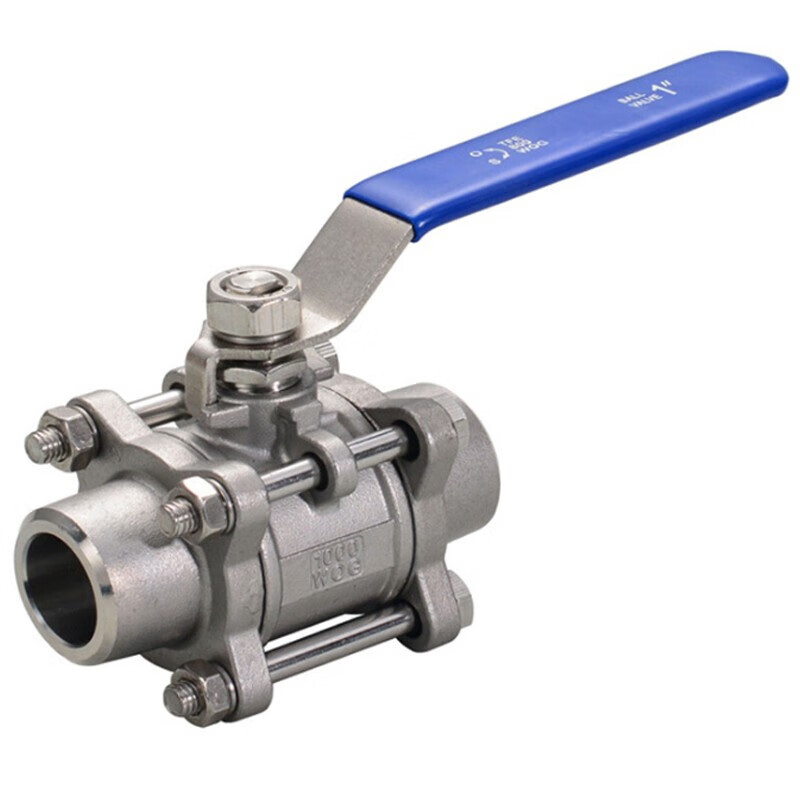
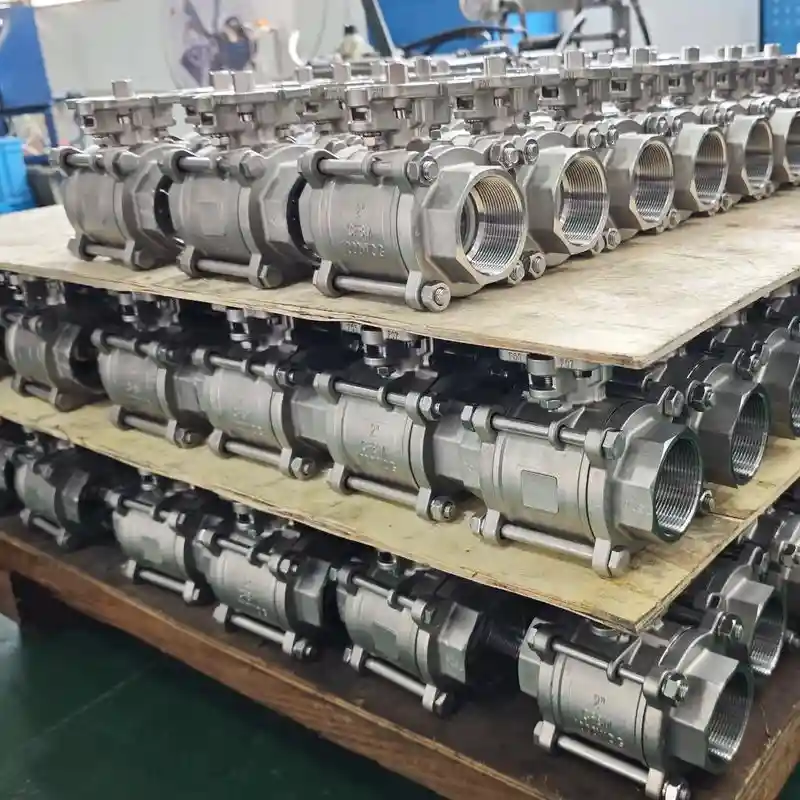
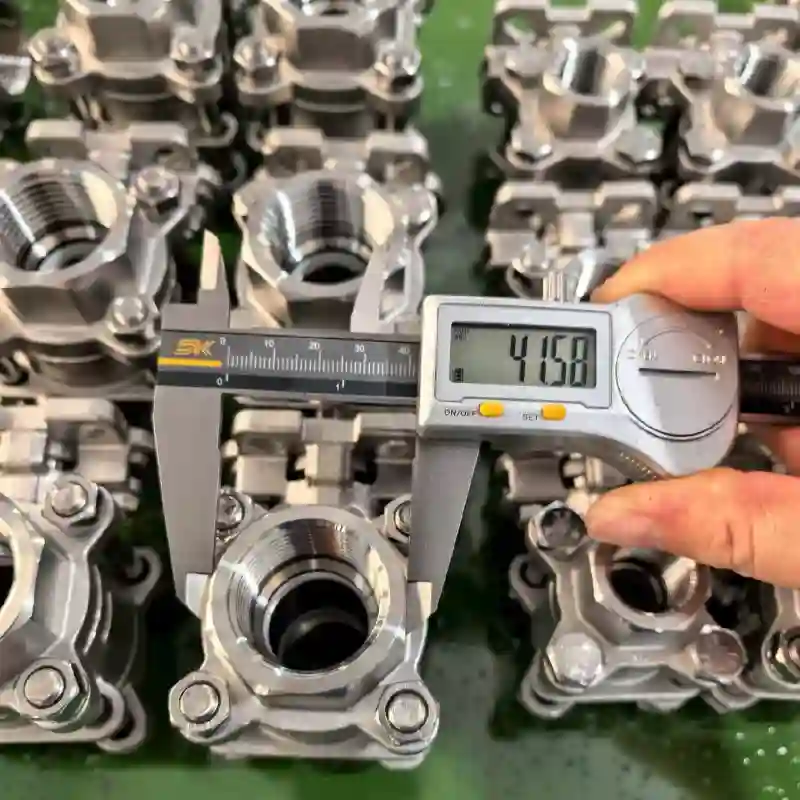
A high‑performance stainless‑steel 3‑piece ball valve is structurally assembled from left‑hand body, central body and right‑hand body, fastened together with high‑strength bolts. The stem drives the ball to rotate through 90 °, enabling pipeline opening and shut‑off. Its signature three‑piece architecture allows technicians to loosen bolts and pull out the central‑body cartridge for direct replacement of balls, valve seats and gaskets, without detaching the whole valve from service piping. This configuration delivers outstanding maintainability for welded joints and hygienic process lines.
Compared with standard‑grade alternatives, high‑performance units adhere to stricter technical specifications covering material traceability to EN 10204 3.1, precision lapped ball‑to‑seat mating, specialised surface finishing including electro‑polishing plus pickling‑passivation, and fugitive‑emission compliance under ISO 15848‑1. These upgraded features suit operating conditions demanding superior sealing integrity, high‑purity process media and regulatory environmental compliance.
Materials and Specifications
| Parameter Item | Specification Range |
|---|---|
| Valve Body Material | 316L (ASTM A351 CF3M) / 2205 Duplex Stainless Steel / 904L |
| Ball Material | 316L / 2205 / Stellite hard‑faced overlay |
| Stem Material | 316L / 17‑4PH precipitation‑hardened stainless steel |
| Seat Material | TFM (reinforced PTFE) / PEEK / Stellite‑alloy metal seat |
| Stem Packing System | Low‑fugitive‑emission graphite packing plus dual O‑rings (ISO 15848‑1 Class B compliant) |
| Nominal Size | DN15 ~ DN300 (1/2″ ~ 12″) |
| Pressure Class | Class 150 / 300 / 600 / 900 / 1500 |
| End Connection Types | Tri‑Clamp / NPT/BSPT threaded / socket‑welded / butt‑welded / flanged (ASME B16.5) |
| Body Style | Floating Type (DN≤150) / Trunnion Mounted (DN≥200) |
| Face‑to‑Face Standard | ASME B16.10 / EN 558 |
| Internal Surface Treatment | Mechanical polishing + electro‑polishing + pickling‑passivation; Ra ≤ 0.4 μm (hygienic execution down to Ra ≤ 0.2 μm) |
| Fugitive Emission Rating | ISO 15848‑1 Class B (stem leakage ≤ 50 ppmv) |
| Fire‑Safe Certification | API 607 / ISO 10497 (optional) |
| Material Documentation | EN 10204 3.1 / 3.2 (traceable by heat lot number) |
| Non‑Destructive Testing | Component‑by‑component liquid penetrant testing (PT) per ASME Section V |
| Actuator Mounting Pad | ISO 5211 direct‑mount platform (F03/F05/F07/F10) |
Core Manufacturing & Quality Characteristics
Three key manufacturing distinctions separate high‑performance stainless‑steel 3‑piece ball valves from conventional standard‑grade products:
(1) Dual‑Process Polishing and Pickling Treatment After mechanical polishing, valve bores and balls undergo additional electro‑polishing together with pickling‑passivation. Electro‑polishing removes surface micro‑protrusions and deformed surface layers via anodic dissolution, bringing internal surface roughness down to Ra ≤ 0.4 μm. Subsequent pickling‑passivation builds a uniform, dense chromium‑rich Cr₂O₃ protective film, eliminating free iron and abrasive residues embedded during machining. This combined treatment removes potential initiation sites for intergranular corrosion, which proves critical for transporting high‑purity water, sterile fluids and alkaline chemicals.
(2) Low‑Fugitive‑Emission Packing Assembly The stem sealing assembly adopts a composite low fugitive emission packing setup: flexible graphite packing handles thermal and mechanical loading, while dual outer PTFE or PEEK anti‑dust O‑rings provide supplementary sealing. Pre‑compression is precisely calibrated during moulding, and every unit undergoes helium leak testing prior to dispatch. Stem fugitive emissions are consistently held within ISO 15848‑1 Class B thresholds (≤ 50 ppmv), satisfying EU Industrial Emissions Directive (IED) and German TA Luft regulatory requirements.
(3) Matched Lapping for Ball‑Seat Couples Ball sphericity is controlled within ≤ 0.01 mm, with sealing‑face surface finish reaching Ra ≤ 0.2 μm. Prior to assembly, each ball is individually lapped against its mating seat using fine lapping compounds to eliminate micro‑asperities and achieve full conformal contact across the sealing band. This process guarantees evenly distributed contact stress across seat surfaces under full differential‑pressure operating conditions, attaining ISO 5208 Rate A zero‑visible‑leak performance.
Application Sectors
High‑performance stainless‑steel 3‑piece ball valves are widely deployed within:
- Sterile pharmaceutical and biotech processes: Transfer lines for Water‑for‑Injection (WFI), Purified Water (PW) and sterile active‑pharmaceutical‑ingredient streams, where electro‑polished passivated internals and low‑fugitive‑emission performance are mandatory.
- High‑purity chemicals and electronic‑grade materials: Delivery circuits for semiconductor wet‑process chemicals, CMP slurries and high‑purity acids/alkalis, demanding ultra‑low metal‑ion leaching and particulate‑level contamination control.
- Fine‑chemical and fragrance‑manufacturing facilities: Process piping for metal‑ion‑sensitive reactants and intermediates; full pickling‑passivation mitigates undesired catalytic side‑reactions.
- Premium food‑and‑dairy production: Process lines for infant‑formula preparations, aseptically‑filled beverages and plant‑protein extraction, requiring FDA compliant and 3A sanitary certification.
- Environment‑regulated chemical plants: Sampling and vent lines carrying VOC‑containing media; low‑fugitive‑emission packing systems satisfy local environmental‑protection statutes.
Field Application Case
At a custom‑synthesis plant producing API intermediates located in Aalst, Belgium, DN25 ~ DN50 stainless‑steel 3‑piece ball valves with butt‑weld ends and TFM seats are installed on sampling loops and high‑purity solvent feed lines for hydrogenation reactors. Each valve features dual‑sequence electro‑polishing plus pickling‑passivation, fitted with low‑fugitive‑emission graphite stem‑packing assemblies.
This facility manufactures chiral intermediates for anti‑tumour drug synthesis. Process solvents such as tetrahydrofuran (THF) and ethyl acetate are highly sensitive to metallic contamination; trace iron ions can poison chiral catalysts and degrade product enantiomeric excess (e.e.) values. Following electro‑polishing and passivation, dense uniform passive layers are formed on valve inner surfaces. ICP‑MS analysis confirms iron‑ion leach‑rates remain below 5 ppb after solvent immersion, fully meeting the plant’s strict process‑contamination limits.
Given its proximity to residential zones, the site operates under continuous local‑authority VOC emission surveillance with tight limits on fugitive stem‑releases. The valve fleet passed ISO 15848‑1 performance validation during Factory Acceptance Test (FAT), recording stem leakage consistently below 35 ppmv versus the 50 ppmv regulatory ceiling. After twelve consecutive months of runtime, retesting shows packing‑box leakage still stays under 45 ppmv without packing‑gland readjustment. Site maintenance supervisors commented in supplier feedback documentation that unlike previously deployed 2‑piece ball‑valve products (which required gland retorquing roughly every six months to sustain sealing), this valve batch needed zero packing‑gland intervention over three‑quarter‑year field operation.