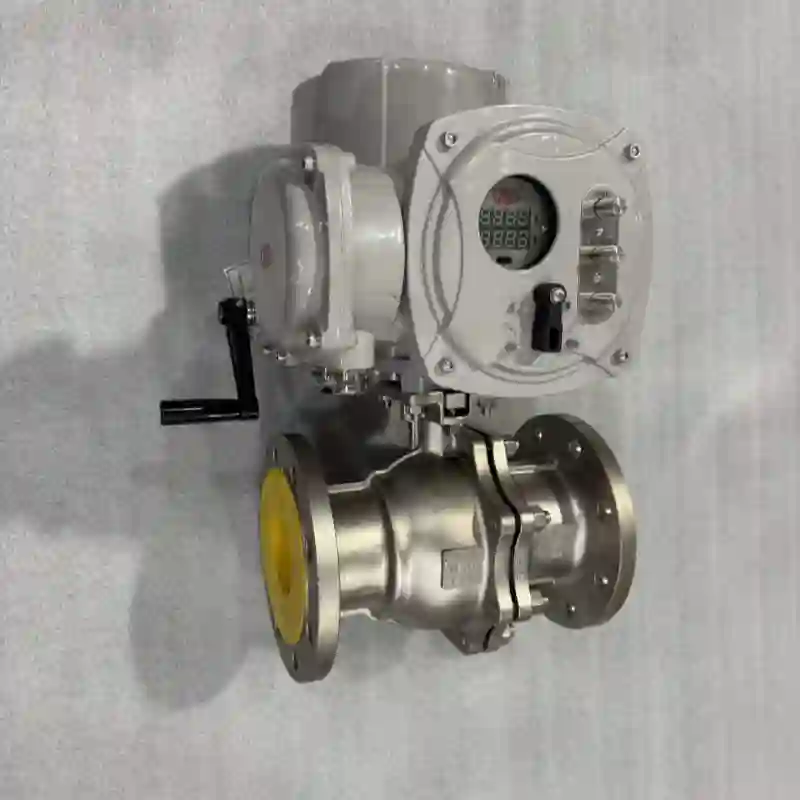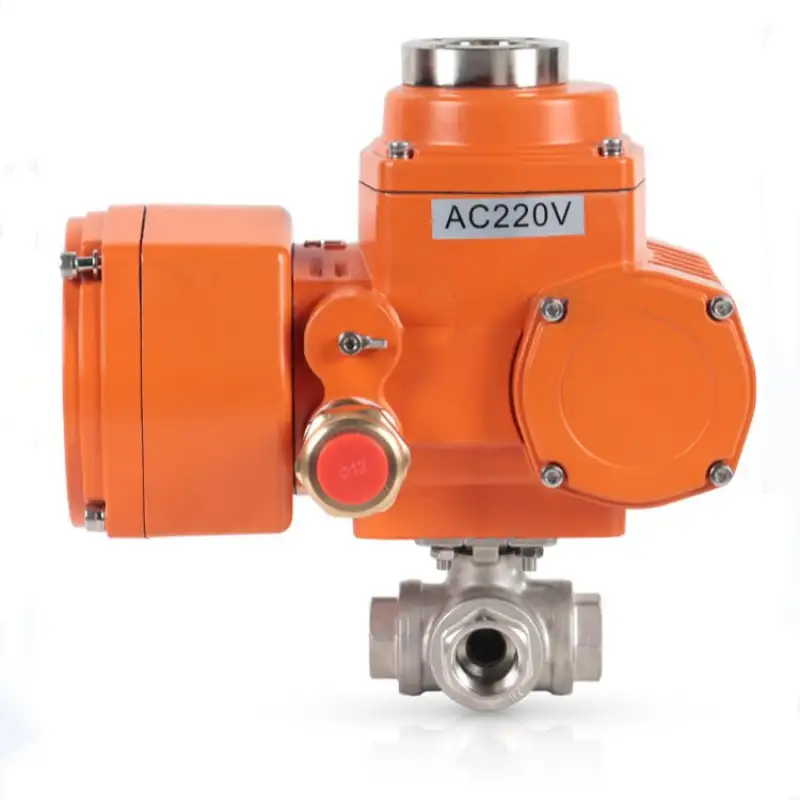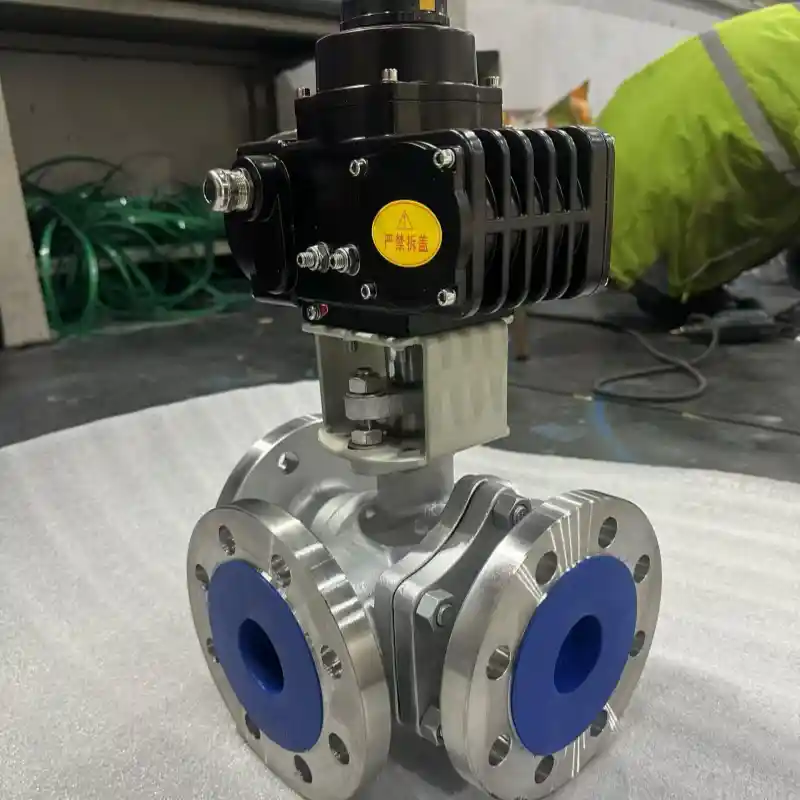

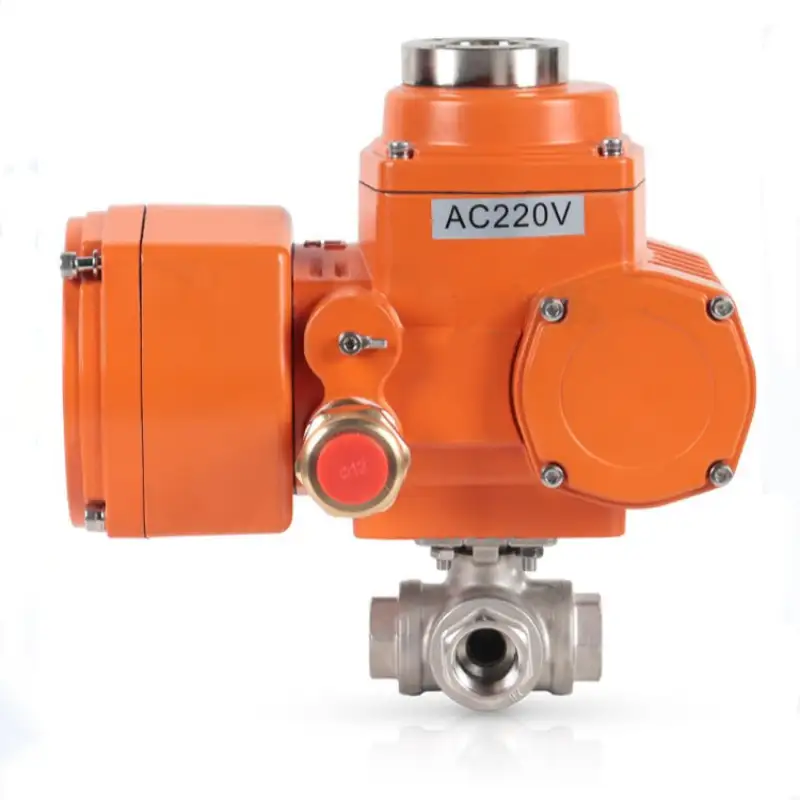
Pneumatic Three Way Ball Valve – ATEX Ex-proof for Automated Control
Pneumatic three way ball valve with double acting and spring return options. Explosion-proof ATEX certified, fast response within 2-3 seconds. Ideal for CIP systems, oil & gas, and chemical processing.
Description
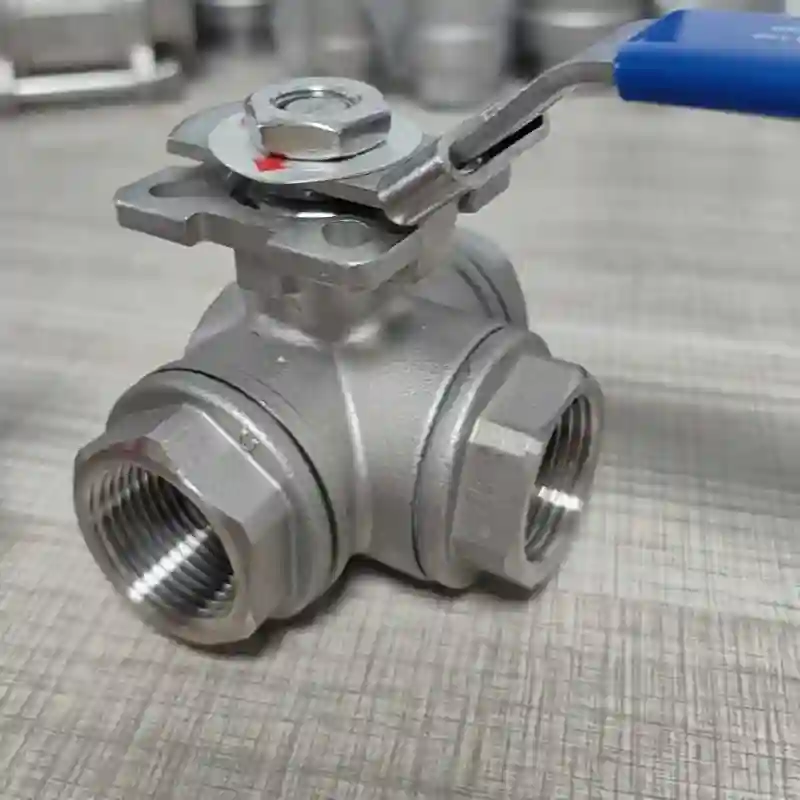
A pneumatic three‑way ball valve is driven by a pneumatic actuator to deliver automatic flow‑path switching, fluid diversion and media confluence within process pipelines.
It merges three‑way ball valve routing capability with the fast‑response and intrinsically‑safe merits of pneumatic actuation. Compressed air drives the actuator piston to produce a 90‑degree rotation for flow‑path reconfiguration, serving as an alternative to manually‑operated on‑site valves and electrically‑powered electric actuated units.
Requiring no electrical power supply, pneumatic three‑way ball valves deliver intrinsic safety within explosive‑hazard zones. Pneumatic actuators complete full‑stroke movement within mere seconds, substantially outperforming manual manipulation and electric‑actuator cycles.
Such strengths make them well‑suited for hazardous areas with combustible gas, as well as automated process workflows demanding high switching speed and frequent cyclic operation.
Explosion‑Proof & Fast‑Response Design Features
Its intrinsic explosion‑safe performance and rapid actuation stem from the following design highlights:
- Intrinsically safe construction: Pneumatic actuators run purely on compressed air, generating no electric sparks or hot surface temperatures during operation. For petrochemical, natural‑gas and coating‑industry sites exposed to flammable gas or dust, these valves operate reliably without costly Ex‑d flame‑proof housings or complex intrinsic‑safety approvals. When paired with ATEX / IECEx certified solenoid valves and limit switches, a complete hazardous‑area solution is realised with markedly lower installation and certification expenditure compared to equivalently‑rated explosion‑proof electric valves.
- Swift response & high‑cycle endurance: Pneumatic actuators finish a full 0‑to‑90° stroke within 1‑3 seconds, far faster than manual intervention (which requires on‑site staff attendance) and electric actuators hampered by motor‑start latency. For heavy‑duty cyclic duties such as multi‑tank sequenced CIP switching and batch‑production flow‑path transition, pneumatic three‑way ball valves deliver irreplaceable rapid performance. Free from motor‑overheating constraints, they withstand hundreds up to thousands of operational cycles each day.
- Dual‑mode actuator options:
- Double Acting: Compressed air delivers bidirectional actuator travel. Designed for position‑holding applications, it generates high switch torque and fits large‑bore or high‑differential‑pressure service conditions.
- Spring Return: Compressed air triggers valve opening or closing, while built‑in springs drive mechanical reset. Upon sudden loss of air supply, the valve automatically reverts to its pre‑defined fail‑safe position, ideal for well‑head safety systems and emergency shutdown duties with strict safety requirements.
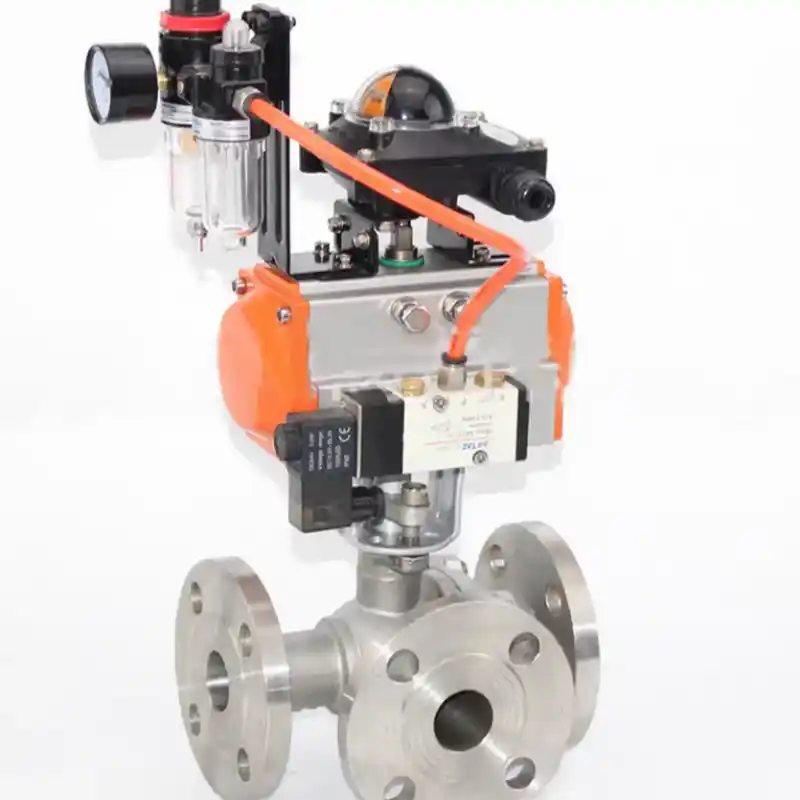
- Integrated control accessories: Pneumatic actuators support auxiliary component assembly including solenoid valves for air‑supply on‑off control, limit switches for valve‑position feedback, filter‑regulator units for air‑pressure adjustment, and positioners for precise modulating control. These accessories enable seamless connection with PLC / DCS platforms to realise remote automated management.
Valve Body Specifications & Parameters
| Parameter | Specification |
|---|---|
| Nominal Size | 1/2″ ~ 12″ (DN15 ~ DN300) |
| End Connection | NPT thread / BSP thread / ANSI‑EN flanges / Tri‑Clamp sanitary connections |
| Pressure Class | Class 150 / 300 / 600 (max. 1,480 PSI) |
| Temperature Range | ‑20°C ~ 180°C (PTFE seat); ‑46°C ~ 250°C (PEEK / metal‑to‑metal seal optional) |
| Flow Pattern | L‑Port (flow switching) / T‑Port (mixing & diversion) |
| Body Material | WCB carbon steel / CF8M (316L) stainless steel / Brass / UPVC |
| Ball Material | 13Cr stainless steel / 316L stainless steel |
| Seat Material | Reinforced PTFE / PEEK |
| Actuator Type | Double Acting / Spring Return |
| Air Supply Pressure | 3 ~ 8 bar (standard); maximum 10 bar |
| Air Port Size | G1/8″ / G1/4″ / G3/8″ (subject to actuator dimension) |
| Operating Time | 1 ~ 5 seconds (varies by size and torque requirement) |
| Ingress Protection | IP66 / IP67 (standard); IP68 optional |
| Explosion‑Proof Certification | ATEX / IECEx (optional) |
| Special Configurations | Anti‑static device (standard) / API 607 fire‑safe design (optional) |
Flow‑Pattern Selection Guidance
- L‑Port: Routes incoming fluid alternately towards two separate outlet ports. Typical use‑cases include filter back‑wash switching, heat‑exchanger bypass regulation and pump‑suction port selection. Pneumatic actuation delivers fast transition, well‑matched for remote‑controlled sequenced workflows.
- T‑Port: Merges two incoming fluid streams for combined output, or divides one inlet flow across two separate outlets. Common applications cover sequenced CIP cleaning‑fluid distribution, dual‑component chemical reagent blending and multi‑loop fluid allocation.
Typical Application Sectors
Pneumatic three‑way ball valves are widely adopted across automated process projects requiring explosion‑proof properties and fast actuation:
- Petrochemical & natural‑gas industry: Flow‑path switching for oil‑gas gathering manifolds and refinery process piping, particularly within hazardous zones carrying flammable gas or dust. Spark‑free pneumatic actuators represent an optimal hardware choice for such environments.
- Food & beverage processing: Automated sequenced delivery of CIP cleaning media and product‑stream switching throughout batch cycles. Pneumatic hardware features simple, cleanable construction and copes with high‑frequency cyclic demands.
- Chemical & pharmaceutical industry: Feed‑line switching for reaction vessels and diversion duties within solvent‑recovery pipelines. Pneumatic three‑way ball valves respond promptly to batch‑mode transition events, while limit‑switch integration enables automated interlock logics.
- Water & environmental engineering: Unit‑to‑unit switching for filter‑tank back‑wash pipelines and automatic proportioning within chemical‑dosing packages. Remote sequenced control lowers field‑exposure risks for operating personnel.
- Well‑head control (WHCP): Air‑supply line switching for well‑head safety valves (SSV / BDV). Spring‑return actuators enforce automatic reset upon air‑supply failure to achieve fail‑safe protection.
Reference Application Case
At a large‑scale AB InBev brewery in Brazil (Case 2), the site’s CIP system required sequenced diversion of cleaning media (acid solution, alkaline liquor, hot water) across over twenty parallel fermenters and storage tanks. Each cleaning cycle involved more than 50 flow‑path transitions, placing high demands on valve cycle endurance and reliable response speed. Previously operated by manual valves, every cleaning session needed two operators working continuously for three hours to complete switching routines, incurring high labour costs alongside frequent human‑induced sequencing errors.
CHCV pneumatic three‑way ball valves were deployed as the solution, fitted with spring‑return pneumatic actuators, 316L stainless‑steel bodies, sanitary Tri‑Clamp ends, integrated solenoid valves and limit switches. Each flow‑path transition finishes within 2‑3 seconds, delivering manifold efficiency gains versus manual workflows. Free from motor‑overheating risks associated with electric actuators, the valves maintain stable performance with over 200 operation cycles daily. Built‑in limit switches transmit valve‑position feedback to the PLC to realise automated interlock for cleaning sequences.
Following commissioning, cleaning‑cycle duration dropped from three hours down to 45 minutes, labour expenditure was cut by 80 %, and incomplete‑cleaning incidents caused by manual mis‑operation were fully eliminated. This solution has been standardised across multiple production lines within AB InBev’s Brazilian facilities.
Quality Assurance
CHCV pneumatic three‑way ball valves are manufactured and inspected complying with ASME B16.34 and ISO 9001 quality‑management protocols. Every pneumatic actuator undergoes 100 % air‑tightness and functional stroke testing. Valve bodies pass 100 % hydrostatic shell‑strength examination plus bidirectional seat‑tightness tests per API 598. ATEX / IECEx certification documentation is available for explosion‑proof variants. Each unit undergoes comprehensive performance verification prior to shipment, accompanied by full material traceability certificates and test reports.