









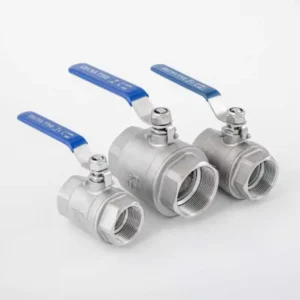
Mini Stainless Steel Ball Valve Compact Size For Instrument Sampling & Pneumatic Line
Compact mini stainless steel ball valve with tiny NPT thread, rustproof, ideal for instruments, sampling pipelines and miniature pneumatic branches.
Description
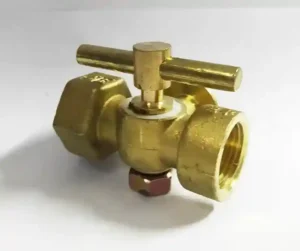
The mini stainless steel ball valve is a small‑bore valve series, with primary sizes concentrated in 1/8″, 1/4″, and 3/8″. Its compact dimensions, miniature threaded ends, smooth and low‑torque operation, and stainless steel corrosion resistance make it ideally suited for confined installation spaces such as precision instrument sampling lines, miniature pneumatic circuits, pressure gauge connection piping, and laboratory reagent tubing. This valve effectively overcomes the limitation of standard‑sized ball valves that cannot fit inside precision equipment cavities, and has become the dedicated control valve for automation instrumentation, laboratory devices, and small hydraulic lubrication systems.
Materials, Threading, and Construction
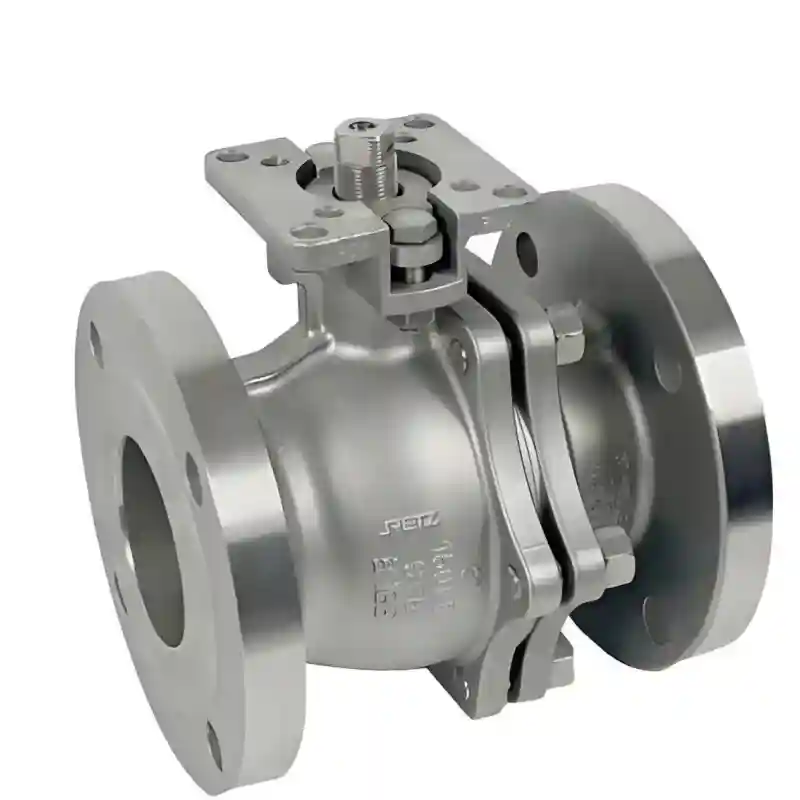
The body is forged from 304 stainless steel, with a 316L upgrade available for enhanced corrosion protection. Its slim profile allows flexible arrangement within narrow equipment clearances. Standard thread options include 1/8 NPT, 1/4 NPT (American miniature threads) and BSP (British standard pipe threads), ensuring full compatibility with common instrumentation and pneumatic piping standards in Europe and the Americas. The widely adopted 2pc mini stainless steel ball valve features a simple two‑piece construction that is both compact and easy to assemble or disassemble. Inside, a high‑precision polished ball works with a food‑grade PTFE seat to deliver tight sealing at pressures up to 1000 WOG, withstanding tens of thousands of switching cycles without leakage.
Safety Options and Flow Characteristics
Two handle configurations are available: the standard lever type and the lockable mini ball valve with a locking mechanism to prevent accidental operation. For long‑term unattended instrumentation applications, the lockable version ensures that the valve position remains undisturbed, avoiding unintended flow changes. The internal flow path is straight‑through full‑bore, eliminating flow restriction and dead zones. This design enables both positive shut‑off and fine flow adjustment via partial rotation – meeting the needs of micro‑sampling in laboratories and precise pneumatic pressure trimming. Compared with plastic miniature valves, the stainless steel mini valve offers superior aging resistance, chemical compatibility, and heat tolerance, while maintaining its shape under elevated temperatures. In contrast to standard industrial ball valves, its footprint is reduced by over 60%, supporting high‑density mounting arrangements. Every unit is leak‑tested with pressurized air and is compatible with mild acidic reagents, dry compressed air, purified water, and other clean media.
Technical Specifications
| Parameter | Specification |
|---|---|
| Common Sizes | 1/8″, 1/4″, 3/8″ |
| Body Material | 304 / 316L stainless steel forgings |
| Thread Standards | NPT, BSPP miniature female threads |
| Pressure Rating | 1000 WOG |
| Body Style | Two‑piece floating ball |
| Typical Applications | Precision analyzers, pneumatic control cabinets, lab sampling lines, instrument piping |
Case Study – Aachen Precision Instrument Factory, Germany
Inside high‑precision analytical instruments, space is extremely limited, leaving only narrow clearances for sampling lines. Many instrument manufacturers now choose miniature stainless steel ball valves for reliable media isolation. At the Aachen Precision Instrument Factory on Industriering 19 in Aachen, Germany, the liquid chromatography equipment originally used plastic miniature valves for its internal sampling lines. These plastic components were attacked by mild acidic reagents, leading to cracking, leakage, and contamination of test samples – ultimately causing measurement inaccuracies. The factory replaced them all with mini stainless steel ball valves (1/4 NPT, 316L version). The compact valve bodies were easily installed within the tight instrument cavities, while the stainless steel construction resisted chemical attack. The smooth, precise operation enabled accurate cut‑off of micro‑flow reagent lines. After three years of continuous service, no leakage or stem seizure has occurred, and the analytical failure rate has dropped significantly.
Conventional ball valves are too bulky for precision instruments, while plastic miniature valves lack chemical resistance and have short service lives. The mini stainless steel ball valve, with its miniature footprint and stainless steel durability, has become the preferred companion valve for precision instrumentation and micro‑pneumatic systems worldwide.