
Industrial Stainless Steel Ball Valve Heavy Duty For Chemical & Water Pipeline
Heavy-duty industrial stainless steel ball valves with pressure resistance, available in manual/pneumatic drive for chemical, water and industrial piping.
Description
The industrial stainless steel ball valve is the most widely used shut‑off valve across modern factory and process piping systems. Distinct from domestic or sanitary‑grade designs, it features a heavy‑duty forged body construction that delivers superior pressure resistance, impact tolerance, and moderate resistance to weak acids and alkalis – all while supporting continuous, uninterrupted operation.
Available with manual levers, pneumatic actuators, electric motors, or gear operators, this valve adapts to a broad range of industrial applications, including chemical processing, power plant cooling water, municipal water supply, low‑pressure oil and gas transmission, and metallurgical cooling systems. Its combination of rapid quarter‑turn operation, stable sealing, and low maintenance costs makes it the standard control valve for industrial fluid networks worldwide.
Robust Materials and Pressure Ratings
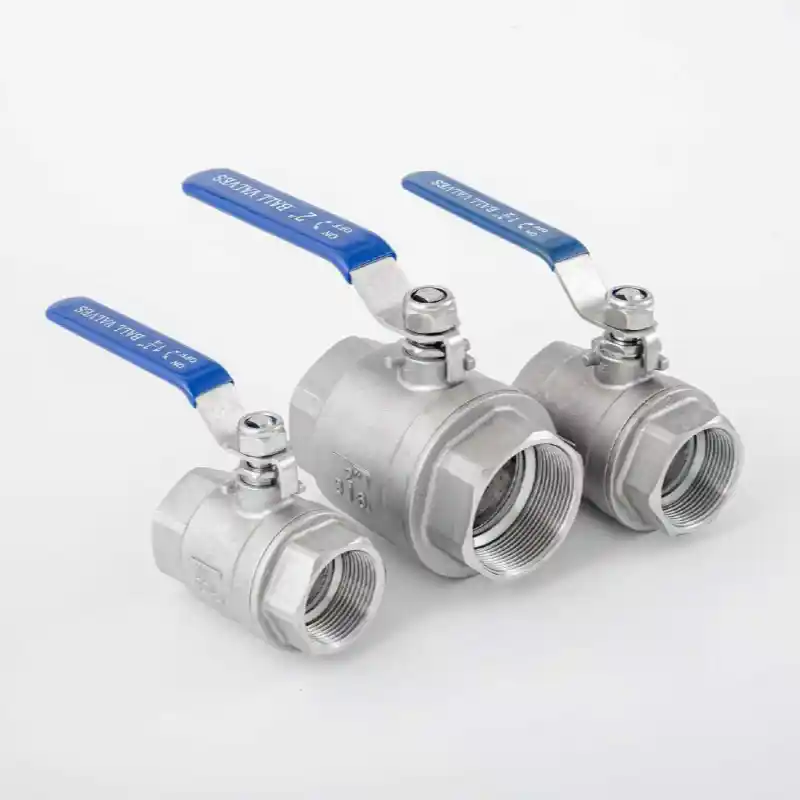
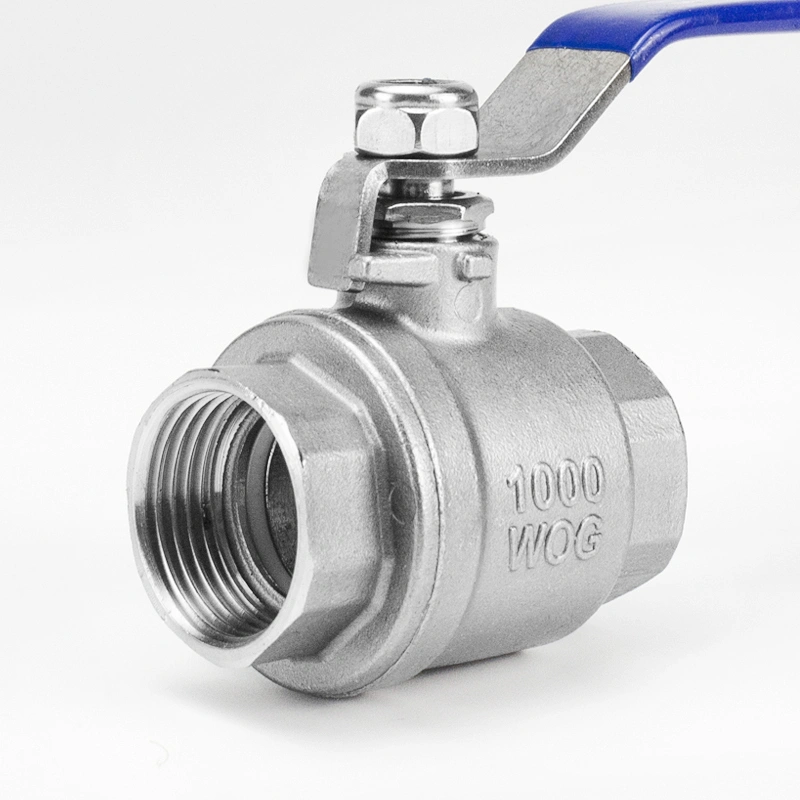
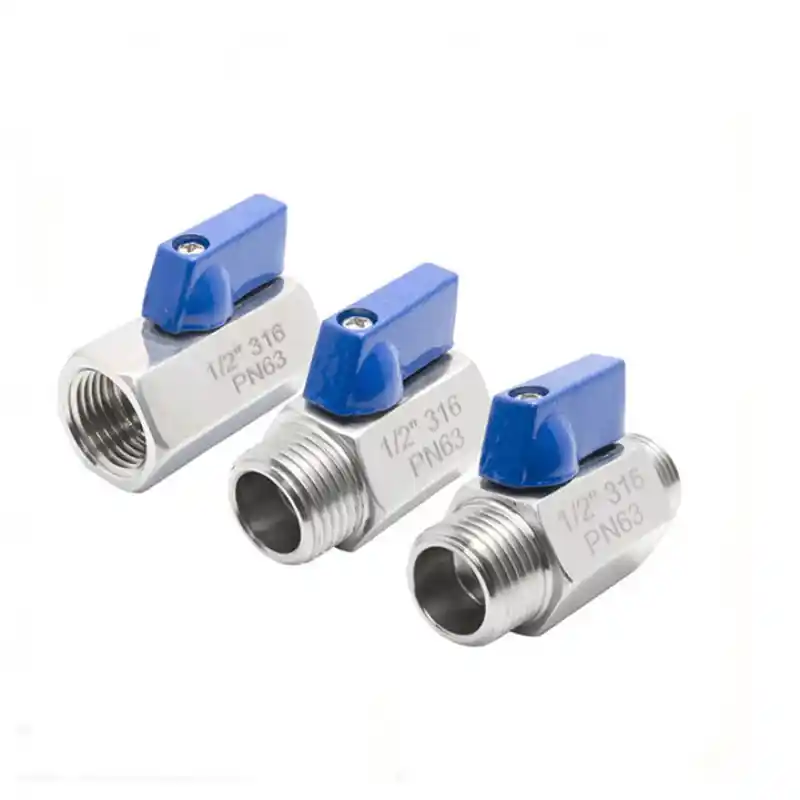
The valve body is forged from 304 or 316L stainless steel, eliminating the porosity and shrinkage defects common in cast bodies. Pressure ratings span from PN16 to PN100 and Class 150 to Class 600, ensuring reliable performance under water hammer and pressure fluctuations. Two primary configurations are offered: two‑piece threaded designs and three‑piece flanged designs. Flanged versions comply with both ANSI B16.5 and GB national standards.
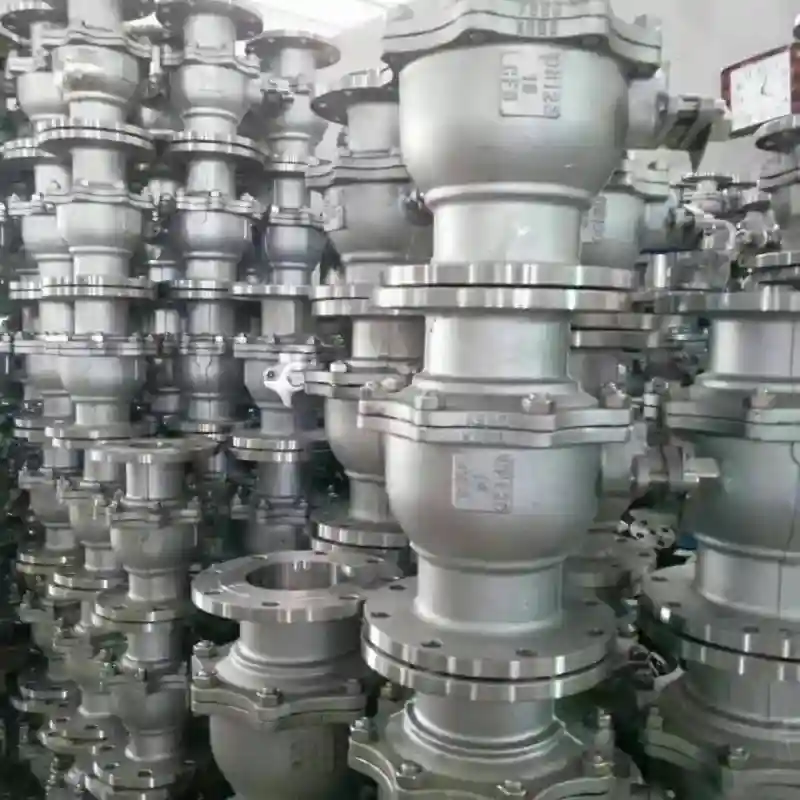
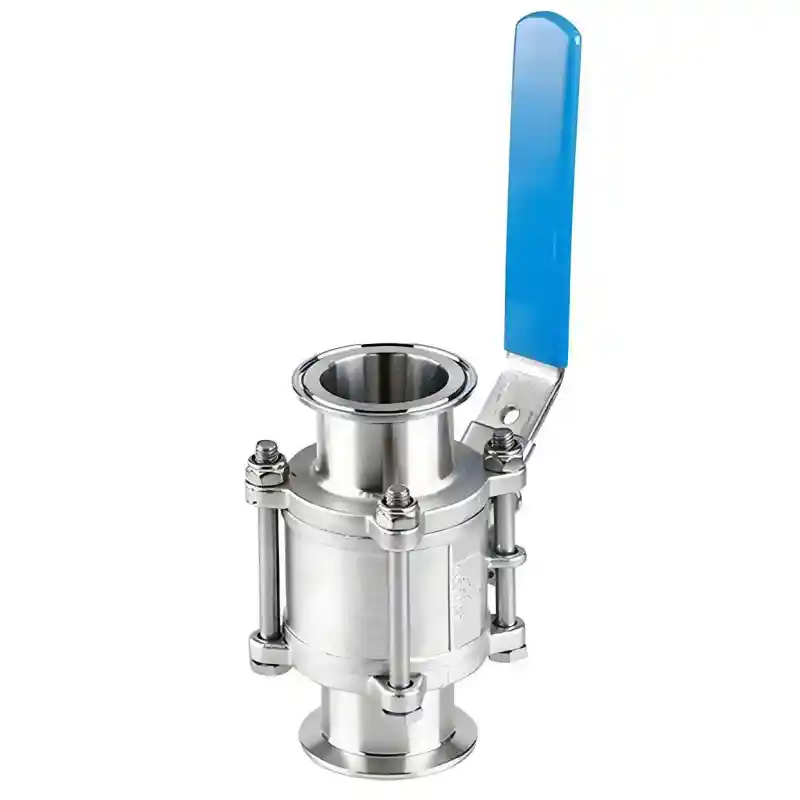
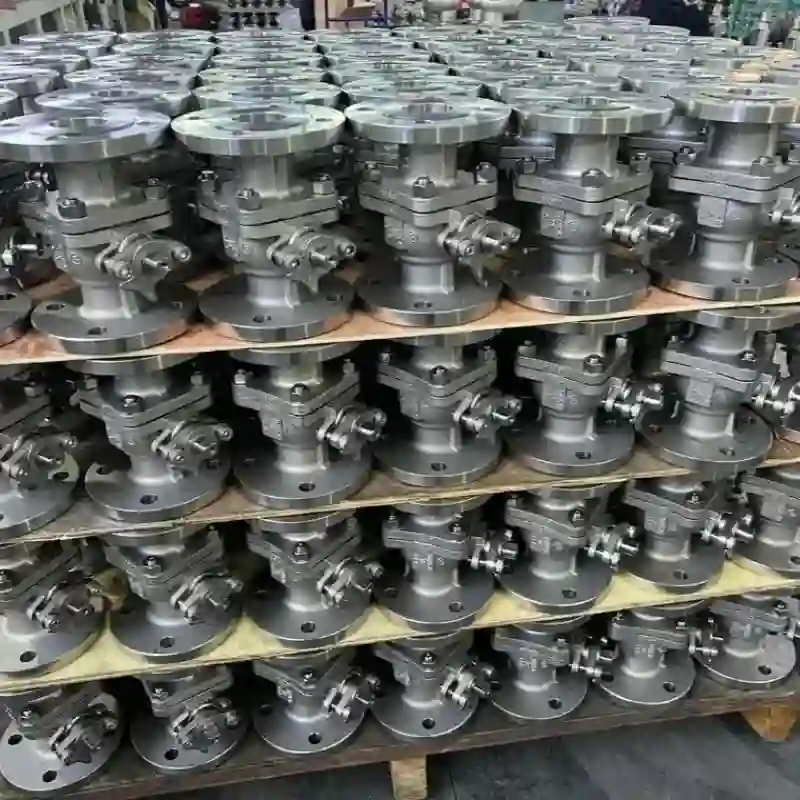
The widely adopted 3pc industrial stainless steel ball valve features a modular three‑piece construction – the end flanges remain fixed to the pipeline, so seat and ball seal replacement can be performed without dismantling the entire piping run, significantly reducing plant downtime.
The ball is precision‑mirror‑finished and paired with modified PTFE or hard‑alloy seats, achieving ANSI Class VI zero leakage. For high‑pressure, large‑diameter applications, the trunnion mounted industrial ball valve is available – its fixed‑shaft design absorbs line thrust and ensures smooth, stable operation under high differential pressures.
Durability and Versatility Across Harsh Environments
Compared with cast‑iron industrial ball valves, the stainless steel body resists rust and can handle moderately saline reclaimed water and mildly acidic chemical streams. In contrast to sanitary‑grade valves, the industrial version has thicker walls and higher structural strength, making it suitable for outdoor, dusty, humid, and other demanding installation sites. Optional anti‑static and fire‑safe designs comply with API 6D, allowing safe use in flammable oil, gas, and chemical pipelines.
Whether for ambient fresh water circulation, weak acid service, or saline media, the appropriate stainless steel grade and seat material can be selected to match the application. Every valve is subjected to hydrostatic shell and seat leakage tests as well as non‑destructive examination, meeting internationally accepted acceptance criteria for general‑purpose industrial valves.
Technical Specifications
| Parameter | Specification |
|---|---|
| Body Material | 304 / 316L forged stainless steel |
| Pressure Ratings | PN16 – PN100, Class 150 – Class 600 |
| End Connections | NPT / BSP threaded; ANSI / GB flanged |
| Body Styles | Two‑piece floating ball; three‑piece floating ball; trunnion‑mounted |
| Actuation Options | Manual lever, pneumatic, electric, gear operator |
| Typical Applications | Chemical lines, power plant cooling water, municipal water, low‑pressure oil/gas |
Case Study – North Bohemian Chemical Park, Czech Republic
Chemical park circulating lines often handle mildly corrosive media and operate continuously, making frequent maintenance shutdowns costly. Many chemical facilities have switched to industrial stainless steel ball valves for reliable flow control. At the circulation workshop of the North Bohemian Chemical Park on Industriální 72 in Litvínov, the plant originally used cast‑iron ball valves to transport slightly saline chemical cooling water.
Over time, the cast‑iron bodies suffered from corrosion, perforation, and leaks – requiring bulk valve replacement every eight months on average, causing significant production losses. The facility replaced the entire line with industrial stainless steel ball valves – specifically 316L flanged three‑piece units. The stainless steel bodies resisted the mildly corrosive circulating medium, while the thickened forged construction withstood hydraulic shocks.
During annual maintenance, the three‑piece design allowed the middle section to be opened for crystal removal and seal replacement, cutting individual service time from 6 hours to just 1.5 hours. Over four years of continuous service, no corrosion or leakage failures have occurred, and maintenance‑related downtime has dropped by 75%, substantially reducing operating expenses.
Cast‑iron ball valves are prone to corrosion and perforation, while sanitary‑grade valves lack the strength to withstand industrial pressures. The industrial stainless steel ball valve strikes an optimal balance between ruggedness, corrosion resistance, and serviceability – making it the preferred shut‑off valve for chemical, power, and municipal industrial piping systems worldwide.