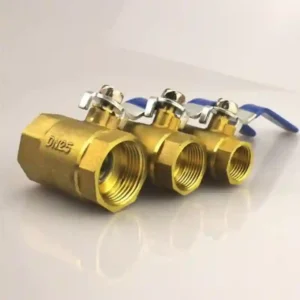










3/4″ Sweat Brass Ball Valve – Full Port, High Temp & Pressure Rated
3/4″ sweat brass ball valve with full port design for low pressure drop. Solder connection ensures leak-free performance in high-temp water systems. 600 WOG, lead-free.
Description
The 3/4″ Sweat Brass Ball Valve is a permanent shut‑off component purpose‑built for copper‑tube piping systems. It forms a unified joint with copper tubing via sweat / solder soldering techniques. It delivers reliable isolation and shut‑off for water heater inlet‑outlet ports, solar thermal collector circuits, HVAC water circulation loops and main residential water supply lines.
The soldered joint creates a metallurgical bond between copper tubing and valve end connections, forming a permanent metallic seal free from thread loosening or seal‑element ageing risks. Paired with Full‑Port flow geometry, forged‑brass body and PTFE seats, this valve withstands sustained hot‑water temperatures up to 120 °C and carries a 600 WOG pressure rating. It stands as a preferred shut‑off solution for hot‑water circuits, closed‑loop circulation systems and concealed‑location plumbing installations.
Material & Specification
| Item | Parameter |
|---|---|
| Body Material | Forged brass (CW617N / ASTM B124) |
| Ball Material | Chrome‑plated brass / 304 stainless steel |
| Seat Material | PTFE |
| Seal Material | PTFE + EPDM (optimized for hot‑water service) |
| Nominal Size | DN20 (3/4″) |
| End Connection | Sweat/Solder, compatible with 3/4″ Type L / M copper tube |
| Pressure Rating | 600 WOG (Water, Oil, Gas) |
| Temperature Range | -20°C ~ +120°C (suited for solar hot‑water systems) |
| Operation | Lever‑operated fast quarter‑turn (90°) open‑close |
| Port Type | Full Port |
| Loss Coefficient (K‑value) | Near zero under fully‑open condition |
| Body Length | 20%‑30% shorter versus threaded‑end brass ball valves |
| Stem Design | Blow‑out Proof |
| Potable‑Water Certification | NSF/ANSI 61 (lead‑free variant optional) |
| Design & Test Standards | MSS SP‑110 / ASME B16.18 / ASME B16.50 |
Application Scenarios
- Residential & commercial main water supply: primary shut‑off downstream of water meters; soldered joints guarantee permanent sealing for concealed plumbing work.
- Water heater inlet‑outlet isolation: isolating valves for gas‑fired and electric water heaters, capable of enduring continuous high‑temperature hot‑water flow.
- Solar hot‑water installations: shut‑off valves for collector supply‑return piping, resisting alternating high‑daytime and low‑night‑time temperatures.
- HVAC and water‑circulation loops: shut‑off and isolation for chilled‑water and hot‑water headers and branch lines.
- Commercial kitchen and foodservice equipment: branch‑line isolation for dishwashers, steam ovens and water boilers.
- Fire‑protection sprinkler branches: isolating valves for light‑hazard sprinkler networks (UL/FM‑certified models available).
- Water‑treatment and water‑softener assemblies: shut‑off and bypass control for softener and water‑purifier inlet‑outlet piping.
Core Advantages: Full‑Port Geometry & Superior Temperature‑Pressure Resistance
1. Full‑Port Construction: Minimize system‑wide pressure drop
The 3/4‑inch sweat brass ball valve adopts Full Port flow‑path design. Its sweat‑socket inner bore matches the nominal inner dimension of standard 3/4‑inch copper tubing, and the ball through‑bore aligns precisely with pipe ID. Flow cross‑section remains unchanged when fully opened, delivering a near‑zero K‑value.
Under typical residential hot‑water flow rates of 4‑8 GPM, field‑measured pressure drop generally stays below 0.5 psi (~3.5 kPa). By contrast, reduced‑bore alternatives such as certain threaded ball valves or globe valves may generate 3‑5 psi pressure loss. For long‑run piping like hotel solar hot‑water networks, full‑port valve deployment can cut annual pump energy consumption by 5%‑10%.
2. Temperature‑pressure endurance: Stable performance under high‑heat operating conditions
The combined assembly of sweat‑soldered joints, forged‑brass body and PTFE seats delivers robust thermal and mechanical performance:
- Sweat‑solder joints: Silver‑bearing or tin‑copper solder forms metallurgical bonding between copper tube and valve sockets. It creates permanent metallic sealing immune to thread loosening, Teflon‑tape degradation or O‑ring failure; sealing integrity holds steady under sustained 120 °C hot‑water exposure.
- Forged brass body: Hot‑forged microstructure delivers consistent mechanical strength at 120 °C, resisting cracking or deformation under repeated hot‑cold thermal cycling.
- PTFE valve seats: Rated for peak service temperatures up to 260 °C, offering ample safety margin for 120 °C hot‑water duties. Its low‑friction characteristic prevents substantial torque rise even under high‑temperature service.
These properties make the valve highly suitable for solar thermal installations and boiler‑fed hot‑water circulation circuits subject to 80‑95 °C operating temperatures and severe diurnal thermal fluctuation.
Application Case: InterContinental Lhasa Paradise Hotel — Solar Hot‑Water Main‑Line Retrofit
Project Name: Lhasa Solar Water Heating System Main Line Isolation Valve Replacement Location: Lhasa, Xizang (Elevation: approx. 3,650 m)
As one of Lhasa’s landmark five‑star hospitality properties, InterContinental Lhasa Paradise Hotel hosts over 200 guest rooms. To leverage abundant local solar resources, the facility runs a solar‑vacuum‑tube‑collector array paired with electric backup heating to supply domestic hot‑water for guest quarters. The system incorporates 120 vacuum‑tube collector units mounted on the hotel rooftop. 3/4‑inch copper tubing transports heated water down to two 20‑ton thermal‑storage tanks situated in the basement.
Project Challenges
- System operating pressure stands at roughly 0.6 MPa. Given the local high‑altitude atmospheric condition where water boils near 89 °C, the circuit requires pressurized operation. Collector outlet temperatures can hit 85‑95 °C on sunny days.
- Six original 3/4‑inch threaded brass ball valves were fitted on collector supply‑return mains for sectional isolation during maintenance.
- Lhasa features extreme diurnal temperature swings (15‑20 °C daily, up to 25 °C in winter). Repeated thermal expansion‑contraction cycles induced micro‑relative displacement across copper‑tube and threaded joints. After three‑to‑four heating seasons, micro‑leaks emerged sequentially at these threaded connections, requiring 2‑3 field repairs each year. PTFE thread tape also suffered accelerated ageing under sustained 85 °C heat.
- Slight flow restriction within legacy threaded ball valves created pressure deficits. During peak hot‑water demand hours (8‑10 PM), guest rooms farthest from storage tanks received insufficient hot‑water pressure, measured at merely 0.18‑0.20 MPa versus the design target of 0.25 MPa.
Solution
During scheduled annual water‑supply shutdown maintenance in April 2024, the hotel engineering team replaced all six threaded ball valves on collector supply‑return mains with 3/4‑inch sweat brass ball valves.
Project Outcomes
- Thermal‑cycle‑resistant sealing eliminates leak‑related pain points: Sweat‑formed metallurgical joints remove micro‑leak risks triggered by 95 °C heat plus 20 °C diurnal thermal cycling. Nine months of runtime recorded zero leakage and zero repair events, ending the prior practice of quarterly rooftop visits for threaded‑joint retightening.
- Full‑port performance stabilizes hot‑water pressure: Post‑retrofit field tests show hot‑water supply pressure at the farthest guest‑room outlet (approx.140 m from collector array) rose from 0.19 MPa to 0.26 MPa, fully meeting design‑spec requirements. Monthly guest complaints regarding hot‑water supply dropped from 12‑15 down to 1‑2, representing roughly 90 % reduction.
- Sweat‑solder installation adapts to high‑altitude operating conditions. Site crews deployed 5% silver‑content high‑temperature solder and completed all soldering work outdoors at 3,650 m elevation under 15 °C daytime ambient temperature. The hotel engineering supervisor commented: “The one‑time high‑quality installation of sweat‑end ball valves fundamentally resolves long‑term leakage headaches for our high‑altitude solar hot‑water system.”