









3/8″ NPT Brass Ball Valve – High-Pressure Self-Sealing, Easy Install

3/8″ NPT brass ball valve with tapered thread self-sealing design. 600 WOG rating, compact size for instrumentation panels. Easy install with PTFE tape & wrench.

Description

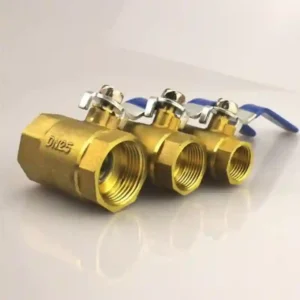
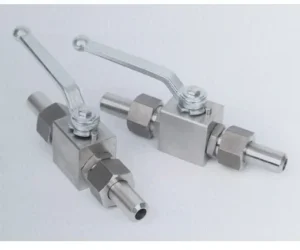
The 3/8‑inch NPT brass ball valve is a miniature shut‑off valve fitted with National Pipe Taper threaded ends. It finds widespread adoption in instrument impulse lines, high‑pressure gas circuits, pneumatic control assemblies and chemical‑analysis equipment. It delivers fast, dependable on‑off regulation for high‑pressure gas and liquid media through 90‑degree rotation of its internal ball component.

As threads are tightened, NPT tapered connections generate both radial expansion and axial locking effects. Higher process pressure drives tighter thread engagement, forming a metal‑to‑metal pressure‑assisted seal. Combined with PTFE valve seats, this creates dual‑layer leak‑proof protection. This valve is particularly well‑suited for industrial instrumentation and high‑pressure gas applications that demand rigorous high‑pressure sealing integrity alongside straightforward field assembly. Its bore cross‑sectional area is approximately 2.25 times that of a 1/4‑inch variant, striking an optimal trade‑off between flow capacity and compact footprint. It serves as an ideal upgrade alternative to 1/4‑inch valves with insufficient flow and bulky 1/2‑inch units.

Material & Specification Parameters

Item Specification
Valve Body Material Forged Brass (CW617N / ASTM B124)
Ball Material Chrome‑plated Brass / SS304 Stainless Steel
Seat Material PTFE (Polytetrafluoroethylene)
Sealing Material PTFE + NBR (Nitrile Butadiene Rubber) / FKM (optional)
Nominal Size DN10 (3/8″)
End Connection Female NPT (American tapered pipe thread, ASME B1.20.1)
Pressure Rating 600 WOG (Water, Oil, Gas)
Temperature Range -20°C ~ +120°C (PTFE seat applied)
Operation Mode Handle‑equipped quarter‑turn (90°) fast opening & closing
Operating Torque < 1.5 N·m (low‑torque actuation)
Body Length 45 ~ 55 mm (subject to end‑connection configuration)
Panel Mount Center‑to‑Center Spacing ≥ 30 mm for compact side‑by‑side mounting
Flow Path Type Full Port
Stem Design Blow‑out Proof structure
Installation Requirement PTFE sealing tape plus pipe wrench only; no gaskets or O‑rings required
Applicable Standards MSS SP‑110 / ASME B16.34 / API 598

Application Scenarios

  • Instrument impulse and blow‑down piping: isolation valves for impulse and blow‑down service upstream of pressure gauges, differential‑pressure transmitters, pressure switches and level transmitters. The 3/8″ NPT format delivers balanced performance between flow output and compact dimensions.
  • High‑pressure gas cylinders and manifolds: shut‑off and switching duties for outlet ports of high‑pressure gas cylinders and manifold branch lines for hydrogen, nitrogen, argon and compressed air.
  • Pneumatic control systems: pilot‑gas circuit switching and bypass functions for precision pressure regulators, pneumatic positioners and solenoid valves.
  • Oil‑gas‑field wellhead instrument manifolds: multi‑path integrated valve assemblies on impulse lines of production and gas‑production trees. Compact form factors suit installation within confined panel real‑estate.
  • Chemical‑analysis and laboratory hardware: carrier‑gas and sample‑gas stream switching for gas chromatographs, mass spectrometers and TOC analyzers.
  • Refrigeration and HVAC systems: impulse isolation valves mounted ahead of pressure gauges and pressure switches on chiller units.
  • High‑pressure cleaning and surface‑treatment equipment: branch switching for process fluid or compressed‑air lines serving commercial high‑pressure washers and blasting machinery.

Core Advantages: High‑Pressure Self‑Sealing & Streamlined Installation

Within instrumentation and high‑pressure gas systems, valve leakage can not only introduce measurement deviation but also trigger serious safety hazards. This valve is purpose‑engineered around two key strengths: High‑Pressure Self‑Sealing and Extremely Easy Installation.

1. NPT Tapered Thread — Tighter sealing under elevated working pressure

NPT (National Pipe Taper) threads adopt a 1°47′ taper angle, enabling its high‑pressure self‑sealing mechanism:

  • During tightening, taper geometry creates radial expansion force which presses thread flanks into tight mutual contact.
  • Upon exposure to high‑pressure process media, axial separating forces arise and further push tapered threads radially outward to produce secondary wedge‑locking.
  • As system pressure rises, axial separating force increases correspondingly, tightening thread meshing and enhancing sealing performance.

Thanks to this pressure‑energized sealing principle, a 3/8″ npt brass ball valve achieves zero‑leakage performance under its 600 WOG pressure rating without additional elastomer sealing components. Unlike straight‑thread ball valves that rely on O‑rings or gaskets, NPT tapered connections eliminate failure risks stemming from extrusion, ageing or chemical degradation of soft sealing elements. This makes it highly suitable for harsh working conditions involving flammable and explosive media such as natural gas and high‑pressure hydrogen.

The stem incorporates a Blow‑out Proof structure with a retention shoulder at its base. Even in cases of abnormal cavity overpressure, the stem cannot be ejected out of the valve body by fluid force, delivering enhanced operator safety protection.

2. Streamlined Installation — No O‑rings or gaskets necessary

Conventional straight‑thread ball valves generally require O‑rings, flat gaskets or composite sealing washers to establish reliable sealing. These extra components expand spare‑part inventories and carry ageing risks under high‑pressure or high‑temperature operating environments.

Assembly workflow for the 3/8″ NPT brass ball valve remains highly concise:

  • Wrap 3‑4 uniform layers of PTFE sealing tape onto male NPT threads.
  • Manually spin the valve onto the mating female thread until hand‑tight.
  • Apply roughly 1.5‑2 additional thread pitches of tightening torque using a pipe wrench to finish installation.

No sealing gaskets, O‑rings, thread sealant or special tooling are needed throughout the whole procedure. Single‑valve fitting normally completes within five minutes. For mobile test rigs, field‑site oil‑gas instrumentation and laboratory setups subject to frequent disassembly and maintenance, this feature cuts downtime and reduces the variety of required spare‑parts inventory.

Application Case: Cenovus Energy Inc. — Compact‑Valve Retrofit for Christina Lake Oil‑Sands Wellhead Instrument Manifolds

Project Name: Christina Lake Oil Sands Wellhead Instrument Manifold Compact Valve Retrofit Location: Alberta, Canada

Cenovus Energy Inc. ranks among Canada’s leading oil‑sands operators, running large‑scale thermal‑recovery oil‑sands facilities across the Christina Lake region using SAGD (Steam‑Assisted Gravity Drainage) technology for bitumen extraction. Instrument panels are fitted onto wellhead production‑tree assemblies to accommodate pressure sensors and gauges. Real‑time pressure monitoring of wellhead produced fluids safeguards stable SAGD process performance.

Background

  • Each producing‑well instrument panel houses four impulse valves and two blow‑down valves (six units total), delivering independent isolation and blow‑down functions for individual sensors. Available panel width is constrained to 280 mm, caused by densely routed surrounding wellhead piping plus mandatory thermal‑insulation wrapping to defend against −40 °C winter ambient conditions.
  • Previously deployed 1/4″ NPT ball valves offered appropriate overall dimensions yet suffered from insufficient bore capacity, producing substantial response lag for pressure‑sensor impulse readings. 3‑5 seconds were required for sensor outputs to stabilize following well‑head pressure fluctuations, failing real‑time monitoring requirements of SAGD operations.
  • Trials with 1/2″ NPT ball valves resolved flow‑capacity issues at the cost of excessive body size. Six side‑by‑side valves occupied over 350 mm total width, exceeding panel boundaries and preventing full insulation coverage, which triggered frequent winter freeze‑up incidents.
  • Furthermore, legacy valves exhibited sharp torque escalation at −40 °C. Field technicians wearing heavy cold‑weather gloves could not complete manual single‑hand operation and had to resort to pipe wrenches, bringing low operational efficiency.

Solution: Following field qualification testing in 2023, Cenovus field engineering department specified 3/8‑inch NPT brass ball valves (Full Port) for instrument‑panel upgrades on all newly commissioned and overhauled production wells.

Project Outcomes

  • High‑pressure self‑sealing performance: NPT tapered joints passed a 48‑hour pressure‑decay test at 3.5 MPa (approx. 35 bar) well‑head pressure with zero measurable leakage. No instrument malfunctions or safety‑related incidents originating from valve leakage have occurred since deployment.
  • Simplified field assembly: Maintenance crews only require sealing tape and a pipe wrench for valve replacement. Welding, sealing gaskets and special tools are eliminated. Single‑valve change‑out finishes in under five minutes, greatly shortening outdoor working durations for site staff operating under −40 °C frigid conditions.
  • Well‑balanced flow and spatial efficiency: The 3/8‑inch full‑port bore provides 2.25 times the cross‑sectional area of 1/4‑inch alternatives. Pressure‑sensor impulse‑response time shortened from 3‑5 seconds down to below one second. Meanwhile, compact body geometry enables side‑by‑side mounting of six valves within the 280 mm panel width, allowing complete insulation wrapping. Zero freeze‑blockage events were logged throughout the first winter after retrofit (Nov 2023‑Mar 2024).
  • Reliable low‑temperature operability: Operating torque stays below 1.5 N·m even at −40 °C. Field‑site workers wearing thick winter gloves can complete open‑close cycles single‑handedly without auxiliary tools.

This solution has been rolled‑out for more than 30 production wells within Cenovus’s Christina Lake site and incorporated into the corporate Oil‑Sands‑Wellhead Instrument‑Manifold Specification as standard hardware for future well‑construction projects. As stated by Cenovus field‑instrumentation engineer: “The High‑Pressure Self‑Sealing and Extremely Easy Installation merits of the 3/8‑inch NPT brass ball valve jointly address sealing reliability and on‑site maintenance efficiency for our extreme‑cold‑climate operations. Simply apply sealing tape and turn with a pipe wrench, and a high‑pressure impulse point is fully commissioned within five minutes.”