
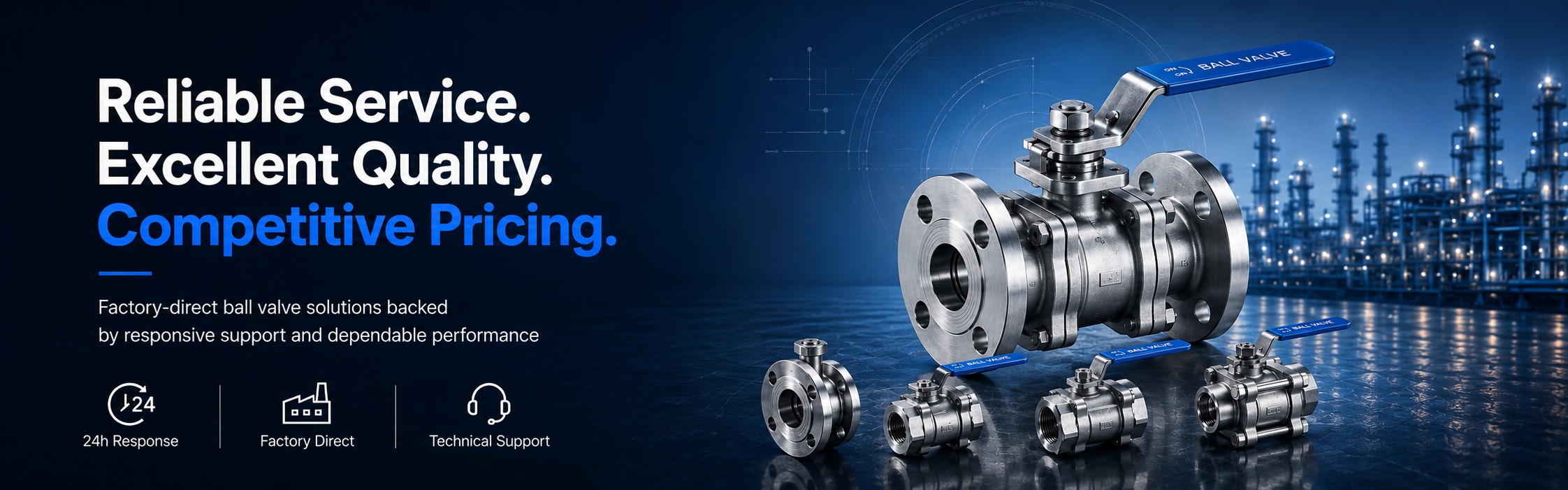






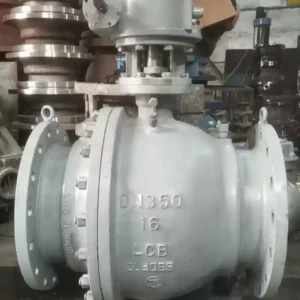
Stainless Steel 3 Piece Ball Valve – Corrosion Resistant Full Port
Stainless steel 3 piece ball valve in 316L / 2205, full port design for corrosive media. Tri-clamp, threaded & flanged ends for sanitary and seawater applications.
Description
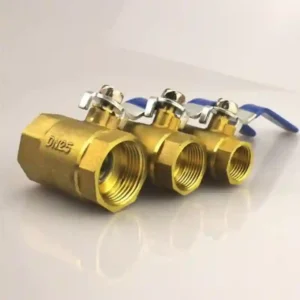
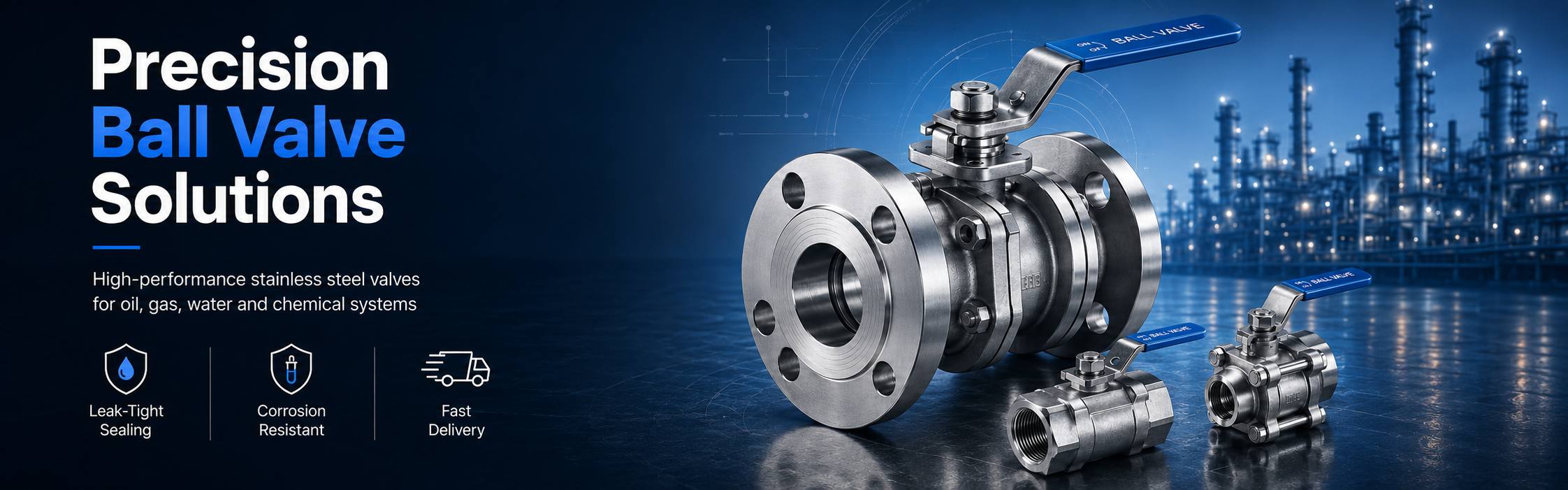
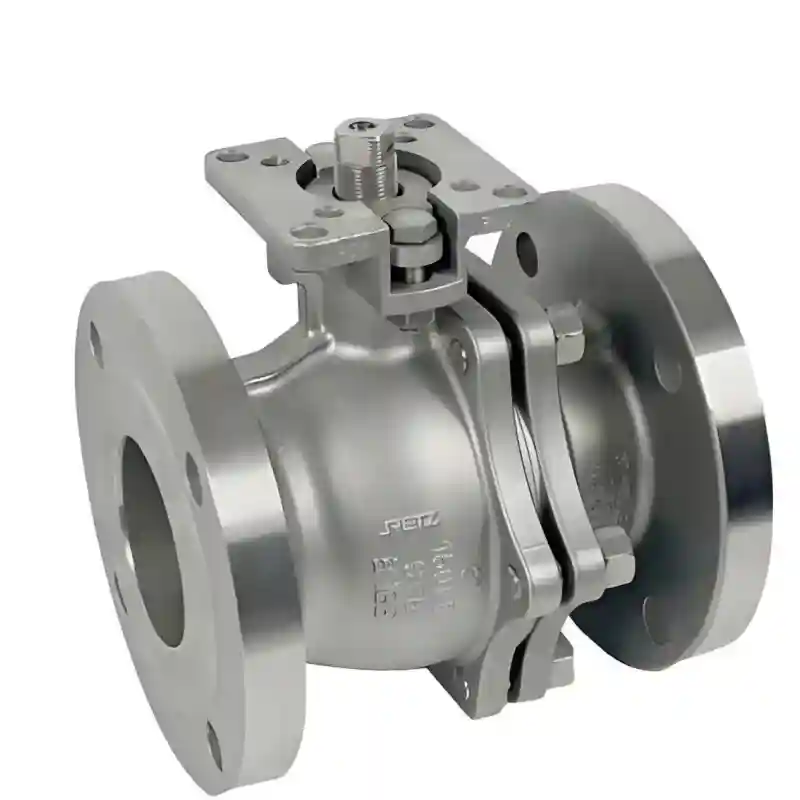
A stainless‑steel 3‑piece ball valve is assembled by bolting together three separate components: left‑hand body, central body and right‑hand body. The ball and valve seats are enclosed inside the central body. Media shut‑off and flow passage are achieved by turning the stem through 90° to actuate the ball.
The core merit of the three‑piece layout lies in its on‑line service capability. Operators may loosen connecting bolts and extract the central cartridge without removing the entire valve from process piping, enabling direct replacement of balls, seats and gaskets. This advantage makes it one of the most service‑friendly ball‑valve solutions for welded piping and hygienic process conditions. Stainless‑steel grades including 304/316L/2205 deliver extended service life against corrosive process fluids.
Materials and Specifications
Below are commonly‑adopted body grades for stainless‑steel 3‑piece ball valves, together with corresponding standards, compatible media and corrosion‑resistant characteristics:
| Material Grade | Reference Standard | Applicable Media | Corrosion Resistance Features |
|---|---|---|---|
| 304 / CF8 | ASTM A351 CF8 | Mildly corrosive fluids, food‑grade media, potable water | General‑purpose austenitic stainless steel |
| 316L / CF3M | ASTM A351 CF3M | Chloride‑containing fluids, organic acids, seawater | Molybdenum‑alloyed (Mo≥2.5 %), good pitting‑corrosion resistance |
| 2205 Duplex Stainless Steel | ASTM A890 | High‑chloride brine, seawater, sour oil‑gas streams | Outstanding resistance to stress‑corrosion cracking (SCC) |
| 904L / N08904 | ASTM B673 | Concentrated sulfuric acid, phosphoric acid, highly corrosive chemical streams | High‑alloy austenitic stainless steel |
Customizable seat materials for diverse operating conditions:
| Seat Material | Operating Temperature Range | Compatible Media |
|---|---|---|
| PTFE / TFM | ‑20 ℃ ~ 180 ℃ | General‑purpose acids & alkalis, steam, food‑grade fluids |
| RPTFE | ‑20 ℃ ~ 200 ℃ | High‑temperature steam, hydrocarbon fluids |
| PEEK | ‑20 ℃ ~ 250 ℃ | High‑temperature high‑pressure service, abrasive‑laden media |
| Metal seat (Stellite hard‑faced) | ‑196 ℃ ~ 400 ℃ | High‑pressure steam, eroding seawater, sand‑bearing fluids |
End Connections and Pressure Parameters
| Parameter Item | Specification Scope |
|---|---|
| Nominal Diameter | DN15 ~ DN600 (1/2″ ~ 24″) |
| Pressure Class | Class 150 / 300 / 600 / 900 / 1500 / 2500 |
| End Connection Types | Tri‑Clamp, NPT/BSPT threaded, socket‑welded, butt weld ball valve 2 inch stainless, flanged (ASME B16.5 / EN 1092‑1) |
| Construction Type | Floating Type for small‑to‑medium sizes; Trunnion Mounted for large‑size / high‑pressure duties |
| Face‑to‑Face Standard | ASME B16.10 / EN 558 |
| Anti‑Static Feature | Standard stem anti‑static assembly (API 607) |
| Fire‑Safe Qualification | Optional API 607 / ISO 10497 fire‑safe certification |
| Internal Surface Finish | As‑cast Ra ≤ 1.6 μm; hygienic electro‑polished Ra ≤ 0.4 μm |
| Actuator Mounting Pad | ISO 5211 direct‑mount platform for pneumatic / electric actuators |
Structural Highlights: Corrosion Resistance & On‑Site Maintainability
Thanks to its three‑piece configuration, internal components can be serviced without detaching the whole valve from the pipeline. After releasing flange bolts, operators pull out the central body assembly complete with ball and seats; worn sealing elements can then be renewed before reassembly. When fitted onto welded piping, this design eliminates pipe‑cutting and re‑welding workflows, cutting repair duration from multiple hours down to dozens of minutes.
Molybdenum content within 316L enhances resistance against chloride‑triggered pitting and crevice corrosion. The duplex microstructure (austenite plus ferrite) of 2205 duplex steel delivers superior SCC performance, making it well‑suited for seawater and H₂S‑containing sour oil‑gas environments. Electro‑polished internal bores present smooth, crevice‑free surfaces, minimising media retention and microbial proliferation risks for hygienic service.
Typical Application Sectors
- Seawater desalination & offshore engineering: RO high‑pressure feed lines, seawater intake networks, brine transfer piping. 316L or 2205 grades paired with metal seats are recommended.
- Pharmaceutical & biotech processes: WFI (Water‑for‑Injection), purified‑water and sterile‑raw‑material transfer lines. 316L electro‑polished bodies with Tri‑Clamp connections are preferred.
- Food & dairy production: Pipelines handling whey protein, fruit juice, syrup and edible oil with high‑viscosity or acidic properties. Adopt full port 3 piece ball valve to mitigate blockage risks.
- Fine chemicals & personal‑care manufacturing: On‑off and diversion duties for surfactants, coatings and aromatics. Select PTFE or PEEK seats to match varied chemical compatibility requirements.
- Oil & petrochemical industry: Sour media loaded with H₂S / CO₂ as well as high‑temperature high‑pressure steam circuits. Metal seats plus fire‑safe options are advised.
Field Application Case
At the Jubail Phase II Desalination Plant operated by Saudi Water Conversion Corporation (SWCC) in Saudi Arabia’s Eastern Province, trunnion mounted ball valve units manufactured from 2205 duplex stainless steel are deployed on high‑pressure RO feed pipelines. Sizes range from 3″ to 6″ with Class 600 pressure rating; balls and seats receive Stellite hard‑facing treatment.
Feed seawater carries chloride concentrations up to 35 000 ppm, imposing stringent demands on pitting‑ and stress‑corrosion resistance. The 2205 duplex grade achieves a PREN value above 35, and hard‑faced metal seats withstand erosion induced by high‑velocity seawater. Since site RO feed piping adopts butt weld ball valve construction, two‑piece alternatives would require pipe cutting for seat replacement. The three‑piece architecture permits technicians to extract the central cartridge in‑situ without cutting welded joints, then renew seats and gaskets. According to SWCC maintenance archives, this configuration reduces per‑valve service labour from 12 hours (cutting, re‑welding and non‑destructive testing for conventional solutions) to merely 3 hours for component swap‑out and reassembly, substantially curbing revenue loss caused by plant shutdowns.
Practical Sizing Guidance
Procurement engineers frequently evaluate floating ball valve vs trunnion ball valve for project selection. General guidance is summarised below: Choose floating‑type construction for DN ≤ 150 and pressure ≤ Class 600 scenarios for simpler mechanics and lower capital expenditure. Specify trunnion‑mounted variants for DN ≥ 200 or pressure ≥ Class 900 applications. Supported by upper and lower body bearings, the fixed ball lowers actuation torque and performs reliably for large‑bore high‑pressure piping networks.