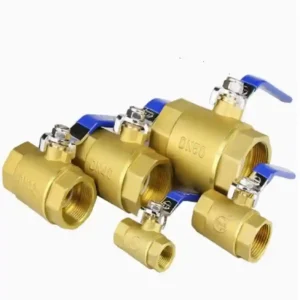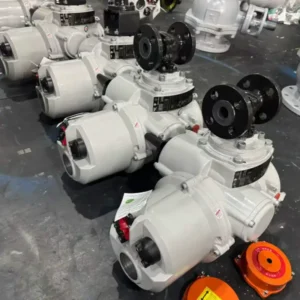

The “normally closed” state of a normally closed motorized ball valve must be defined first. Does it mean closed when the command is zero, or does it mean that the valve returns closed after a power loss? A standard electric actuator may hold its last position and may not have spring return. Write the safe state, control logic, and power-loss behavior as separate requirements.
A normally closed configuration may suit a branch that should block the medium by default, but safety also depends on the medium, equipment startup order, bypasses, and manual reset. The words “normally closed” cannot replace a site risk review.
For model and connection details, see CHCV valve resources.
normally closed electric ball valve: Write the closing condition
For a normally closed electric ball valve, confirm whether the closing condition comes from the control signal, internal actuator logic, or an external relay. Record the position after normal power loss, signal loss, power restoration, and manual operation so that “normally closed” has a defined project meaning.
1″ motorized ball valve 120v normally closed for steam: Define the steam boundary
A 1″ motorized ball valve 120v normally closed for steam requires a separate review of body, seat, seal, temperature range, and actuator insulation conditions. Normally closed logic cannot compensate for a material or temperature mismatch. The medium conditions must be confirmed before the control mode.
📌 Case Setting: CHCV and UTILITY AUTOMATION SDN. BHD. review safe-state logic for a small factory
UTILITY AUTOMATION SDN. BHD. is a contractor in Kuala Langat, Selangor, Malaysia. Since 2021 it has held CIDB G7 registration and has provided building, civil-engineering, and MEP solutions. For a utility upgrade at a small factory, the team reorganized isolation logic for a cleaning area and equipment-air branches. The maintenance team wanted a clear blocking state when a control signal was lost, but the media and startup conditions differed by branch: ambient cleaning water, compressed air, and areas with steam-traced piping.
The team did not treat “closed after power loss” as a universal answer. It confirmed four dimensions separately: the running position, the position after power or signal loss, the manual-reset method, and whether the control cabinet provided an unambiguous state indication. It then judged which branches suited a normally closed arrangement and which should remain normally open. For steam or future product-contact services, the team separately asked CHCV to confirm body and seal temperature and compatibility documents. CHCV supplied the relevant ball-valve products and material and technical documents.
1″ motorized ball valve 120v normally closed: Separate voltage from safe state
A 1″ motorized ball valve 120v normally closed query contains size and voltage intent, but still requires confirmation of rated-voltage range, starting current, connection standard, and control method. 120 V describes one procurement condition; it does not mean every 1-inch valve can connect to the same circuit.
3/4″ motorized ball valve nc 2 wire: Check the two-wire logic
A 3/4″ motorized ball valve nc 2 wire arrangement may suit simple on/off control, but confirm power-loss state, reset method, and position feedback. If the control cabinet must know that the valve actually closed, add that feedback requirement during procurement rather than changing wires after installation.
2″ normally closed ball valve: Add verification for larger sizes
A 2″ normally closed ball valve may require higher actuator torque and stronger installation support. Confirm pipe stress, valve operating torque, actuator orientation, and service space. Do not transfer small-valve normally closed experience directly to a larger assembly.
Frequently Asked Questions
Will a normally closed motorized ball valve always close after a power loss?
Not necessarily. Unless the specific actuator has a suitable reset mechanism, it may hold its pre-loss position. Use the model documentation and a field test as the basis.
Is a normally closed valve suitable for a steam line?
Control state alone is not enough. Steam service also requires review of body, seat, seal, temperature, pressure, and actuator environmental conditions.