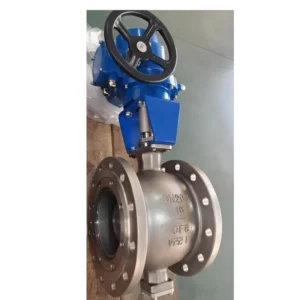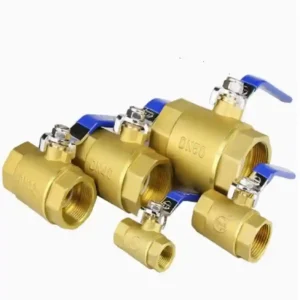

The central task when selecting a motorized ball valve actuator is torque and interface matching, not actuator housing size. Valve operating torque changes with size, seats, medium pressure, temperature, and service condition. The actuator must also match the stem, mounting flange, power supply, control signal, and feedback arrangement.
Separate valve and actuator fields in the purchase document, then connect them with a matching table. A “complete set” quotation without torque evidence, interface dimensions, or a wiring diagram is not a sufficient final selection basis.
For model and connection details, see CHCV valve resources.
2″ electric ball valve actuator: Screen the options with torque data
The 2″ electric ball valve actuator search intent does not imply one fixed torque. Ask the supplier to state valve operating torque, actuator output torque, starting conditions, and the applicable margin, and confirm that the test condition resembles the actual medium, pressure, and temperature.
electric ball valve with feedback: What does the feedback actually represent?
The feedback from an electric ball valve with feedback may be a switch contact, analog signal, or communication data. Define whether it represents a command, position, or fault; confirm the controller input; and test open, closed, and interrupted movements in the field.
📌 Case Setting
KNH Engineering & Construction (M) Sdn Bhd is a Malaysian MEP contractor established in May 2000 and located on Jalan Puchong in Kuala Lumpur. It focuses on plumbing, sanitary, civil, and MEP installation and piping work. For a factory utility upgrade, KNH needed a complete list for electric ball valves and actuators across several equipment branches. The branches had different sizes, control modes, and feedback requirements: some needed only on/off control, some needed open/closed feedback, and some involved modulating control. Buying by valve name alone could leave an interface that could not be installed or an actuator without enough torque.
The team used the valve model as the master field and attached actuator model, output torque, mounting interface, supply voltage, control signal, and feedback signal to each installation point. For example, a DN50 branch required an actuator output that met the opening requirement at the maximum differential pressure, while a feedback branch separately stated the feedback type and terminal definition. CHCV supplied the valves and submitted torque calculations, wiring diagrams, and test records by list position so that each document matched a valve number. After installation, KNH checked actual valve position against the control-cabinet status and filed the records as one complete delivery package.
2″ ball valve with electric actuator: Match the complete-set interfaces
When purchasing a 2″ ball valve with electric actuator, confirm the valve connection, stem height, mounting flange, and actuator output shaft. A complete supply can reduce interface disputes, but acceptance must still check the body, actuator, wiring, and movement result separately.
3 way ball valve electric actuator: Confirm ports and rotation direction
For a 3 way ball valve electric actuator, the question is not only whether the actuator can rotate 90 degrees. Rotation direction, port labels, and the intended flow path must agree. Use the drawing to confirm ports A, B, and C, then test each position so that a control-cabinet “open” signal does not hide an incorrect flow route.
actuator control ball valve: Check power, signal, and protection
An actuator control ball valve may use on/off, three-point floating, or continuous modulation. Confirm power, input signal, overload protection, limits, feedback, and manual operation. A matched control signal does not prove that torque and valve interfaces are matched.
2 way ball valve with actuator: Leave service space after installation
After installing a 2 way ball valve with actuator, check stem alignment, pipe support, actuator direction, and manual access. Do not transfer pipe stress directly to the body or use the actuator as a pipe support. Maintenance must allow isolation, power disconnection, and reset according to the instructions.
Frequently Asked Questions
Is a higher actuator torque always better?
Not necessarily. Torque must cover the actual valve requirement and match the stem, seats, and system protection. An oversized actuator can also create installation, control, and overload risks.
Must an electric ball valve and actuator be purchased together?
Not always. When purchased separately, the supplier must receive complete stem, flange, torque, power, signal, and feedback data; otherwise interface responsibility can remain unclear.