
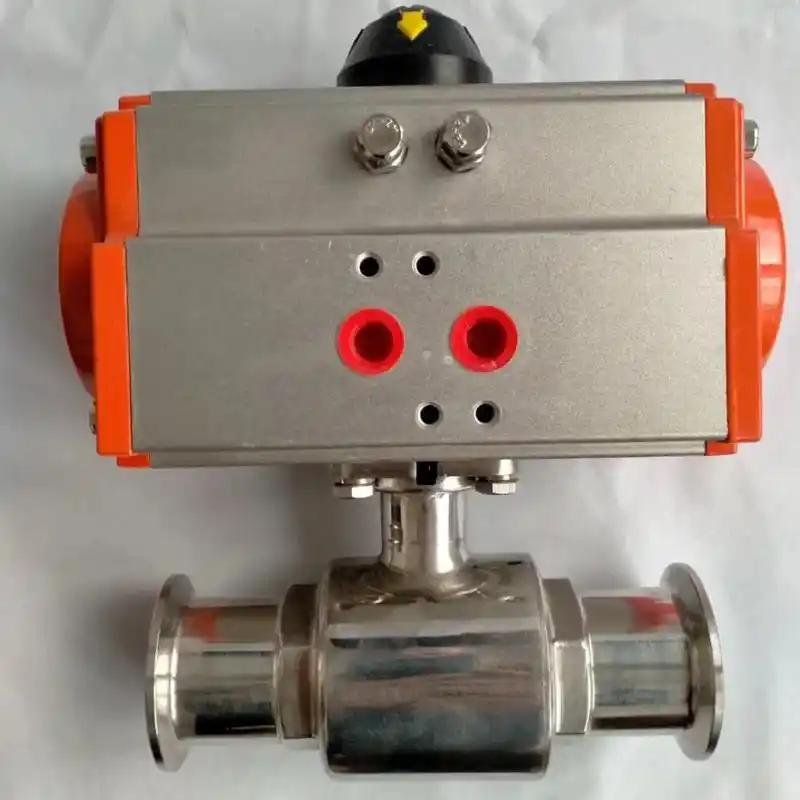
Sanitary Pneumatic Ball Valve Hygienic Dead-Free For Food & Pharmaceutical Lines
sanitary pneumatic ball valve with hygienic dead-zone-free flow path, ideal for beverage, dairy and sterile pharmaceutical pipelines.
Description
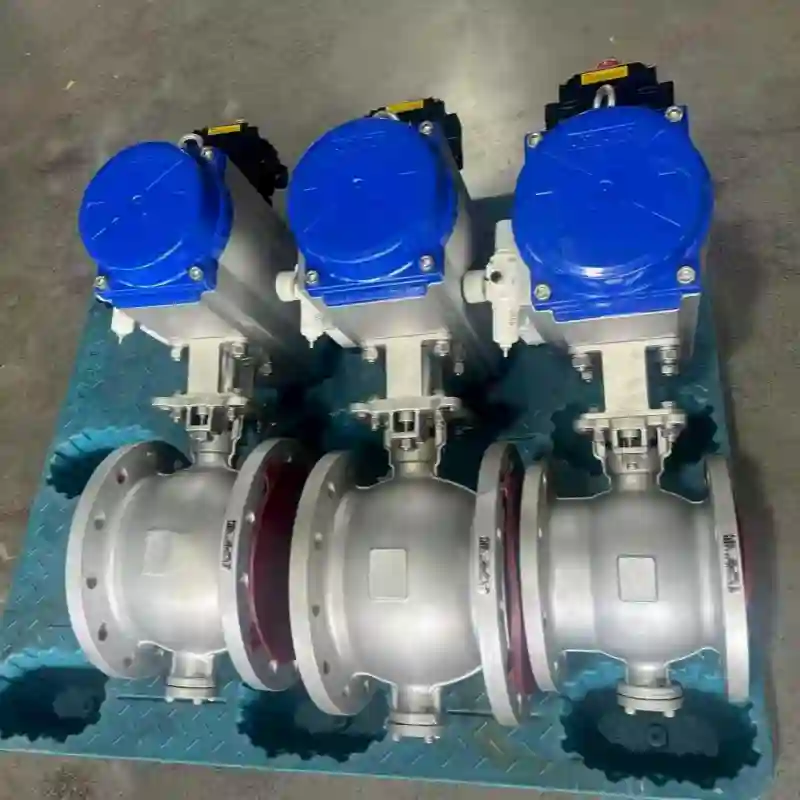
The sanitary pneumatic ball valve uses compressed air to drive a pneumatic actuator, which rotates the ball 90° for on/off flow control. Its main strengths are hygienic design and dead‑leg‑free construction: the valve body features a high‑precision mirror‑polished flow path that eliminates crevices and stagnant zones where media could accumulate. Actuators are offered in double‑acting and single‑acting spring‑return types; the latter automatically closes upon air supply failure.
The valve is primarily connected via tri‑clamp (quick‑connect) fittings for easy installation and disassembly. Optional accessories such as solenoid valves and limit switches allow integration with PLC automation systems. The valve withstands CIP (clean‑in‑place) and SIP (sterilise‑in‑place) processes, making it suitable for dairy, beverage, pharmaceutical, bio‑fermentation, and other sanitary fluid lines with stringent cleanliness requirements.
2. Materials & Technical Specifications
| Parameter | Detail |
|---|---|
| Nominal sizes | DN15 – DN100 (1/2″ – 4″) |
| Drive type | Pneumatic actuator |
| Actuator type | Double‑acting / Single‑acting spring return |
| Connection | Tri‑clamp (quick‑connect); threaded adapters optional |
| Body material | SS304 / SS316L stainless steel |
| Internal surface finish | Mirror polish, Ra ≤ 0.8 μm (sanitary grade) |
| Air supply pressure | 0.4–0.7 MPa |
| Key features | Sanitary‑grade compliance, dead‑leg‑free flow path, compatible with CIP/SIP |
| Optional accessories | Limit switches, solenoid valves, air preparation units (FRL) |
| Working pressure | 0.1–1.6 MPa |
| Medium temperature | –10°C ~ 135°C |
| Applicable media | Dairy products, beverages, purified water, pharmaceutical agents, fermentation broths, food‑process fluids |
3. Application Scenarios
Typical deployments include food and beverage production lines, dairy processing piping, aseptic pharmaceutical process lines, bio‑fermentation systems, purified‑water distribution loops, brewing equipment, sterile cosmetic production lines, and bio‑laboratory material transfer lines.
4. Real‑World Project
At the Ferment‑DK Copenhagen fermented beverage plant in Copenhagen, Denmark, the sanitary pneumatic ball valve has been extensively installed on production lines. The hygienic, dead‑leg‑free flow path effectively prevents product accumulation and minimises microbial growth risks, while fully supporting the plant’s CIP cleaning routines. For standard ingredient‑line on‑off duties, the double‑acting sanitary pneumatic ball valve is selected.
5. Selection Guide & Distinctive Strengths
Two primary benefits define this valve:
-
Sanitary design – constructed from food‑grade stainless steel with internal/external polishing, meeting 3A and SMS sanitary standards; no harmful substances leach into the product.
-
Dead‑leg‑free – the streamlined flow path eliminates crevices where media could stagnate, reducing cross‑contamination risks and suiting frequent cleaning/sterilisation cycles.
For fail‑safe closure upon air supply failure, choose the spring‑return sanitary pneumatic ball valve. For corrosive pharmaceutical reagents, prefer the 316L sanitary pneumatic ball valve. For central control requiring valve‑position feedback, configure with the limit switch sanitary pneumatic ball valve.
Note: Verify seal material compatibility with the process media; for CIP/SIP operations, confirm the valve’s temperature and pressure ratings. A clean, dry air supply is essential to prevent contaminants from entering the process. The product meets international sanitary standards. We provide polish‑grade reports, dimensional drawings, and installation/maintenance manuals to facilitate project integration and acceptance for overseas food/pharma equipment manufacturers. Bulk orders are welcome, and actuators and sanitary seals can be supplied separately to shorten spare‑parts delivery lead times.