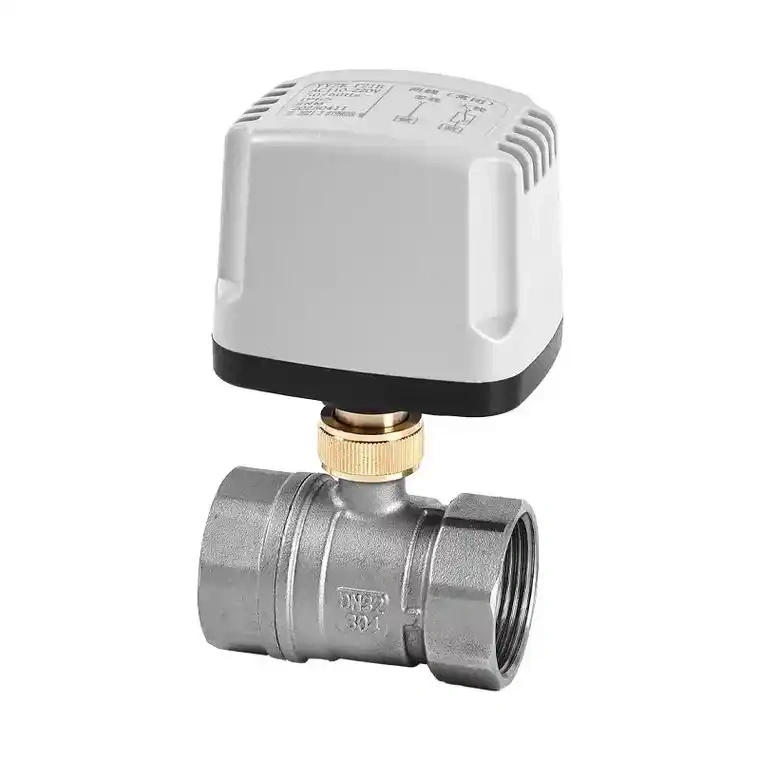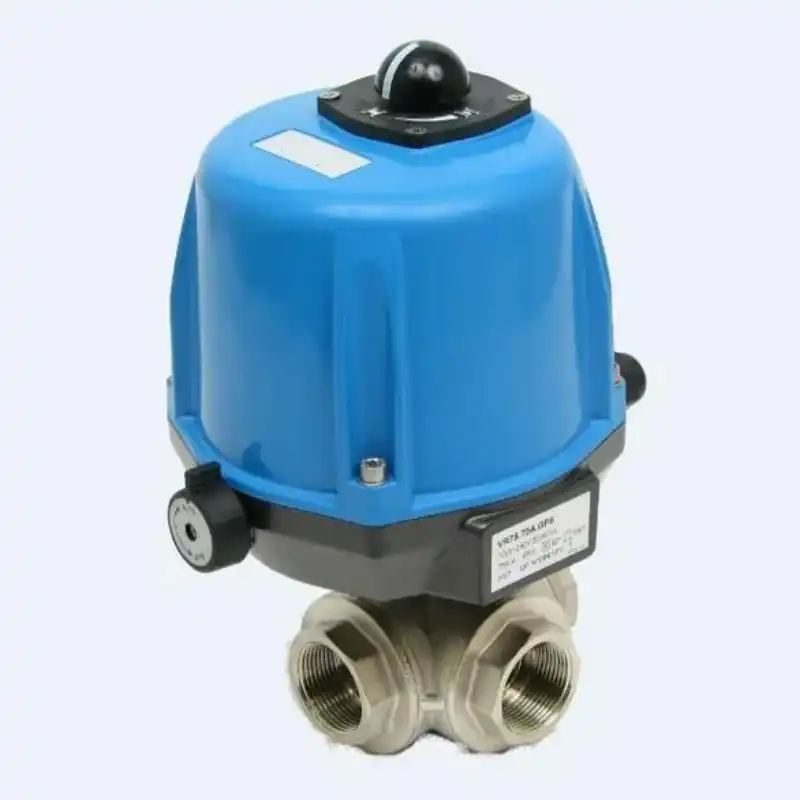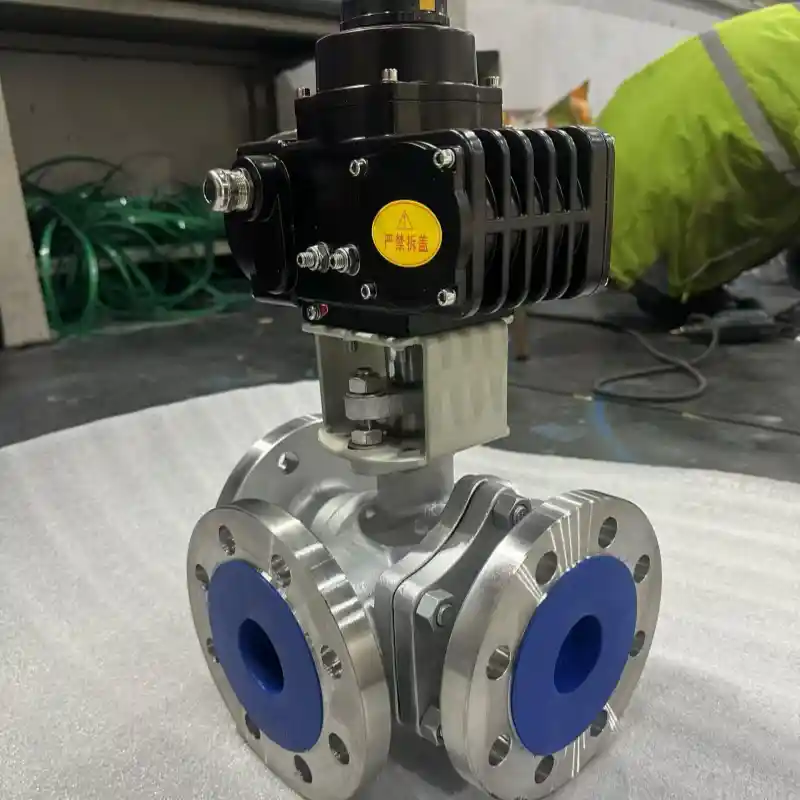

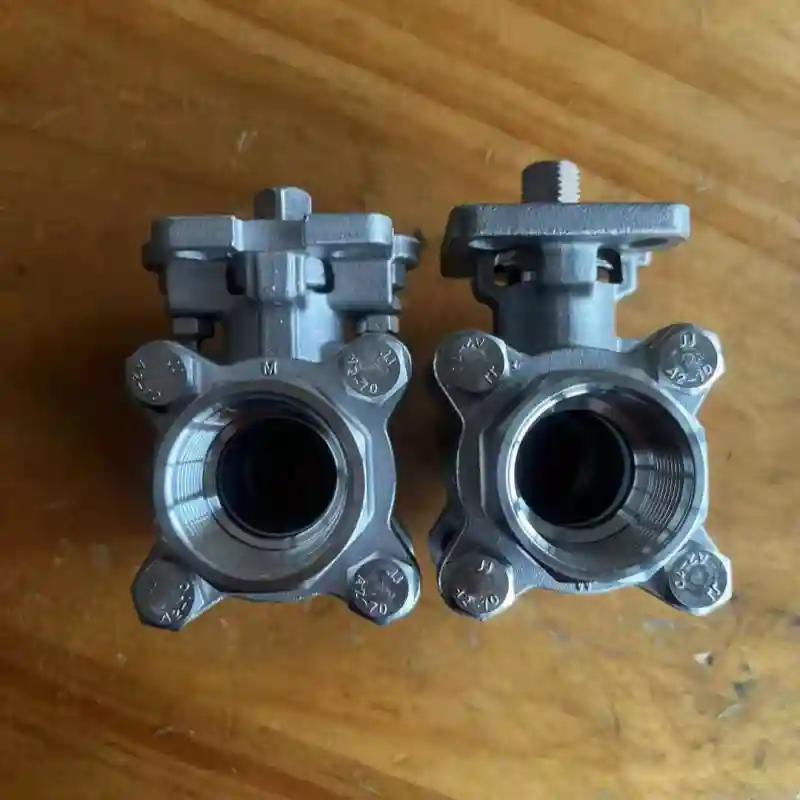
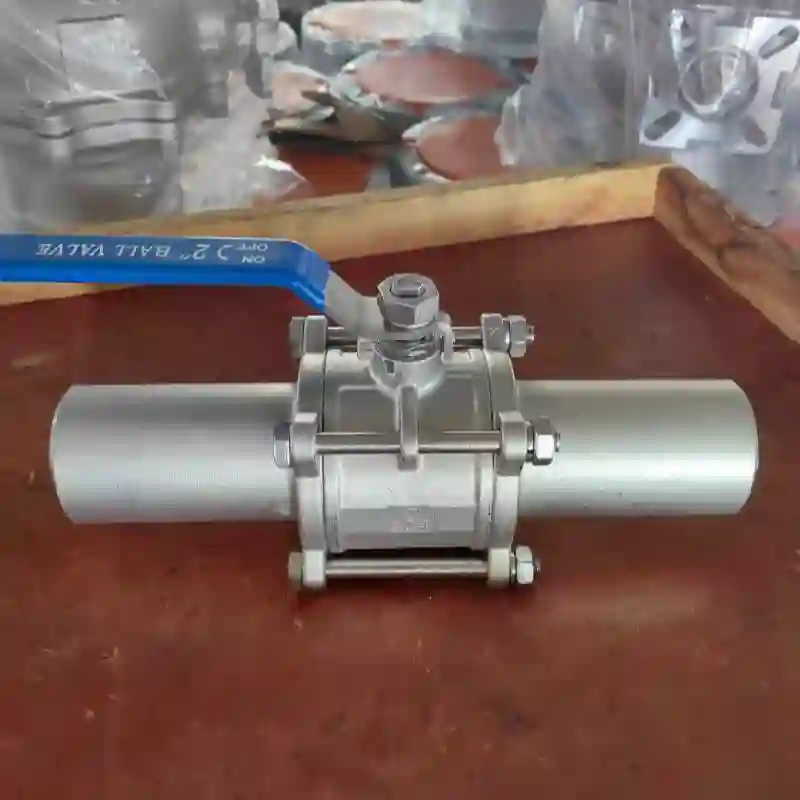
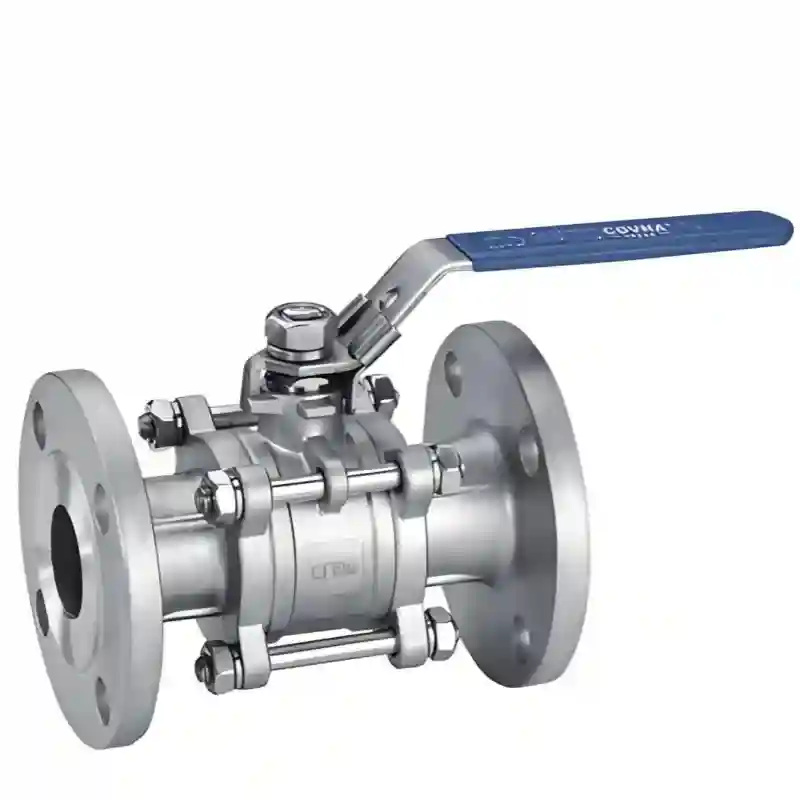
Three Piece Flanged Ball Valve – High Pressure Class 1500 Floating/Trunnion
Three piece flanged ball valve with Class 150 to 2500 pressure rating. Floating and trunnion designs available for high pressure oil, gas, steam, and water pipelines.
Description
A three piece flanged ball valve consists of three separate components: left‑flange body, central body and right‑flange body, securely assembled with high‑strength bolts. The ball and seat assemblies are housed inside the central‑body cavity. A 90‑degree stem rotation enables media shut‑off and flow regulation.
Its flanged ends comply with ASME B16.5 or EN 1092‑1 standards and mate with pipe flanges via bolting, making the product well‑suited for large‑bore, high‑pressure industrial piping systems. Thanks to its three‑piece configuration, service personnel can loosen central‑body bolts to pull out and replace ball‑seat cartridges without disconnecting end‑flange fasteners, enabling practical on‑line maintenance for high‑pressure large‑size valves.
Materials and Specifications
| Parameter Item | Specification Range |
|---|---|
| Valve Body Material | WCB (Carbon Steel) / CF8 (304) / CF8M (316) / 316L / LF2 (Low‑temperature Carbon Steel) / F91 (Cr‑Mo Steel) / 2205 Duplex Stainless Steel |
| Ball Material | Body‑matching grade / 316L / Stellite hard‑faced overlay / Tungsten‑carbide coating |
| Stem Material | 316L / 17‑4PH / Monel alloy / Inconel 718 |
| Seat Material | PTFE / RPTFE / TFM / PEEK / Metal seat (Stellite or tungsten‑carbide hard‑faced overlay) |
| Nominal Size | DN15 ~ DN600 (1/2″ ~ 24″) |
| Pressure Class | Class 150 / 300 / 600 / 900 / 1500 / 2500 |
| Flange Standard | ASME B16.5 (RF / RTJ) / EN 1092‑1 (PN10 ~ PN100) / JIS B2220 |
| Body Style | floating type — DN ≤ 200 / Class ≤ 600; trunnion mounted — DN ≥ 250 / Class ≥ 900 |
| Face‑to‑Face Standard | ASME B16.10 (long / short pattern) / EN 558 |
| Fire‑Safe Design | API 607 / ISO 10497 (optional) |
| Anti‑Static Feature | Standard anti‑static assembly fitted between stem and ball |
| Actuator Mounting Pad | ISO 5211 direct‑mount platform (F05 / F07 / F10 / F12 / F14) |
| Fugitive Emission Performance | ISO 15848‑1 (optional) |
| Material Certificates | EN 10204 3.1 / 3.2 (available upon request) |
| Non‑Destructive Testing | Penetrant testing (PT), Radiographic testing (RT), Ultrasonic testing (UT) performed piece‑by‑piece in accordance with ASME Section V (subject to valve size) |
Structural Advantages: Superior Pressure‑Bearing Performance
The robust pressure‑handling capability of three piece flanged ball valve originates from three synergistic design features:
Flanged end connections: Multiple high‑strength bolts clamp valve and pipe flanges together. Bolt preload generates adequate gasket sealing pressure across flange mating surfaces. Unlike threaded joints which rely on thread‑tooth shear strength, flanged connections withstand substantially higher internal pressure. ASME B16.5 flanges cover Class 150 up to Class 2500, supporting maximum design pressures exceeding 42 MPa.
Three‑piece body construction: Circumferentially arranged bolts integrate the left‑flange body, central body and right‑flange body into one rigid assembly. When subjected to axial thrust induced by process fluid pressure, loads are evenly distributed to avoid localised stress concentration. Two‑piece ball valves adopt fewer bonnet bolts or threaded connections; under large‑bore high‑pressure operating conditions, they exhibit inferior bending stiffness and fatigue resistance compared with multi‑bolt three‑piece designs.
Trunnion‑mounted option: For high‑pressure large‑bore applications (DN ≥ 250 / Class ≥ 900), trunnion‑mounted execution is available. The ball is mechanically restrained by upper stem and bottom trunnion shaft inside the body to eliminate ball floating displacement. Fluid‑generated thrust is absorbed by upper and lower support bearings rather than transferred onto valve seats. This layout delivers markedly lower operating torque than equivalent floating‑type valves for high‑pressure large‑size service, reduces seat wear and optimises stress distribution across pressure‑containing components.
Application Sectors for High‑Pressure Media Pipelines
- High‑pressure oil & gas gathering and transmission: Shut‑off valves for natural gas, crude oil and condensate pipelines at Class 900‑2500 pressure ratings.
- Refinery and petrochemical plants: Piping for high‑pressure steam (Class 600‑1500) and H₂S‑bearing sour process fluids.
- Hydropower high‑pressure water conveyance systems: Maintenance isolation valves for penstocks with design water heads above 200 metres.
- Power‑plant main‑steam and feed‑water circuits: Isolation valves for high‑temperature high‑pressure steam (Class 900‑2500, up to 540 ℃).
- High‑pressure chemical reaction facilities: Process lines for high‑pressure polymerisation and synthetic manufacturing workflows.
- Seawater desalination high‑pressure RO sections: Isolation valves for RO membrane feed pipelines operating at 6‑8 MPa.
Field Application Case
Three piece flanged ball valves were deployed as penstock maintenance isolation valves for the Xiluodu Hydropower Station (Yongshan County, Zhaotong, Yunnan Province), operated by China Three Gorges Corporation. Ranking as China’s third‑largest hydropower facility, the site boasts an installed capacity of 13 860 MW.
The project penstocks feature a design internal water pressure of 4‑6 MPa (corresponding to roughly 300‑metre design water head). Transient water‑hammer surges triggered by rapid unit ramping or emergency shutdowns push peak pressure above 10 MPa, with nominal sizes ranging DN500‑DN800. The supplied trunnion mounted ball valves adopt three‑piece flanged construction. Fabricated from ASTM A350 LF2 low‑temperature carbon steel to cope with cold high‑altitude ambient conditions, they are fitted with Stellite hard‑faced metal seats and engineered per ASME B16.34 Class 600.
Three distinct pressure‑handling strengths are demonstrated on‑site. First, flanged joints reliably withstand enormous axial thrust generated by internal pressure within extra‑large‑diameter piping: an DN800 pipe under 10 MPa internal pressure produces axial force exceeding 5 000 kN, and flange bolting represents the only proven end‑joint solution for such extreme loads. Second, the multi‑bolt three‑piece body maintains high bending stiffness under cyclic water‑hammer impact, with zero flange‑face parting or body deformation recorded. Third, the trunnion‑mounted ball, secured by upper and lower support bearings, maintains stable operating torque under large differential pressure. On‑site operators can complete full‑stroke opening and closing of each large‑bore valve within two minutes.
Since commissioning of the first generating unit in 2013, these valves have delivered dependable shut‑off and sealing performance during multiple sectional penstock maintenance campaigns. According to official operational records from China Three Gorges Corporation’s equipment‑management department, zero pressure‑boundary leakage failures have occurred within this valve fleet across more than ten years of field operation.