
3 Piece Threaded Ball Valve – NPT/BSPT Ends for Quick Installation
3 piece threaded ball valve with NPT/BSPT ends, 3-piece body for in-line seat replacement. Available in stainless steel 316/304, 1000 WOG, for instrumentation and steam lines.
Description
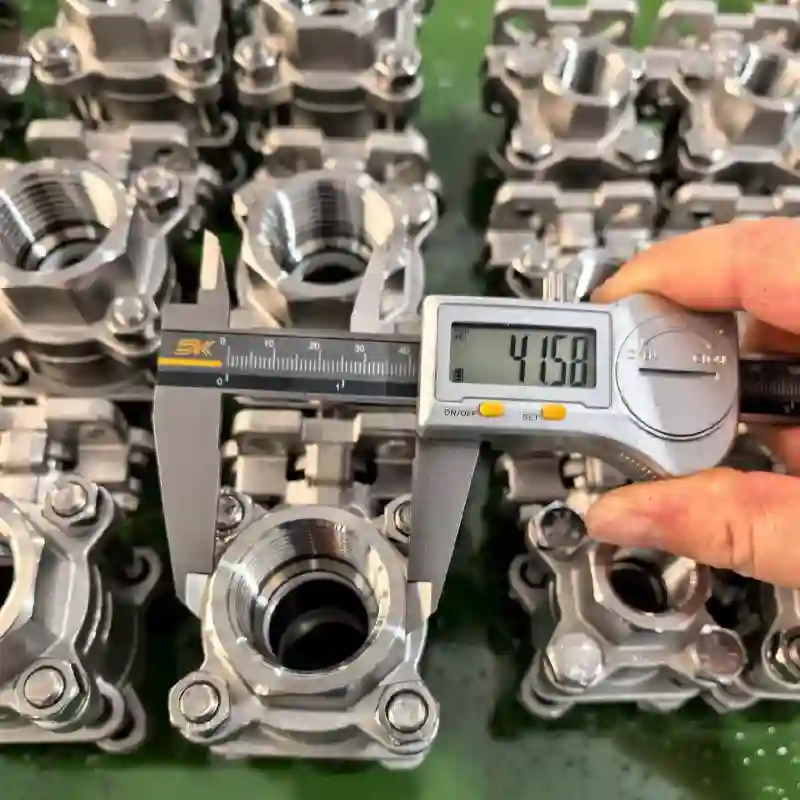
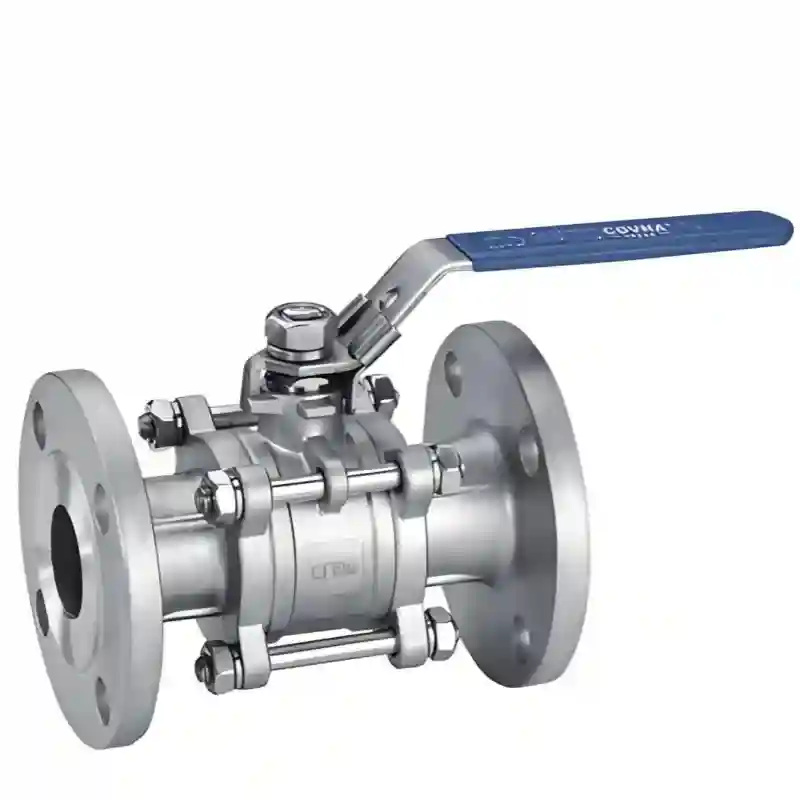
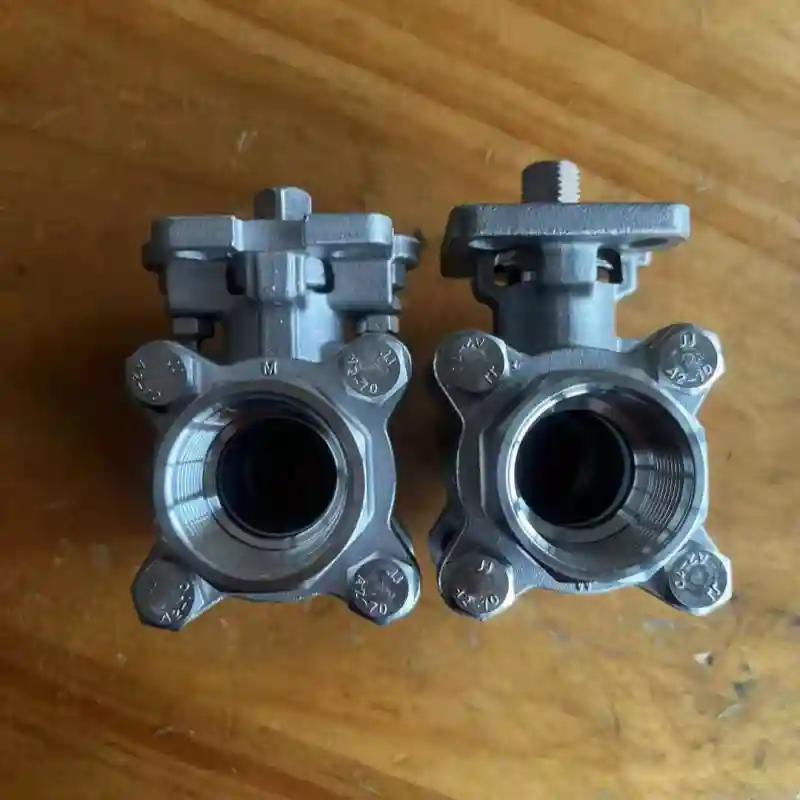
A 3 piece threaded ball valve comprises three independent body segments: left‑hand body, central body and right‑hand body, locked together by high‑strength bolts. The ball and seat assemblies are housed inside the central‑body cavity. Quarter‑turn (90°) stem rotation enables media shut‑off and flow modulation.
End ports adopt threaded connections (NPT/BSPT/BSPP); the valve can be screwed directly onto matching pipe fittings without welding or flange bolting. After loosening the bolts flanking the central cartridge, technicians may extract the central‑body unit complete with ball and seats. Seat and gasket renewal can be accomplished without undoing the end threaded joints.
Threaded ends permit rapid valve installation onto live process lines where hot‑work activities are prohibited. Meanwhile, the three‑piece architecture preserves end‑thread integrity during subsequent servicing. It eliminates repeated twisting‑on‑and‑off of threaded fittings, which commonly causes thread galling and joint seal degradation.
Materials and Specifications
| Parameter Item | Specification Range |
|---|---|
| Valve Body Material | 304 Stainless Steel (CF8) / 316 Stainless Steel (CF8M) / 316L Stainless Steel / Brass (CW617N) |
| Ball Material | 304 / 316 / 316L Stainless Steel |
| Stem Material | 304 / 316 Stainless Steel |
| Seat Material | PTFE / RPTFE / TFM / PEEK |
| Nominal Size | DN6 ~ DN80 (1/8″ ~ 3″) |
| Pressure Rating | 600 WOG / 1000 WOG / Class 150 / Class 300 / Class 600 |
| End Thread Standards | NPT (American Taper Pipe) / BSPT (British Taper Pipe) / BSPP (British Parallel Pipe) |
| Body Style | floating type |
| Operating Media Temperature | -20 ℃ ~ 180 ℃ (PTFE seat) / -20 ℃ ~ 250 ℃ (PEEK seat) |
| Anti‑Static Feature | Standard anti‑static assembly fitted between stem and ball |
| Actuator Mounting Pad | ISO 5211 direct‑mount platform (F03/F05/F07, optional) |
| Surface Treatment | Pickling‑passivation (stainless‑steel variants) / Nickel‑plated (brass variants) |
| Handle Type | Zinc‑coated steel handle / stainless‑steel handle / aluminium handle |
Structural Highlights: Streamlined Installation & Servicing
The practical merits of a 3 threaded ball valve fall into two key dimensions:
Installation phase: Threaded end connections allow direct screwing onto existing threaded ports or pipe nipples. Only pipe wrenches plus thread‑seal tape or thread‑locking compound are required for assembly.
This joining technique rules out welding operations, so hot‑work permits, certified welders, post‑weld NDT and heat treatment, as well as post‑weld pickling‑passivation for piping are all unnecessary. For retrofitting new branch valves onto active lines or modifying legacy equipment where hot‑work is forbidden, threaded connection represents a viable installation solution.
Maintenance phase: When seat wear emerges after long‑term runtime, the three‑piece layout lets technicians pull out ball and seat components simply by loosening central‑body bolts, while end threaded joints remain untouched. By contrast, 2‑piece or 1‑piece threaded ball valves demand full valve disassembly from threaded fittings for every repair.
Repeated twisting damages thread surfaces, and re‑applying thread‑sealant compounds raises potential leakage risks at threaded joints. Throughout its full service life, the end threaded connections of a three‑piece threaded ball valve stay torqued once during initial installation; subsequent servicing leaves these threaded interfaces undisturbed.
Application Sectors
- Retrofit & new branch tapping on live pipelines: Quick mounting onto pre‑existing threaded ports for sites prohibiting hot‑work.
- Instrument and sampling piping: Root shut‑off valves for pressure transmitters, temperature transmitters and sampling assemblies, sizes ranging from 1/4″ to 1/2″.
- Steam and high‑temperature media lines: Steam‑blow‑down interfaces and tracing‑loop isolation, requiring periodic replacement of high‑temperature resistant seats.
- Compressed‑air and gas circuits: Branch‑point isolation valves for factory compressed‑air stations and nitrogen supply facilities.
- Lubrication and hydraulic networks: Branch shut‑off valves for lube‑oil and hydraulic‑oil distribution manifolds.
- Chemical‑dosing systems: Isolation valves fitted at pump inlet and outlet for water‑treatment and boiler‑water chemical‑injection skids.
Field Application Case
During the CIP cleaning‑system upgrade for instant‑coffee extraction lines at Nestlé Philippines Inc., Batangas Factory (Barangay San Miguel, Tanauan City, Batangas 4232, Philippines), additional steam‑blow‑down connections were required on existing stainless‑steel steam branch lines. These ports serve portable steam hoses for internal purging of extraction process equipment. The site selected 3/4″ BSPT 3 piece threaded ball valves, fabricated from 316L stainless steel, rated for 1000 WOG and fitted with PTFE seats.
The extraction workshop has run continuously for years. Its existing steam piping consists of welded stainless‑steel runs surrounded by extraction towers and drying units. If flanged ball valves had been adopted, site crews would have had to cut existing pipe sections, weld on flanged nipples, mount valves and re‑perform piping pickling‑passivation. Such workflow would involve hot‑work permits and multi‑trade coordination among welders, pickling operators and NDT inspectors, mandating production shutdowns with an estimated minimum turnaround of five working days.
The implemented solution leveraged spare BSPT threaded ports pre‑fitted on steam branches, previously sealed with threaded pipe plugs. The 3 piece threaded ball valves were directly screwed onto these reserved ports, with zero welding, hot‑work or pickling‑passivation work required. Its three‑piece construction also simplifies long‑term upkeep for steam service. Elevated steam temperatures accelerate PTFE seat degradation, making seats consumable spare parts. For future maintenance cycles, maintenance staff only loosen central‑body bolts to extract and swap ball‑seat assemblies. End BSPT taper‑thread joints remain intact, eliminating re‑wrapping of PTFE tape or re‑application of thread sealant, and avoiding thread damage caused by repeated disassembly.
All six steam‑blow‑down valves were fully installed and commissioned within a single working day, cutting project duration by 80 % compared with the five‑day timeline projected for the flanged alternative. According to project‑acceptance documentation issued by the plant engineering department, the threaded‑connection approach was “the only feasible option for adding steam connections without halting production”.