
Two Piece Stainless Steel Ball Valve – 304 Threaded for Food Processing
Two piece stainless steel ball valve with SS304/316L body, threaded/flanged ends, and one body seal joint for leak point reduction in food and chemical lines.
Description
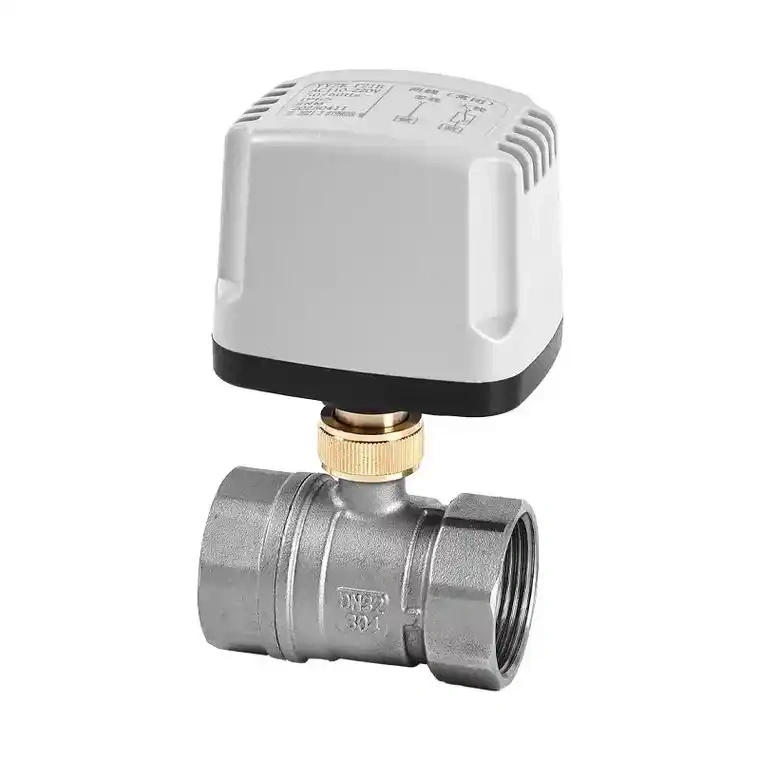
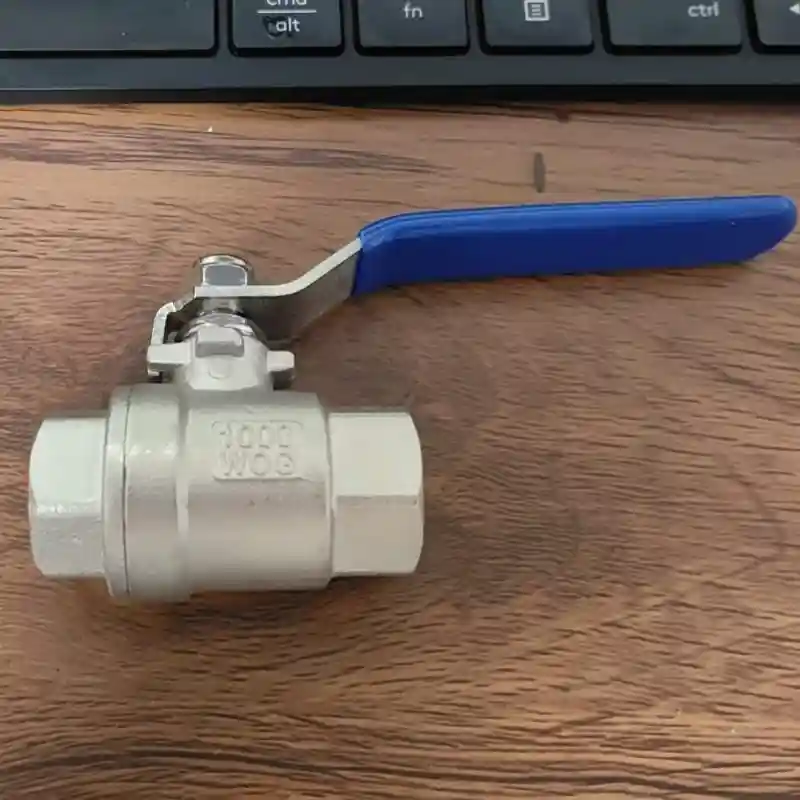
A two‑piece stainless steel ball valve consists of two major components: main valve body and bonnet, fastened together via threads or bolts. The ball is inserted from the end of the main body and locked in place by the bonnet. A stem drives the ball through 90‑degree rotation to open or close process pipelines. Fabricated from SS304 / SS316L stainless steel, the valve delivers reliable corrosion resistance against acid‑alkali fluids and food‑grade media.
For servicing, the entire valve must be detached from piping for disassembly, where worn ball and seat components can be replaced before reassembly and reinstallation. Compared with three‑piece counterparts, two‑piece designs feature only one primary body‑to‑bonnet sealing joint, cutting external leakage pathways. Relative to non‑repairable one‑piece valves, they support component overhaul to extend overall service life.
Material and Specification
| Parameter | Specification Range |
|---|---|
| Valve Body | SS304 (ASTM A351 CF8) / SS304L / SS316 (CF8M) / SS316L (CF3M) |
| Ball | SS304 / SS316 / SS316L |
| Stem | SS304 / SS316 / 17‑4PH |
| Seat | PTFE / RPTFE / TFM / PEEK |
| Nominal Size | DN6 ~ DN200 (1/8“ ~ 8”) |
| Pressure Rating | 600 WOG / 1000 WOG / Class 150 / Class 300 / Class 600 |
| End Connection | Thread (NPT / BSPT / BSPP) / Socket Weld (SW) / Flange (ASME B16.5 / EN 1092‑1) |
| Body Design | Floating type |
| Primary Body Seal Joint | 1 (between main body and bonnet) |
| Operating Temperature | ‑20 ℃ ~ 180 ℃ (PTFE seat) / ‑20 ℃ ~ 250 ℃ (PEEK seat) |
| Face‑to‑Face Standard | ASME B16.10 / Manufacturer’s standard |
| Anti‑Blow‑Out Stem | Standard configuration |
| Actuator Mounting Pad | ISO 5211 direct‑mount platform (optional) |
| Surface Treatment | Pickling & passivation / Mechanically polished (optional) |
| Material Certificate | EN 10204 3.1 (available upon request) |
Structural Features: Corrosion Resistance and Minimized Leak Points
The dual advantages of stainless steel 2pc ball valves — corrosion‑resistant performance and fewer leakage pathways — are achieved through material selection plus optimized mechanical layout.
Corrosion‑resistant performance of stainless steel: SS304 stainless steel contains minimum 18 % chromium (Cr). When exposed to oxidizing media, a dense chromium‑rich passive film forms spontaneously on metal surfaces to halt further substrate corrosion, making it suitable for food, beverage and mild acid‑base service. With molybdenum addition (Mo ≥ 2.5 %), SS316L delivers markedly improved resistance to chloride‑triggered pitting and crevice corrosion, fitting for salt‑laden streams, seawater and pharmaceutical water loops. The two‑piece configuration keeps the main valve body as an integral forging or casting without intermediate body joints, fully preserving the inherent corrosion‑resistant properties of stainless steel alloys.
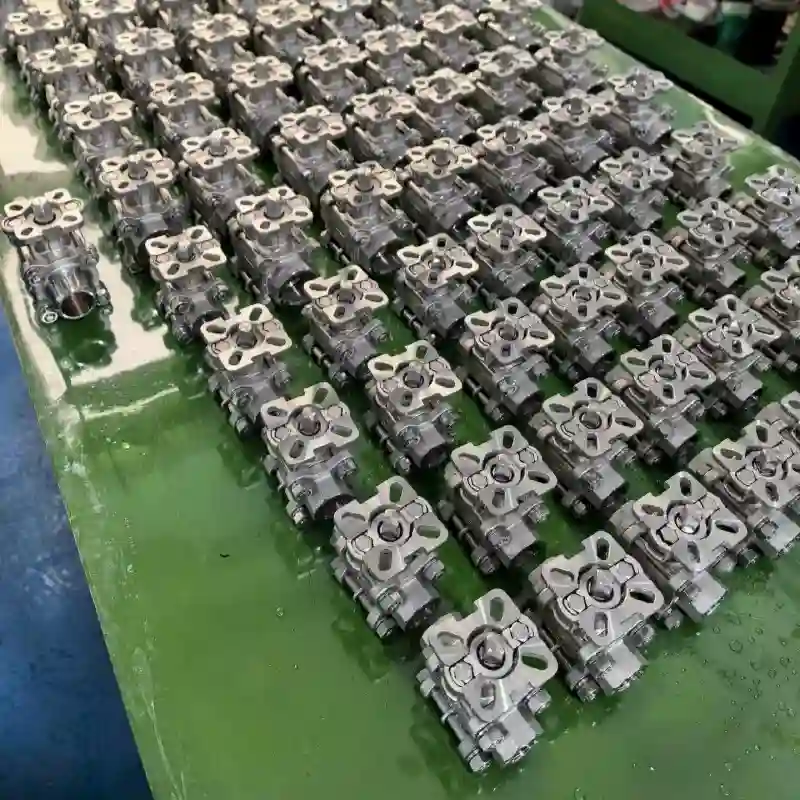
Minimized primary sealing joints: Two‑piece ball valves maintain merely one major sealing interface situated between main body and bonnet. By contrast, three‑piece ball valves carry two intermediate‑body sealing joints (left‑to‑middle and middle‑to‑right). Under identical operating circumstances, two‑piece variants cut external leakage paths by half. Every extra sealing joint introduces a potential leak risk and adds bolt‑torque check points for routine maintenance. For chemical plants, food processing facilities and refineries with strict leak‑control requirements, fewer joints directly lower seal‑failure probability and cut maintenance workload.
Balanced repairability and leakage management: Unlike non‑serviceable one‑piece ball valves, two‑piece structures allow bonnet removal so operators can swap out degraded seats and balls to restore shut‑off performance. Internal leakage induced by seat abrasion can be resolved via overhaul instead of full‑valve scrapping. Installing fresh body gaskets during reassembly returns sealing capability back to original factory specifications.
Application Scenarios
2pcs stainless steel ball valves are widely deployed across multiple industries:
‑ Food & beverage: Pipelines for syrup, fruit juice, dairy produce, beer and edible oil.
‑ Chemical industry: Process lines carrying acids, alkalis and various solvents.
‑ Pharmaceutical sector: Piping for purified water, buffer solutions and non‑sterile active pharmaceutical ingredients.
‑ Water treatment: Municipal water supply, RO permeate and circulating cooling water pipelines.
‑ Petrochemical service: Media containing H₂S and CO₂ (SS316L material specified).
Field Application Case
At PepsiCo Mexico (Av. Vallarta 6500, Guadalajara, Jalisco 45010, Mexico), SS304 two‑piece threaded ball valves serve as isolation valves on syrup blending and transfer pipelines running from syrup mixing tanks to filling machines. Sizes range from 1/2” to 2”, fitted with RPTFE seats. These valves isolate syrup circuits during beverage‑grade product change‑overs and support CIP sequence switching.
During blending operations, syrup features a pH of 3.2‑3.8 with phosphoric and citric acid present, operating at 20‑30 ℃. SS304 exhibits satisfactory tolerance to such weak‑acid conditions. No internal body corrosion or corrosion‑provoked internal leakage has occurred during long‑term site operation. Upon daily production completion, piping undergoes CIP cycles: 30‑minute circulation with 1.5 % NaOH solution at 85 ℃, hot‑water flushing, followed by 20‑minute circulation with acidic detergent. SS304 also delivers adequate chemical compatibility with alkaline cleaning agents.
Regarding leak‑point management, the filling workshop maintains persistently high humidity above 70 % relative humidity. Previously deployed three‑piece ball valves possessed two intermediate‑body flange joints; uneven gasket ageing under humid conditions frequently triggered minor syrup seepage at one joint location. During 2023 equipment retrofits, the facility replaced these units uniformly with two‑piece threaded ball valves.
The two‑piece design retains only one primary sealing interface between main body and bonnet, reducing external leakage pathways from two intermediate‑body joints down to one. Food‑grade thread sealant was adopted at threaded end connections instead of conventional PTFE tape to further mitigate minor seepage risks.
Post‑retrofit tracking statistics demonstrate that syrup dripping incidents originating from minor seal‑face leakage dropped by roughly 70 %. Internal engineering summaries from the plant confirm that two‑piece ball valves outperform prior three‑piece hardware for this application in terms of leak‑point control. Thanks to integral body construction, maintenance teams no longer need to manage torque values for multiple sets of intermediate‑body bolts throughout installation and servicing workflows.