
Unidirectional Ball Valve for High-Pressure Gas Compressor Anti-Surge Service
Discover unidirectional ball valves with forced directional sealing for high-pressure gas pipelines. Used in PetroChina’s China-Russia gas line. API 6D, Class 900. Ensure reverse flow prevention. Inquiry now.
Description
In high‑pressure long‑distance natural‑gas transmission pipelines, anti‑surge loops at compressor outlets impose stringent requirements on flow‑direction control. The unidirectional ball valve is a special‑purpose valve developed for such demanding service conditions.
Its core function is to permit medium flow in the designated forward direction, while achieving positive shut‑off under reverse differential pressure through forced directional sealing. It effectively prevents high‑pressure gas backflow during compressor shutdown or surge events, thus safeguarding critical rotating equipment.
Design and Materials
The fundamental distinction between unidirectional ball valves and conventional bidirectional ball valves lies in their asymmetric seat configuration. This construction delivers full sealing performance only when the valve is installed in the forward orientation, and provides no sealing capability in the reverse direction. Rather than a manufacturing defect, this acts as a functional error‑proofing mechanism that compels fitters to follow flow‑direction arrows during installation.
Valve bodies of this series adopt A350 LF2 low‑temperature carbon steel for service down to −46 °C. Balls and seats feature Stellite hard‑facing overlay on 316L stainless steel substrates, ensuring long‑term sealing‑face stability under frequent cyclic operation. Sealing components are formulated with reinforced PTFE filled with 25 % carbon fibre, combining low friction and creep‑resistance properties.
Sizes and End Connections
| Parameter | Technical Specification |
|---|---|
| Nominal Size | DN50 – DN600 (2″ – 24″) |
| Pressure Class | Class 150 – Class 2500 |
| Body Material | A350 LF2 / A105 / F316 / F51 (Duplex Steel) |
| Seat Material | Reinforced PTFE / PEEK / Metal‑to‑Metal Hard‑Seat |
| End Connection | Flanged (RF / RTJ) / Butt‑Weld (BW) |
| Operation | Manual / Gear Operator / Pneumatic / Electric |
| Design Codes | API 6D / ASME B16.34 |
| Fire‑Safe Compliance | API 607 / ISO 10497 |
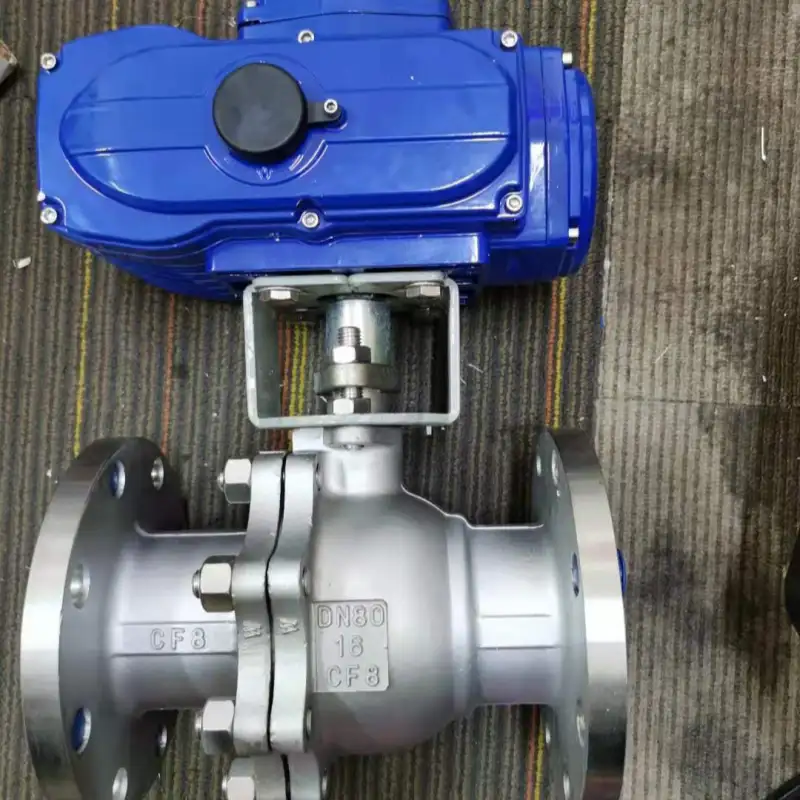
| Direction Marking | Permanent cast‑on body flow arrow plus installation nameplate |
Application Scenarios
Unidirectional ball valves are widely deployed for the following services:
- Anti‑surge loops for compressors on long‑distance natural‑gas transmission pipelines
- Recycle‑hydrogen compressor outlets in refinery catalytic‑cracking and hydroprocessing units
- Overhead reflux pump outlet piping within chemical process plants
- Unidirectional protection for high‑pressure water‑injection and gas‑injection systems
- Critical pump‑outlet isolation on offshore platforms and FPSO facilities
Typical Field Case
At Heihe Initial Station of PetroChina China‑Russia East Natural Gas Pipeline, unidirectional ball valves of this series, Class 900 and DN150, are installed in compressor anti‑surge loops. As the first receiving station on the Chinese side of the cross‑border trunkline, the facility has a designed annual transmission capacity of 38 billion cubic metres with compressor outlet pressure reaching 10 MPa.
In this project, the forced directional‑sealing characteristic of unidirectional ball valves delivers an extra safety layer for operation‑and‑maintenance crews.
During routine inspections, the permanently cast flow arrow together with the asymmetric seat geometry allows technicians to visually verify correct mounting orientation. No mis‑installation incidents arising from flow‑direction confusion have been logged across two annual turnaround cycles, supporting continuous and reliable operation of this major energy artery.
Technical Selection Notes
Special attention must be paid during specification: unidirectional ball valves require strict alignment between installation orientation and process‑fluid flow direction. The valve provides no sealing performance against reverse flow, with reverse leakage rate approximately 100 times the forward‑direction value.
Process piping design shall define flow paths at an early stage, and field installation shall strictly follow the directional marking cast on the valve body. Where bi‑directional shut‑off and sealing are required, please select the company’s bidirectional ball valve product series.