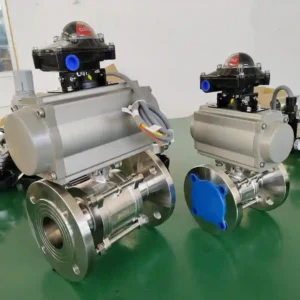

Stainless Steel Ball Valve Manufacturer: 316L Material and Food-Grade Craft
When purchasing from a stainless steel ball valve manufacturer, the real dividing line is not the words “stainless steel” but the material grade, forming process, and test records. 304, 316, and 316L differ clearly in corrosion resistance and cost; cast and forged valve bodies also differ in internal quality. This article breaks manufacturer evaluation into three steps—material verification, process confirmation, and document validation—from the perspective of food and beverage plant engineers and buyers.
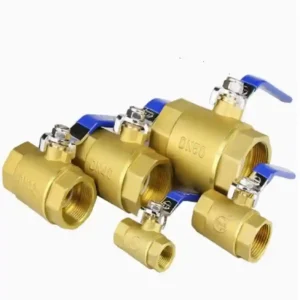
316l Stainless Steel Ball Valve: Why Food Lines Prefer 316L
The 316L grade in a 316l stainless steel ball valve contains about 2–3% molybdenum (Mo), giving it significantly better chloride corrosion resistance than 304, making it suitable for CIP cleaning solutions and salt-containing media. The L stands for low carbon (C≤0.03%), which reduces the risk of intergranular corrosion after welding. Confirm the grade and composition on the material report, not just the nameplate.
Forged Stainless Steel Ball Valve: Forging vs Casting
A forged stainless steel ball valve has dense internal grain structure, good pressure resistance, and fatigue resistance, making it suitable for high-pressure small-bore applications. Casting suits complex structures and mass-produced valve bodies. Select based on operating pressure, structural complexity, and cost—do not assume one is universally better.
Food Grade Stainless Steel Ball Valve: Hygiene Boundaries
Food grade stainless steel ball valve is not just a material label. It also includes surface roughness, seal material, and dead-leg-free structure. The internal flow path and seals must be easy to clean, and seal materials (such as PTFE, EPDM) must be compatible with cleaning agents and media.
1 Inch Ball Valve 316 Stainless Steel Specifications: Write the Specs Fully
1 inch ball valve 316 stainless steel specifications should cover bore size, end connection, pressure rating, seat and seal material, operation method, test items, and documents shipped with the goods. The more complete the specification sheet, the harder it is for a supplier to substitute a similar model.
2″ 316 Stainless Steel Ball Valve: Batch Consistency
For bulk procurement of 2″ 316 stainless steel ball valve, focus on confirming the same batch number, same production line, and unit-by-unit test records. Material, testing, and packaging standards must be consistent across batches, and written into order terms.
📌 Case Setting
Modern Madness’ official public information shows it is a Kuala Lumpur craft beer brand founded in 2018, operating a bar at REXKL with products known for local ingredient flavors. Material choice for brewing and cleaning branches directly affects flavor stability and hygiene management.
The project grouped brewing branches into product-contact and cleaning branches: product-contact branch ball valves required material reports confirming 316L grade, while cleaning branches checked CIP cleaning solution compatibility with seal materials. CHCV helped provide material reports, pressure test records, and seal material boundaries for stainless steel ball valves, making each valve’s applicable boundary traceable in the selection sheet—never treating “stainless steel” as a free pass.
CHCV provides material reports and test records so every valve grade is traceable.
✅ Material Quick Reference: 304 / 316 / 316L
304: general water and low-corrosion media, lowest cost
316: contains Mo, resists chloride and weak acids/bases, suitable for CIP cleaning
316L: low carbon resists intergranular corrosion, stable after welding, preferred for food lines
Confirm material report: grade, composition, and heat batch number match the nameplate
Check seal material separately: PTFE suits -20~180°C, PEEK suits high temperature and pressure
Common Questions
FAQ 1: Must all branches in a food plant use 316L?
No. Only branches that contact product or cleaning solution need hygiene-grade assessment; pure utility branches can be selected by media and pressure. Write the boundary between product-contact and non-product-contact clearly to avoid over-specification.
FAQ 2: A supplier only quotes “stainless steel ball valve” without grade. Can I buy it?
Not recommended. Ask for a material report to confirm the specific grade and heat batch number. Quotes without grade information cannot evaluate corrosion resistance or applicability, and lack acceptance basis.