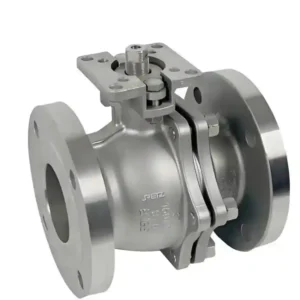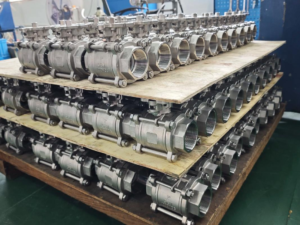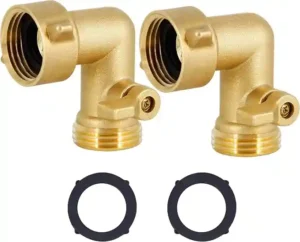

Valve Ball Brass: Ball Material and Mating Fits
“Valve ball brass” is closer to the question “is the ball brass, and how does it mate with the seat and the stem?” than to asking about the color of a whole ball valve. The ball carries the flow-path switching, the seat provides contact and shutoff, and the stem transmits the handle action to the ball; a change in any one of these combinations can change the feel, the sealing, and the fit.
In purchasing or maintenance, do not read “brass ball” as meaning every part is brass. First confirm what the body, ball, stem, seat, seals, and handle are each made of, and then confirm whether these parts belong to the same model or the same series.
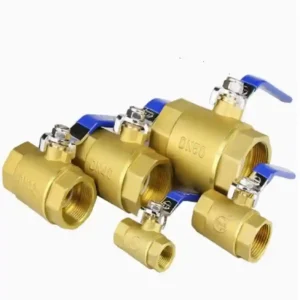
Ball Material in Ball Valve: What Does the Ball Actually Do?
“Ball material in ball valve” must be read together with the ball geometry, the surface condition, and the seat contact. When the ball turns, the ball port must align with the inlet and outlet; when closed, the solid area contacts the seat. The material and the machining condition of the ball affect the turning resistance, the contact surface, and how it is checked after long-term use.
If the ball is treated as an ordinary round ball on site, the bore, the port shape, and the stem connection are easily missed. For two-piece, three-piece, reduced-port, or full-port constructions, the ball size and the passage form may differ, and replacement parts must match the model and the drawing.
How to Confirm Ball Valve Ball Material with the Seat Combination
“Ball valve ball material” should be confirmed on the same line as the seat and the seals. The same ball material does not mean the seat material, the stem seal, or the end seals are the same; and when the seat contact surface is affected by contamination, pipe stress, or thermal cycling, the ball action and the shutoff will change with it.
The inquiry sheet can state the ball material, the seat material, the stem material, the seal materials, and the applicable medium, and ask the supplier to mark standard configurations or order-confirmation items. Without documents, do not infer the internal parts from photos, colors, or feel. For the part-level structure of the same topic, see our brass ball valve parts guide.
Why Must Ball Valve Body Material and Ball Material Not Be Confused?
“Ball valve body material” mainly corresponds to the external pressure boundary, the pipe connection, and the environmental conditions, while the ball directly participates in the flow-path switching. Even if the body is brass, the ball may use a different material or surface treatment; conversely, a brass ball does not prove the whole valve suits a special medium.
When the pipe connection is plastic, plated, or dissimilar metal, also check the connection method, the transition pieces, and the supports of a “ball valve brass fitting”. If the fittings, sealing tape, or thread loading are not right, the ball and the seat may take extra offset load after installation.
How Should Ball Valve Body Material Selection Be Written into the Purchase Order?
“Ball valve body material selection” is better started from the medium, the environment, and the connection conditions, rather than from writing one material name first. The purchase order should list the medium, the temperature, the pressure range, the size, the connection standard, the body and trim materials, the seat and seal combination, the operating method, and the documents required.
For general water or compressed air branches, the purchase focus may be the model, the threads, the seals, and the operating space; for corrosive, hygienic, or product-contact media, stricter material and document checks must be added. Different scenarios cannot share one default configuration.
Ball Valve Brass Handle: The Handle and the Ball Action Must Match
“Ball valve brass handle” is not just about the handle color; it also covers the stem connection, the rotation direction, the operating space, and the position indication. When the handle is too small, blocked by insulation, or interferes with adjacent fittings, the valve may be installed but still hard to isolate and maintain.
At receiving, check the handle, stem, stop, and body marking against the model, and confirm that the handle action matches the open and closed positions. If locking or remote operation is needed, raise it at the ordering stage instead of drilling holes on site or mixing handles. A CHCV inquiry lists these confirmation items before shipping.
📌 Case Setting: Ball Material Check for a Circulating Water Skid
A ball material check was carried out for a circulating water skid. Nibco is an American valve brand, and CHCV, as its cooperative supplier, provides ball valves and replacement documents to the workshop. While organizing the spare-part list, the workshop found that the old valves only had shell markings and no complete internal-part records, so it consulted CHCV, and CHCV then checked against Nibco product documentation.
The workshop listed the ball, stem, seat, handle, and “ball valve brass fitting” item by item, and recorded the ball outside diameter, the seal ring material, and the stem connection method, to avoid mixing brass parts from different series. CHCV helped compare the replacement documents of the same Nibco series and marked the applicable pressure and temperature ranges. What the project really needed to solve was “can these parts work together”, not to change one part to brass on its own. If the medium, the pipe support, or the cleaning method changes, the original combination still needs reconfirmation; CHCV and Nibco jointly established the material check boundary, so the spare-part replacement of the circulating water skid has a documented basis.
🔧 Internal Parts Check Card: Four Positions at Receiving
Check the body marking and model; check that the stem and ball action is continuous; check that the seat and seals belong to the order combination; check that the end connections and the handle match the drawing. Only when all four items correspond to the documents does later maintenance have a traceable basis.
Common Questions
FAQ 1: If the ball is brass, must the body also be brass?
Not necessarily. The ball, body, stem, seat, and seals can use different materials and must be confirmed against the material list of the specific model.
FAQ 2: Can the ball material be judged by appearance color alone?
No. Surface treatment, light, and contamination can change the appearance; the material should follow the model documentation, supplier confirmation, and the necessary inspection documents.