
In industrial piping systems, three-piece ball valves are highly regarded for their reliable structure and ease of maintenance. However, with so many manufacturers on the market, selecting a truly capable supplier among numerous 3 piece ball valve manufacturers is a critical task for procurement engineers and project managers.
What is a three-piece ball valve?
✅A three-piece ball valve consists of three separate body components: the center body houses the ball and seats, while the two end bodies are secured by bolts. The key feature of this three piece ball valve design is its convenience for in-line maintenance—without removing the entire valve from the pipeline, you simply loosen the bolts and take out the center section to replace seals or clean the ball.
✅Compared to one-piece or two-piece designs, the three-piece construction performs more stably under high pressure, high temperature, or media containing particulates. As a result, it is widely used in demanding applications such as petrochemical, pharmaceutical, food and beverage, and steam systems.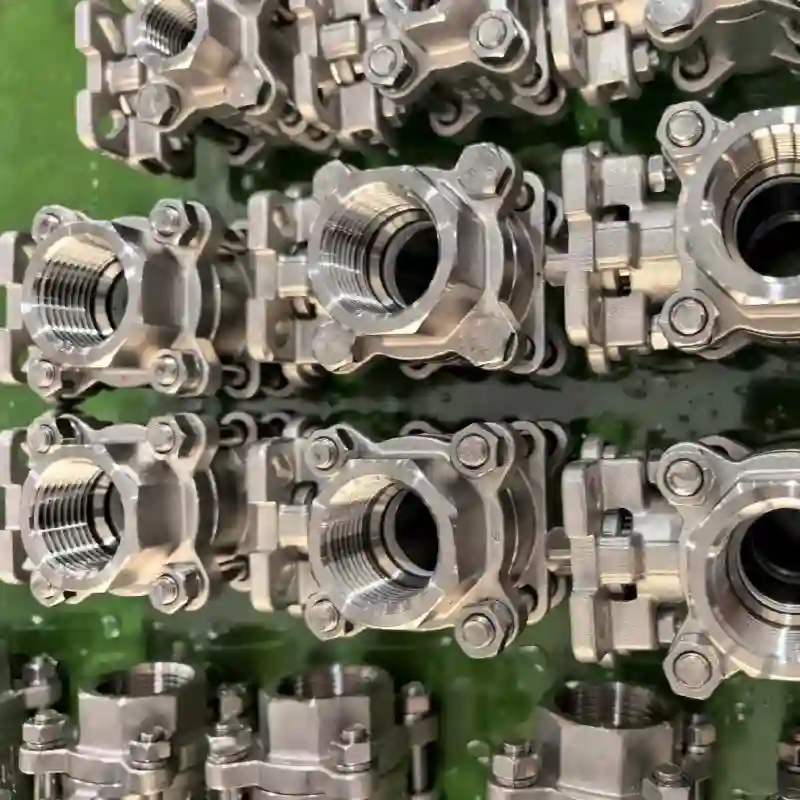
Core advantages of the three-piece ball valve
Understanding the advantage of three piece ball valve helps you clearly explain the selection rationale to clients or your team:
-
Easy maintenance: In-line replacement of seats and seals significantly reduces downtime.
-
Material flexibility: Both body and ball can be made from stainless steel, alloy steel, or special materials depending on the media—among which the stainless steel three piece ball valve is the standard choice for corrosive conditions.
-
Reliable sealing: PTFE or reinforced seat materials, combined with precision-machined balls, enable bidirectional zero leakage.
-
Broad applicability: From low-pressure gases to high-pressure steam, the three-piece structure provides stable shut-off performance.
Criteria for selecting manufacturers
When evaluating 3 piece ball valve manufacturers, we recommend focusing on the following four dimensions:
1. Design and manufacturing standards
Reputable manufacturers strictly follow international specifications such as API 6D, ASME B16.34, and ISO 17292, and can provide complete material traceability reports and pressure test records.
2. Seat and sealing technology (Three piece ball valve seal kit)
The seat is the most critical wear part in a ball valve. Professional suppliers offer a complete three piece ball valve seal kit, including seats, O-rings, and packing, with material combinations validated under actual operating conditions. Asking whether the supplier provides seal kits in different material grades is an effective way to gauge their technical depth.
3. Assembly and testing capability (Three piece ball valve assembly)
The quality of three piece ball valve assembly directly affects the valve’s service life. Reliable manufacturers use torque-controlled bolting and perform shell strength tests and leak tests, ensuring every valve undergoes strict inspection before shipment.
4. Customization and delivery capability
Excellent manufacturers should be able to recommend suitable body materials, ball coatings, and sealing materials based on the client’s media, temperature, and pressure parameters, while providing clear technical documentation.
Application example
Take a chemical plant’s steam pipeline retrofit as an example: the plant originally used imported two-piece ball valves, which experienced multiple internal leaks within two years. After switching to stainless steel three piece ball valve, not only was the leakage problem resolved, but during each annual overhaul, only the seal kit needed replacement—reducing single maintenance time from 4 hours to 1.5 hours. This is the tangible value delivered by the three piece ball valve design.
Summary
📌When choosing 3 piece ball valve manufacturers, don’t focus solely on price—pay more attention to design standards, material control, assembly processes, and after-sales support. A supplier that values a robust quality system and technical expertise will provide long-term, reliable protection for your piping system. If you are evaluating new suppliers, start by requesting complete test reports and seal kit material lists.
📌For specific project needs, feel free to contact the CHCV technical team for selection recommendations.