
Titanium Ball Valves: Material Limits vs. Brass Systems
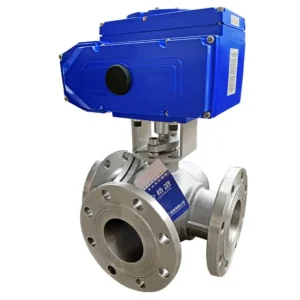
“Titanium ball valves” often appears in selection discussions for corrosive media and special materials, but “titanium” only states the material direction of a structural part; it does not automatically mean the whole valve suits every working condition. The body, ball, stem, seat, seals, end connections, and the actual medium should be placed on one check sheet.
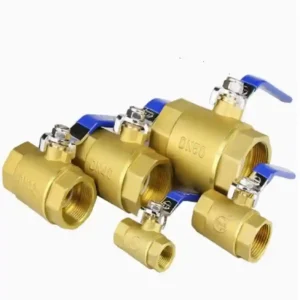
If the existing system uses brass ball valves, changing to titanium ball valves is also not a direct one-for-one replacement. The medium composition, concentration, temperature, pressure, operating frequency, cleaning method, pipe material, and installation space may all change the choice. In particular, the combination of threads, seals, and seats often causes more field problems than the material name itself.
How Should Ball Valve Materials Be Read Apart?
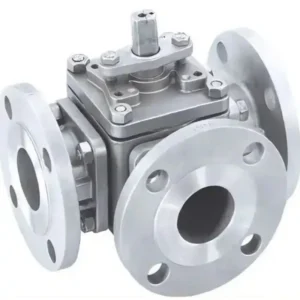
When reading “ball valve materials”, first break the product into functional layers: the body provides the external connection and the medium boundary, the ball forms the passage, the stem transmits the switching action, the seat and seals provide shutoff, and the handle or actuator provides operation. Different parts do not necessarily use the same material, and the product name does not always describe the trim combination completely.
An inquiry therefore cannot just say “titanium ball valve”. Ask the supplier to list the specific configuration of the body, ball, stem, seat, seals, and end connections, and to state which items are standard configuration and which items require order confirmation.
Ball Valve Material Selection Guide: Confirm the Medium Before the Material
The practical order of a “ball valve material selection guide” is to write the medium first and the material second. The purchase sheet should at least record the medium name, whether solid particles are present, possible concentration changes, the working temperature range, the pressure range, the switching frequency, and the cleaning conditions. Even if the medium name is the same, changes in concentration and temperature can make the seat or seals the limiting factor.
If the valve sits on a laboratory device, a metering skid, or a non-product-contact utility branch, the material evaluation must also consider drainage, cleaning, and maintenance methods. For special chemical media, do not copy experience from ordinary brass, titanium, or stainless steel directly; ask the supplier to state the applicable boundary from the specific model documentation.
Ball Valve Body Material Selection vs. Trim Selection: What Is the Difference?
“Ball valve body material selection” mainly solves the matching of the body with the piping, the environment, and the medium boundary, but it cannot replace the check of the ball, stem, and seals. Even if the body material looks suitable, the whole valve still cannot serve as a qualified replacement if the seat fails under temperature changes or cleaning media.
The connection standard must be checked at the same time. Thread specification, end length, bore, and mounting direction affect field modification; if the pipe is plastic, lined, or dissimilar metal, confirm the transition pieces, supports, and sealing method separately, so the material advantage does not become an installation connection risk. For a material-side comparison with another valve family, see our brass vs stainless steel ball valve guide.
Ball Valve Seat Material Guide: Seat and Seals Are the Key Boundary
A “ball valve seat material guide” is not just for comparing seat names; also look at the combination of seat and seals, the medium, the temperature, and the operating pattern. A soft seat working with metal parts may suit certain switching services, but not necessarily scenarios with particles, frequent operation, or special cleaning.
When purchasing, ask the supplier for the material description of the seat, the stem seal, and the end seals, and write the applicable media and the limiting conditions into the order confirmation. Later, when parts are replaced, field staff will not mistake “same body material” for “same complete seal combination”.
What Checkable Documents Do High Quality Titanium Ball Valves Need?
“High quality titanium ball valves” is not a judgment that can replace technical documents. More useful documents include the model and dimension table, the material list, the connection standard, the assembly drawing, the seat and seal combination, the applicable medium description, and the inspection documents corresponding to the model. If the project requires customization, list the modified items separately.
For a “customized titanium ball valve”, confirm whether the customization covers the material, the end connection, the length, the handle, the mounting method, or the whole construction. The more customized content there is, the more the interface must be locked in the drawing or the confirmation sheet, so receiving is not judged by appearance alone. A CHCV inquiry should specify these modification items from the start.
📌 Case Setting
The project placed the valves on a non-product-contact utility branch, and recorded the medium, the cleaning method, the connection ends, and the maintenance space first, before asking CHCV about brass and special alloy candidate options. The site had different material combinations at the same time, and the body, ball, seat, and seals might come from different series, so it had to be confirmed whether they could work as a set. CHCV combined Nibco product documentation to compare the body, ball, seat, seals, and connection as one system, instead of assuming in advance that one material is the best. This avoids ordering by the material name alone while ignoring seal and connection compatibility.
If the line is later changed to product contact, special cleaning agents, or higher-temperature service, the original material conclusion must be rechecked; CHCV and Nibco help establish a traceable review boundary.
🧭 Material Decision Card: Arrange These Six Items in the Inquiry
Medium and concentration → working temperature and pressure range → body and ball materials → seat and seal combination → connection standard and installation space → model drawings and inspection documents. Filling in this order reduces decisions made only from material names or marketing adjectives.
Common Questions
FAQ 1: Can a titanium ball valve directly replace a brass ball valve?
Do not assume it can. Besides the body and trim materials, check the size, bore, thread or other connection, end-to-end length, seal combination, operating space, and the actual medium.
FAQ 2: Does “high quality” prove corrosion resistance?
No. Corrosion resistance depends on the medium, temperature, material combination, surface condition, and specific construction, and should follow the model documentation and the order confirmation as the purchase basis.