
Brass Ball Valve Handle: Size, Direction, and Locking
“Brass ball valve handle” is not an accessory question judged only by color and length. The handle must match the stem end, the nut, the stop, the rotation direction, and the valve body series, and it must be operable within the actual pipe space. A wrong handle size can prevent the valve from opening or closing completely.
For a new valve purchase, confirm the handle form together with the valve model. For a field modification, first record the stem size, the original handle connection, the mounting direction, the insulation thickness, and the available space. A “universal” handle bought on its own often cannot cover these differences.
Ball Valve Brass Handle: Confirm the Stem Connection First
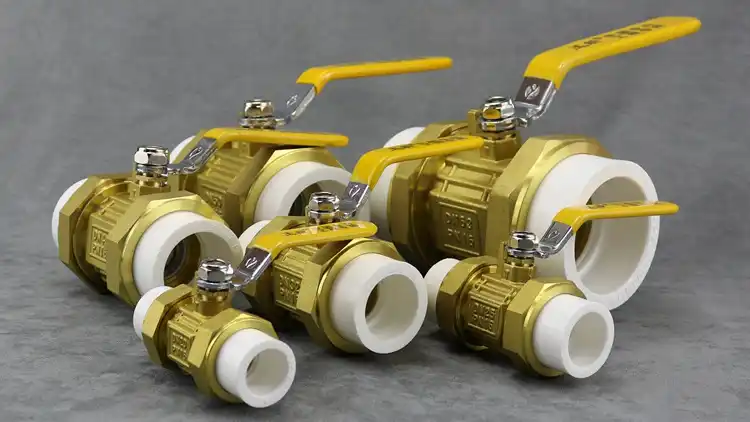
The key of “ball valve brass handle” is the mechanical connection between the handle and the stem. Different series may use different square heads, flat heads, nuts, or pin structures. A handle that seems to fit may still loosen, spin, or stop at the wrong position in practice.
At receiving, check the handle, stem, nut, and stop parts together against the model documentation. Do not judge usability by the handle shape or color alone, especially for small sizes and replacements between different manufacturers.
Ball Valve Handle Dimensions: Combine Size with Operating Space
“Ball valve handle dimensions” is not just the overall handle length; it also includes the mounting height, the rotation radius, the clearance from the pipe, and the net space after insulation. A handle that is too long may hit adjacent lines, while one that is too short may be hard to turn; wall-mounted, in-box, or equipment-bottom installations also need to consider the tool access direction.
For field measurement, record the valve body centerline, the handle rotation plane, the adjacent obstacles, and the available maintenance passage at the same time. Giving these dimensions to the supplier gets the correct configuration more easily than simply saying “a bigger handle is needed”. For the replacement side of the same topic, see our brass ball valve handle replacement guide.
When Is a Brass Ball Valve Handle Extension Useful?
A “brass ball valve handle extension” suits positions where the handle is blocked by insulation, a guard, or a deep installation, but the extension changes the operating radius and the load. Before use, confirm that the stem load, the extension fixing method, the locking, and the position indication remain clear.
An extension cannot make up for a valve selection error. If the body and the pipe are misaligned, the stem is already sticking, or the pipe support is insufficient, a longer handle may magnify the problem.
Brass Ball Valve Lever Handle vs. Butterfly Handle
A “brass ball valve lever handle” usually shows the open and closed directions more easily but needs enough rotation space; a butterfly handle takes a smaller radius but may differ in effort and identification. Compare the valve size, operating frequency, operator visibility, and box space, not just the appearance.
If the handle is part of equipment safety isolation, also confirm the valve position marking, the locking hole, the lockout tag, and the distance between adjacent valves. A valve that can turn does not mean the field staff can accurately judge its state.
Brass Ball Valve with Locking Handle: State the Purpose of the Lock
The locking function of a “brass ball valve with locking handle” may prevent misoperation, hold the valve open, or hold it closed; the purchase should state which one applies. The locking position, padlock space, key management, and release conditions can all affect the handle choice.
A locking handle does not mean the valve has a higher pressure rating, and it cannot replace a safety interlock. It is only part of the operating control and still needs the valve model, the medium boundary, and the site procedures. A CHCV handle inquiry should state the locking purpose from the start.
📌 Case Setting
CHCV works with Apollo Valves to organize the operating space of isolation valves in a customer’s pump room. Apollo Valves is a ball valve brand under the American Conbraco Industries group, and CHCV, as its cooperative supplier, provides handles and replacement accessories. The original handle was hard to turn between the insulation and the adjacent piping, so the project first measured the stem size, the rotation radius, and the maintenance passage, and then asked CHCV whether a “ball valve brass handle”, an extension, or a locking configuration could match the original model. CHCV checked the handle interface, the fixing method, and the stop angle against Apollo product documentation to avoid a forced modification. If the valve carries special media, frequent operation, or a safety interlock function, the handle change must also review the valve position display and the operating procedures at the same time, not just “it can be fitted”.
🔩 Handle Fit Card: Four Items to Confirm as a Set
Valve model and size; stem end and nut dimensions; overall handle length and rotation radius; locking, stop, and position indication. If any item is unclear, do not mark the handle as a universal replacement.
Common Questions
FAQ 1: Can the handle be used as long as it fits onto the stem?
Not necessarily. The fixing method, stop, rotation direction, load, and space must also be confirmed, to avoid spinning, loosening, or failure to close completely.
FAQ 2: Can an extension handle solve a sticking valve?
It cannot be treated as a repair for sticking. Check the valve, the pipe stress, and the stem condition first, and then decide whether an extension is needed.