
How to Choose a Quality Brass Ball Valve?
A quality brass ball valve is not necessarily brighter, heavier, or more expensive. For buyers, the real question is whether the body and internal parts match the medium, pressure, temperature, connection method, and operating frequency, and whether the order data, dimensions, and inspection records correspond. This article explains how to identify a quality brass ball valve from a procurement and receiving perspective.
Brass ball valves are commonly used in water, air, and general utility pipelines, but “brass” alone is not a universal approval for every service. If the medium contains corrosive chemicals, operates at high temperature, or involves special gases, material and seal compatibility must be checked separately. If remote opening and closing is required, the valve body and actuator configuration should also be evaluated separately.
✅ Which Parts Should You Check First in a Quality Brass Ball Valve?
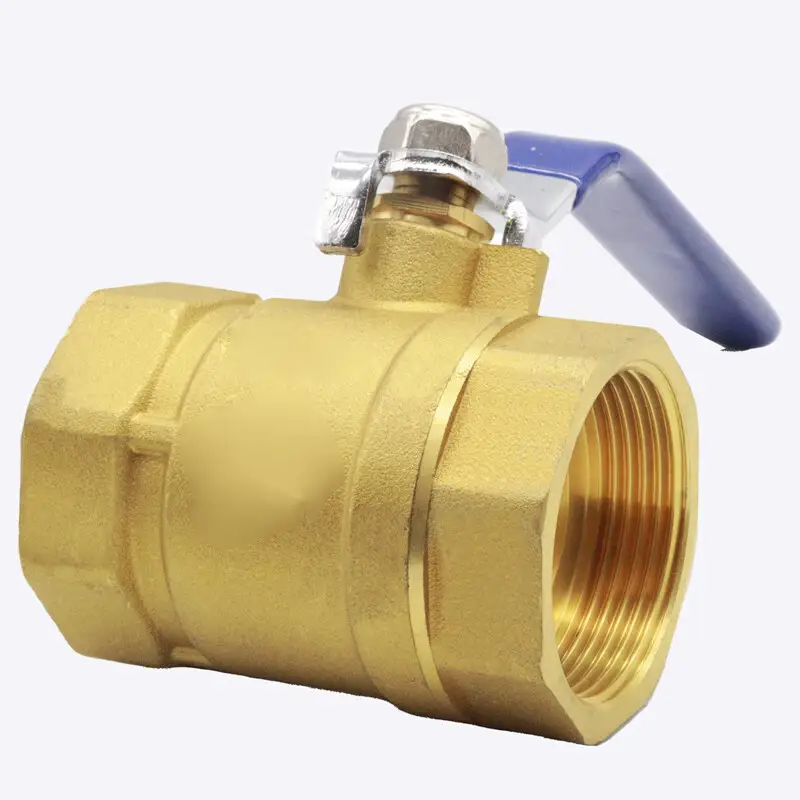
When judging a quality brass ball valve, do not look only at the body finish. Check the body, ball, stem, seat, seals, and handle or actuator interface together. The ball should rotate smoothly, the stem should not show obvious wobble, and the end connections and threads should be clear and complete. For lines that require frequent cycling, also check whether the stem seal and operating torque match the actual service conditions. If an order only says “brass ball valve,” the supplier may not know the internal materials, bore, or seal configuration.
What Should a Brass Ball Valve Material Specification Include?
A brass ball valve material specification should identify the body, ball, stem, seat, and seals instead of simply stating “brass.” If lead-free, dezincification-resistant, or specific hygiene requirements apply, state them in the order and technical documents rather than inferring them from color or brand name. Seat and seal materials must also be considered alongside the medium, temperature, and pressure. The same body material can have a different service boundary when a different seal combination is used. Without a model drawing or formal data sheet, do not add fixed grade, pressure, or temperature values.
How Do Brass Ball Valve Sizes and Connection Standards Confirm Installation Fit?
Brass ball valve sizes do not refer only to the nominal pipe size. Buyers should also check the bore, overall length, end connection, thread standard, male or female thread direction, installation clearance, and handle operating space. NPT, BSP, and other connection standards must not be mixed, and the same nominal size does not mean that two valves can be exchanged directly. For a replacement valve, compare the old valve’s connection form, sealing method, and installed length with the new valve drawing item by item. A similar outside diameter is only an initial reference, not a substitute for confirming dimensions and threads.
Why Does a Ball Valve Seat Material Guide Matter?
The key point of a ball valve seat material guide is to connect the seat material with the medium, operating temperature, pressure differential, and cycling frequency. PTFE is common in many general-purpose ball valves, but that does not mean it suits every medium or temperature. Buyers should confirm the combination of seat, stem seal, and other soft-seal materials and review the technical data for the selected model. For corrosive or particle-laden media, or for frequent cycling, the word “quality” cannot replace a specific compatibility check.
🛠️ What Should a Ball Valve Inspection Checklist Include?
A ball valve inspection checklist can cover appearance, markings, dimensions, connections, operation, and sealing. On receipt, first confirm the model, size, connection standard, and quantity. Then check the cast or machined surfaces for cracks, obvious impact damage, blockage, and thread damage. Operate the handle and observe whether the ball reaches its full position. If pressure or leakage testing is required, follow the order, model documentation, or applicable standard, and match the results to the batch documents. This produces a more useful quality judgment than looking only at the surface finish or a single price.
📌 Application Case: PROPAC ENTERPRISE Warehouse Packaging Area Upgrade
PROPAC ENTERPRISE is a Malaysian supplier of packaging products for the food and beverage sector. It mainly operates through online orders, low minimum order quantities, and ready-stock warehousing. As the business grew, its warehouse and distribution center in Selangor needed a Utility Isolation Upgrade for the utility pipelines, so local sections could be isolated quickly during routine maintenance or unexpected repairs without disrupting the warehouse’s overall production and packaging operations.
During the evaluation, the PROPAC team identified two clear requirements. First, the warehouse cleaning-water and general utility-water branches needed sectional isolation, so one section could be serviced without shutting down the water supply to the entire warehouse. Second, the compressed-air branches serving the sample packaging stations and small pneumatic equipment needed service isolation valves, allowing the air supply to be cut off quickly during maintenance.
During selection, PROPAC visited several local plumbing and water-supply distributors and compared valve solutions in different materials and sizes. It finally selected the manual, non-pneumatic brass ball valves supplied by CHCV for DN15–DN25 branch lines. The PROPAC purchasing manager explained the choice directly: “Only these few branch lines needed to be modified in our warehouse, so the quantity was small but the delivery needed to be fast. CHCV’s ball valves were available from our wholesaler in Kuala Lumpur, so we could collect them directly without waiting for a shipment. Our own maintenance staff installed the valves without an outside contractor, and they have operated without a problem for more than a year.”