
V-Port Stainless Steel Ball Valve Manufacturers in China: Modulating Control
V-port ball valves have a V-shaped cut in the ball, giving an approximately equal-percentage flow characteristic with opening degree, suitable for process control branches requiring modulation. Ordinary ball valves are mainly for on-off service; V-port valves are for modulation—know which function you need before selecting. This article breaks v-port stainless steel ball valve manufacturers in china evaluation into modulation characteristic, media matching, and control signal from the perspective of process control engineers and food and chemical industry buyers.
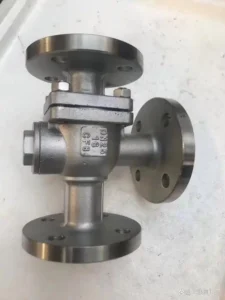
3 Way V Port Ball Valve: Three-Way Modulation Flow Paths
A 3 way v port ball valve three-way structure is used for diverting or mixing modulation. When selecting, confirm flow path form (L or T type) and modulation needs for each port. Three-way valve flow characteristics are more complex than two-way; data sheets must be checked port by port.
Installation direction of a three-way V-port valve affects mixing effect; confirm according to process requirements. When process media need quick switching, a three-way valve is more compact than multiple valves in parallel.
3/4″ V Port Ball Valve: Small-Bore Modulation Branches
A 3/4″ v port ball valve is commonly used for small-flow modulation branches such as dosing, additive injection, and bypass control. Small-bore V-port modulation accuracy depends on ball cut precision and seal performance; confirm machining precision and test records when selecting.
For small-flow modulation branches, matching valve bore to actual flow range matters more: if the bore is too large, the valve works in a small opening range and modulation accuracy suffers.
2 Way Modulating Ball Valve: Two-Way Modulation Selection
For 2 way modulating ball valve two-way modulation valve selection, confirm maximum flow, minimum adjustable flow, and differential pressure conditions to ensure stable modulation within the working opening range.
The modulation valve flow characteristic curve is provided by the supplier. After receiving the data sheet, map the process flow range to the opening range and confirm the linear segment covers common operating conditions.
Ball Valve Modulating: When to Use Ball Valve for Modulation
Ball valve modulating excels in applications requiring fast response, frequent cycling, and high sealing requirements. V-port ball valves combine ball valve sealing with modulation characteristics, making them a common choice for modulation branches.
But ball valve modulation is not suitable for sustained high-precision control: throttling accelerates seal face wear. For long-term throttling conditions, evaluate dedicated control valve options.
Ball valve vs control valve comparison centers on modulation accuracy, response speed, and cost: V-port ball valves are simple, fast, and moderately priced, suiting most process modulation; control valves (such as single-seat globe valves) offer higher accuracy but at higher cost and maintenance requirements.
📌 Case Setting
Yakin Sedap’s official public information shows it is a Halal sauce and seasoning OEM processor in Rawang, Selangor, with automated filling lines and online quality inspection equipment. Flow modulation for thick sauce pipelines requires valves with good modulation characteristics rather than just on-off capability.
When evaluating flow modulation solutions for filling and blending branches, the project compared V-port and ordinary ball valve modulation characteristics, focusing on opening-flow curves, seal material, and CIP cleaning compatibility, and requested corresponding valve data sheets. CHCV helped provide V-port ball valve flow characteristic and size data, giving the modulation solution a data basis rather than relying on experience.
CHCV provides flow characteristic data so V-port selection is based on measurable curves.
✅ Five V-Port Selection Questions
Modulation characteristic: does the opening-flow curve match process requirements?
Media characteristic: viscosity, temperature, and solids content effects on sealing
Seal material: compatible with CIP cleaning agents
Control signal: matches DCS or PLC points
Test data: flow characteristic data sheet provided by supplier
Common Questions
FAQ 1: What is the difference between a V-port ball valve and an ordinary ball valve?
A V-port valve has a V-shaped cut in the ball, giving an approximately equal-percentage flow characteristic with opening degree, suitable for modulation; ordinary ball valves are mainly for on-off isolation. Choose V-port for frequently modulating branches.
FAQ 2: Can thick media use an ordinary ball valve for modulation?
Not recommended. Ordinary ball valves have drastic flow change at small openings, and thick media easily accumulates at the seat. For modulation branches, prioritize evaluating V-port or other modulation valves.