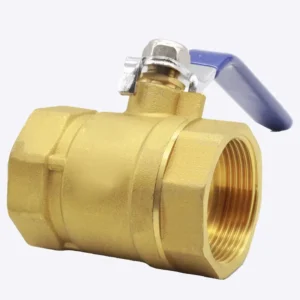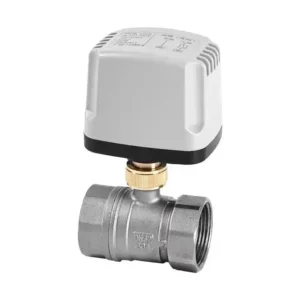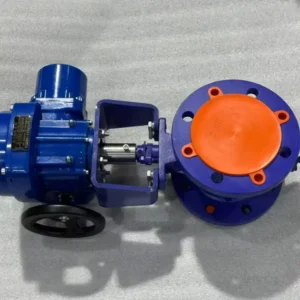

Valve selection is often overlooked in residential plumbing systems until problems emerge: water pressure drop, inability to shut off water for water heater maintenance, or burst outdoor hose connections caused by freezing. The discussion between full port ball valve and gate valve essentially boils down to three questions: how much flow resistance exists when fully open, whether shutoff is fast, and how convenient maintenance is.
We will start with the meaning of full port ball valve, then compare bore size, structure and installation scenarios.
full port ball valve meaning: What exactly does full port mean?
A full port ball valve means that when the ball valve is fully open, the inner diameter of the ball passage is close to the inner diameter of the pipe. When water flows through the valve, there is no obvious reduction in the passage, resulting in low local resistance. Manufacturers often provide Cv values; under the same nominal size, full port types generally have a higher Cv. A higher Cv means a larger water flow rate under the same pressure differential.
Some people search for full port ball valve vs ball valve. This expression is not precise. Ball valves can be classified by passage type into full port and standard port. They can also be grouped by ball support style into floating ball and trunnion mounted ball, and by body construction into one-piece, two-piece and three-piece designs. Therefore, a full port ball valve is a ball valve variant defined by its passage configuration, not a category opposing all ball valves.
Full port ball valve vs standard port: Flow rate and cost trade-offs from reduced bore
The difference between full port ball valve and standard port lies first in the passage. To shrink the valve body and cut costs, a standard port ball valve has a ball passage smaller than the pipe inner diameter.
When water flows through, flow velocity rises, pressure drop increases, and noise plus erosion may also go up. This is the trade-off between full port valve and standard port: full port offers extra flow capacity, yet it comes with a larger body, higher price and possibly more space required for handle rotation.
Standard port can satisfy applications with small pipe size and low flow demand. For main water supply lines, circulating heating, water heater inlet/outlet or equipment inlets, pressure drop from bore reduction will amplify over years of operation.
When selecting valves, do not only check the connection size. Also verify the marked bore size, Cv value, pressure-temperature rating and material.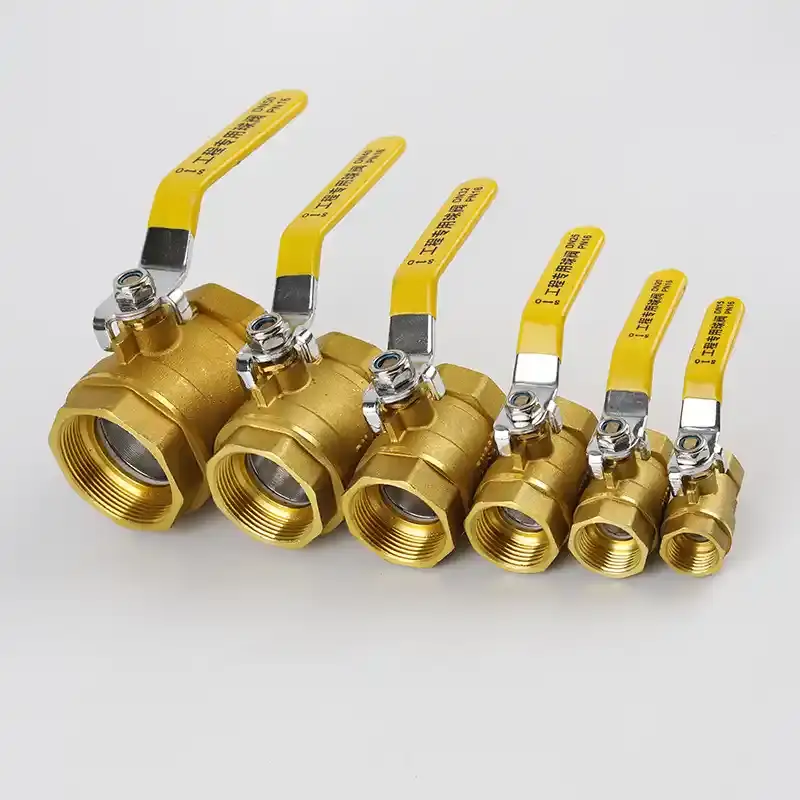
full port ball valve vs gate valve: Comparison of operation, flow resistance and maintenance
| Comparison Item | full port ball valve | gate valve |
|---|---|---|
| Opening & Closing Method | 90° handle rotation | Multi-turn handwheel to lift/lower gate |
| Flow Resistance at Full Open | Passage nearly straight pipe, low resistance | Low resistance when fully open |
| Partially Open Operation | Short-term throttling possible, not recommended for continuous throttling | Gate prone to vibration and erosion; unsuitable for throttling |
| Sealing | Ball mating with valve seats | Gate mating with valve seats |
| Maintenance | Replaceable seats; some designs permit in-line maintenance | Packing can be adjusted; complex repair after gate wear |
| Space Requirement | Space needed for handle rotation | Vertical space required for handwheel travel |
| Recommended Use | Quick shutoff, low flow resistance, frequent operation | Fully open / fully closed service, large bore, infrequent operation |
full port ball valve vs gate valve is not a matter of one fully replacing the other. Ball valves excel at quick shutoff and low flow resistance, while gate valves remain applicable for long-distance fully open water transmission at locations with infrequent operation. Note that rapid closing of ball valves may cause water hammer, especially in high-rise buildings or long pipelines; rotate the handle slowly. Throttling with a partially open gate valve subjects the gate to erosion, which may lead to poor shutoff after long service.
When to select full port ball valve and when to select gate valve
Prioritize full port ball valve if fast isolation is needed, maintenance downtime should be minimized, or the pipeline is sensitive to pressure drop. Common applications include water heaters, boilers, main water inlets, irrigation mains and equipment inlets.
Gate valves may be considered for large bore installations that stay fully open or fully closed most of the time, operate rarely, and have space for handwheel vertical movement. If continuous flow regulation is required, choose a dedicated control valve instead of operating ball valves or gate valves in partially open positions for extended periods.
Specific Application Scenarios
full port ball valve for water heater
Reliable shutoff of inlet and outlet is required during water heater maintenance. full port ball valve for water heater reduces flow loss introduced by the valve, and water supply restoration after maintenance is straightforward.
If the water heater is installed at height or connected to long piping, slow opening and closing reduces water hammer risk. Reserve operating space at the installation position, and confirm valve materials are compatible with potable water and hot water temperatures.
full port ball valve with drain
full port ball valve with drain simplifies draining, pressure relief and freeze protection. The drain port can connect to a hose to divert water to a floor drain or outdoors. For houses unoccupied in winter, close the main water supply then open the drain port to remove residual water inside pipes and prevent freeze bursts. Tighten the drain plug and inspect for leakage periodically.
full port ball valve hose bib
full port ball valve hose bib can be considered for outdoor water outlets. The full bore delivers ample hose flow, suitable for car washing, irrigation and cleaning. If freezing occurs locally in winter, select freeze-resistant models or fit an indoor shutoff valve, and drain the system before winter arrives. Versions with vacuum breakers reduce backflow contamination risks.
Sizes & Connections: Full Port Ball Valve 3/4″, full port ball valve 1 inch and 2″ full Port Ball Valve
Full Port Ball Valve 3/4″ is commonly used for residential branch lines, sink connections, toilet feeds and some water heater branch pipes. full port ball valve 1 inch may be adopted for main branch lines, larger water heaters or irrigation inlets. 2″ full Port Ball Valve is mostly used in commercial systems, main pipelines or high-flow equipment, and is rarely seen in ordinary homes.
Size is not the only parameter. Also confirm connection types: NPT thread, socket weld, flange, PEX crimp or push-to-connect. Verify pressure rating, temperature range, body material (brass, bronze, stainless steel) and seat material (PTFE, RPTFE, etc.), plus certifications. For potable water systems, check compliance with local low-lead and hygiene requirements.
FAQ
- What is the difference between full port ball valve vs ball valve? A more accurate phrasing is the difference between full port ball valve and standard port ball valve. The former has a passage close to the pipe inner diameter, while the latter features a reduced bore.
- full port ball valve vs standard port: Which has lower pressure drop? At the same nominal size and flow rate, full port typically achieves lower pressure drop, yet it has a larger body and higher cost.
- full port ball valve vs gate valve: Which is better for main water lines? full port ball valve is preferred if fast shutoff and low flow resistance are required. Gate valves can be evaluated for large bore lines that stay fully open and operate infrequently.
- Is full port ball valve 1 inch suitable for residential use? It can be used for main branch lines or equipment inlets with high flow demand; Full Port Ball Valve 3/4″ may suffice for ordinary branch lines.
- Can 2″ full Port Ball Valve be installed on domestic water pipes? Generally not recommended. The 2″ bore is designed for commercial or high-flow systems, and domestic pipe connections plus flow demands are usually mismatched.
Conclusion
The selection between full port ball valve vs gate valve depends on flow rate, operation frequency, available space, maintenance requirements and budget. Choose full port ball valve for low flow resistance and fast shutoff. Evaluate gate valves for large bore applications staying fully open or fully closed with infrequent operation. For water heater, drain and outdoor hose applications, refer to full port ball valve for water heater, full port ball valve with drain and full port ball valve hose bib respectively.
Full Port Ball Valve 3/4″, full port ball valve 1 inch and 2″ full Port Ball Valve cater to different flow requirements. When purchasing, cross-check Cv value, material, connection type and certifications together.