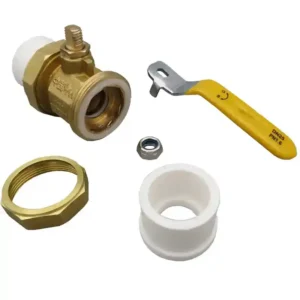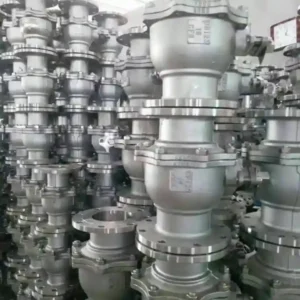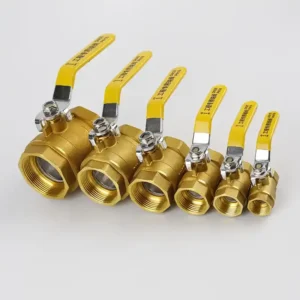

Ball valves are widely used in industrial piping, water treatment, oil & gas, HVAC and general fluid control systems. Based on the ball support method and force-bearing structure, ball valves fall into two primary categories: Floating ball valve Trunnion mounted ball valve
Understanding the differences between these two types is the first step for proper valve selection. In addition, the industry also classifies ball valves by body construction, port configuration, number of flow paths, end connection type and actuation method.
Floating Ball Valve: Common Option for Small-to-Medium Bore and General Service
A floating ball valve features a ball that is not fixed by upper and lower trunnions; instead, it is supported by the seats. When fluid pressure enters the valve cavity, the pressure pushes the ball against the downstream seat to form a seal.
Its characteristics include:
- Relatively simple structure and low manufacturing cost;
- Widely applied in small-to-medium bore, medium and low pressure working conditions;
- Good sealing performance, suitable for water, oil, gas and general industrial media;
- Common pressure ratings include 1000 WOG, PN16, PN40, Class 150, Class 300, etc.;
- Bore sizes are mostly small to medium.
Floating ball valves also have clear limitations. As bore size and pressure increase, the force exerted by the medium pushing the ball rises, resulting in higher operating torque and increased seat load. For this reason, trunnion mounted ball valves are normally selected for high-pressure, large-bore pipelines.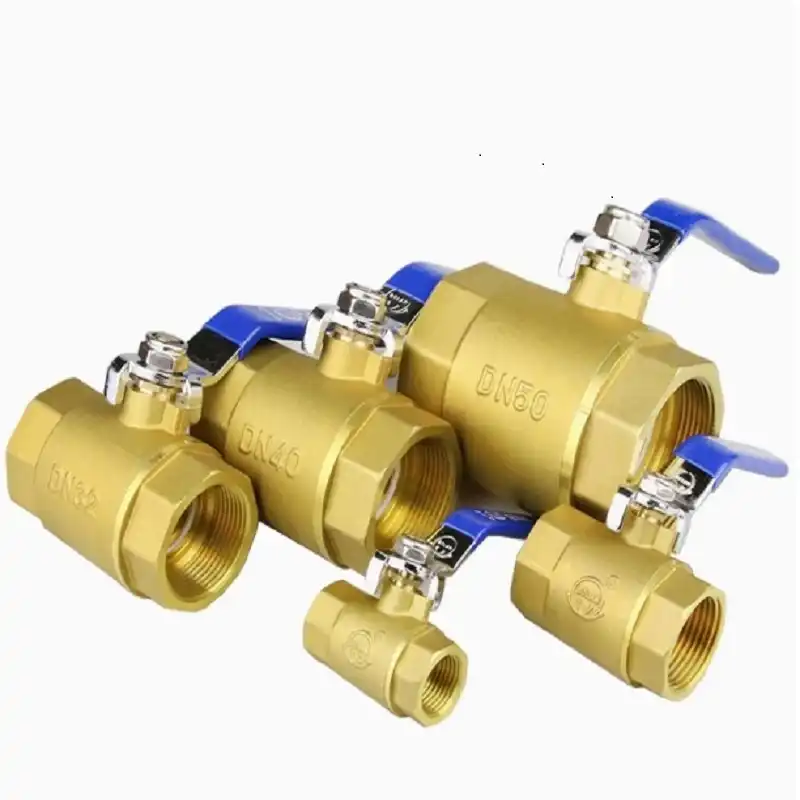
Trunnion Mounted Ball Valve: Main Choice for Large-Bore, High-Pressure and Critical Service
Trunnion mounted ball valve is also known as fixed ball valve. Its ball is supported by upper and lower trunnions. The ball itself will not shift significantly under medium pressure; instead, the seats move under pressure to achieve sealing.
This type of valve is commonly used in:
- Long-distance oil and gas transmission pipelines;
- High-pressure, large-bore pipelines;
- Oil, natural gas and petrochemical plants;
- Applications requiring low operating torque;
- Working conditions requiring double block and bleed, fire-safe and anti-static designs.
Its main advantages include:
- Low operating torque, suitable for large bore and high pressure;
- Can adopt double piston effect or single piston effect seat design;
- Better compliance with standards such as API 6D and API 608;
- Can be fitted with gearboxes, electric, pneumatic or hydraulic actuators;
- Higher reliability for critical isolation and emergency shut-off applications.
On the downside, trunnion mounted ball valves have a more complex structure with more components, and their cost is generally higher than floating ball valves.
Floating vs Trunnion Ball Valves: How to Make the Selection
| Comparison Item | Floating Ball Valve | Trunnion Mounted Ball Valve |
|---|---|---|
| Ball Support | Supported by seats; the ball can float | Supported by upper and lower trunnions; the ball is fixed |
| Sealing Principle | Medium pressure pushes the ball to press against the downstream seat | Seats move under pressure to form seal |
| Operating Torque | Torque rises sharply with increased bore size and pressure | Low and stable torque |
| Applicable Bore | Small to medium bore | Medium to large bore |
| Applicable Pressure | Mainly medium and low pressure | Medium-high pressure and high pressure |
| Cost | Lower | Higher |
| Typical Applications | Water, oil, gas, HVAC, general industry | Oil & gas long-distance transmission, petrochemical, high-pressure critical pipelines |
For practical selection, floating ball valves are often economical and practical for general water lines, compressed air, small equipment or small-to-medium bore piping. Trunnion mounted ball valves are usually preferred for large-bore, high-pressure, frequently operated or critical oil & gas pipelines.
What are common types of ball valves?
Apart from floating and trunnion ball valves, ball valves can be categorized in the following ways.
2 Piece vs 3 Piece Ball Valve: Classification by Body Construction
Common body constructions include: 1-piece ball valve: Compact structure and low cost, yet limited maintenance access; 2-piece ball valve: Composed of two body segments, allowing for basic maintenance; 3-piece ball valve: Consists of a central body and two end caps. The ball, seats and seals can be removed inline. It suits applications requiring frequent cleaning, maintenance or sanitary requirements.
Therefore, 2 piece vs 3 piece ball valve is a frequently compared topic in procurement and engineering selection. 3-piece ball valves offer easier maintenance but come at a relatively higher cost; 2-piece ball valves are more prevalent in general industrial services.
Full Port vs Reduced Port Ball Valve: Classification by Port Size
Full port ball valve: The internal bore is roughly equal to the pipe internal diameter, delivering low flow resistance and low pressure drop. It is suitable for pigging, viscous media or pipelines requiring low pressure loss; Reduced port ball valve: Its internal bore is smaller than the pipe internal diameter, with lower cost but higher pressure drop. It is used for applications with non-stringent flow requirements.
The core difference between full port vs reduced port ball valve lies in flow capacity, pressure drop and cost.
Other Common Classifications
By number of flow paths:
- 2-way ball valve;
- 3 way ball valve;
- 4-way ball valve.
Among them, 3 way ball valve is widely used for flow splitting, mixing, switching and bypass service. L-port and T-port are common options.
By end connection type:
- threaded ball valve;
- flanged ball valve;
- socket weld / butt weld ball valve;
- tri-clamp sanitary ball valve;
- grooved ball valve;
- compression ball valve.
By actuation method:
- manual ball valve;
- electric actuated ball valve;
- pneumatic actuated ball valve;
- motorized ball valve;
- gear operated ball valve.
By material:
- brass ball valve;
- bronze ball valve;
- stainless steel ball valve, such as 304, 316, CF8M;
- carbon steel ball valve, such as WCB, A105;
- duplex stainless steel ball valve;
- special alloy ball valve.
By sealing type:
- soft-seated ball valve, with materials like PTFE, RPTFE, PEEK;
- metal-seated ball valve, suitable for high temperature, high pressure, abrasive or severe working conditions.
Key Parameters to Confirm during Valve Selection
Whether choosing between the two primary ball valve types or further selecting other ball valve constructions, the following information is recommended for confirmation:
- Bore size: DN, NPS or inch;
- Pressure rating: PN, Class, WOG, PSI;
- Temperature range: ambient, high temperature, low temperature or cryogenic;
- Medium: water, oil, gas, steam, chemicals, slurry, etc.;
- Connection standard: NPT, BSP, ANSI, DIN, JIS, ISO, etc.;
- Operation mode: manual, electric, pneumatic, hydraulic;
- Standard requirements: API 6D, API 608, ASME B16.34, ISO 5211, API 607/6FA, etc.;
- Maintenance requirements: inline repair capability, fire-safe, anti-static, DBB and other functions.
Conclusion
The two main types of ball valves are floating ball valve and trunnion mounted ball valve. The former is suitable for small-to-medium bore and general service, while the latter is designed for large-bore, high-pressure and critical pipelines. In real projects, engineers also need to consider 2 piece vs 3 piece ball valve, full port vs reduced port ball valve, end connection, actuation, material and sealing standards to select the most appropriate ball valve for working conditions.
CHCV can support ball valve selection, procurement and technical communication, helping users match proper ball valve types according to medium, pressure, temperature and application scenarios.