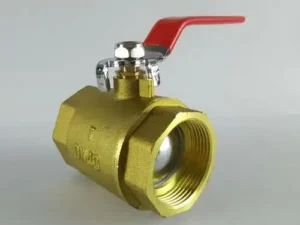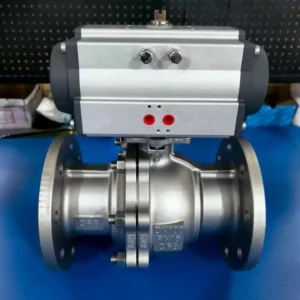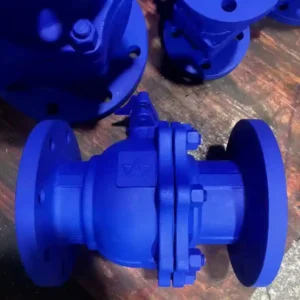

Why does a ball valve not leak after closing?
The sealing of a ball valve relies on a combined set of mechanisms: the ball body fits against the valve seat, assembly preload provides initial sealing force, the medium pressure further compresses the valve seat, and the stem and body connections block external leakage respectively.
Failure of any single component will result in internal leakage or external leakage.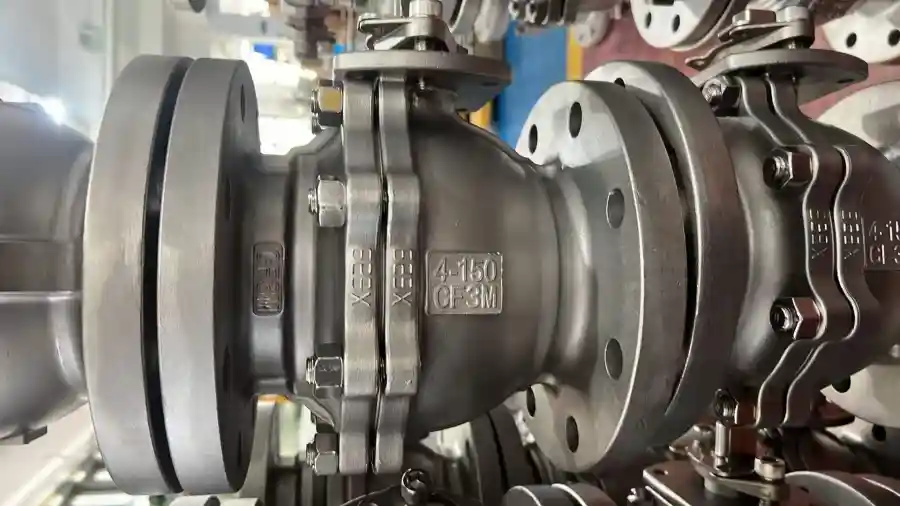
I. Basic logic of ball valve sealing
The core component of a ball valve is a precision machined and polished ball. When closed, the ball’s bore is offset from the pipeline direction, and the ball surface presses against the valve seat. Under preload and medium pressure, the valve seat undergoes elastic or plastic deformation to fill microscopic gaps and form a sealing band. At low pressure, sealing mainly depends on preload; as pressure rises, pressure-assisted sealing takes effect.
Two types of leakage need to be distinguished: internal leakage means the medium still passes to the outlet side even when the valve is closed; external leakage means the medium seeps out from the stem, body flange or body joints. Internal leakage is determined by the matching condition between valve seat and ball, while external leakage depends on packing, sealing rings and connection structures.
II. ball valve seat material selection: Valve seat material defines the sealing boundary
ball valve seat material selection is the first step in leakage prevention design. PTFE features good chemical resistance and low friction, suitable for conventional water, oil and gas media, but has a limited temperature range. Reinforced materials such as RPTFE and TFM can improve creep resistance and wear resistance.
PEEK is applicable for higher temperature and pressure conditions, yet it has poor elasticity and requires higher precision of the ball body. Metal seats are adopted for high temperature, high pressure and abrasive working conditions, but metal-to-metal contact can hardly achieve the zero-leakage level of soft seats.
Therefore, type selection should not only consider the body material, but also medium compatibility, temperature cycling, particulate matter and switching frequency. For services involving gas, oxygen, hydrogen, liquefied natural gas, etc., anti-static treatment, degreasing and low-emission requirements shall also be considered.
III. How to verify “no leakage”?
In engineering practice, “absolute zero leakage” is rarely specified directly. Instead, shell tests, high-pressure sealing tests and low-pressure sealing tests are performed in accordance with standards. ball valve seat leakage class is the criterion to evaluate sealing performance.
Common standards include API 598 and ISO 5208. Soft-seated ball valves can generally reach Class VI; metal-seated ball valves are commonly Class IV or Class V, subject to nominal diameter, pressure, temperature and manufacturing accuracy.
IV. floating vs trunnion ball valves: Structure determines force bearing mode
The difference between floating vs trunnion ball valves directly affects sealing performance. In a floating ball valve, the ball is supported by valve seats. Medium pressure pushes the ball towards the outlet-side seat, which bears the main sealing force. It has a simple structure and low cost, fit for small and medium sizes and moderate pressure, yet operating torque increases under high pressure.
In a trunnion mounted ball valve, the ball is fixed by upper and lower trunnions and will not shift with pressure. Springs and medium pressure push the valve seat against the ball. It features low torque and stable sealing, suitable for large diameters, high pressure, frequent operation and pipelines requiring double block and bleed.
V. Why is the stem prone to external leakage?
The valve stem needs to rotate, so static gaskets used for flanges cannot be applied alone for stem sealing. ball valve stem seal usually adopts O-rings, V-type packing, PTFE packing, graphite packing or combined sealing structures. An anti-blowout stem can prevent the stem from blowing out abnormally, but it cannot replace proper packing compression and material selection.
Stem leakage is often caused by packing aging, loosening due to thermal cycling, chemical corrosion, stem scratches or over-tightened gland. During maintenance, the gland can be slightly adjusted per the manufacturer’s specifications, but do not tighten it to full lock. Low-emission packing shall be selected for flammable, toxic or highly permeable media.
VI. Supplementary design for high-temperature fire service
Ordinary PTFE valve seats may decompose under fire conditions and cause sealing failure. ball valve fire safe design adopts fire-resistant seats, emergency metal sealing faces, graphite packing and fire-resistant body flange gaskets. It provides temporary metal sealing after the soft seat burns out. Common certifications include API 607, API 6FA and ISO 10497.
This design cannot guarantee that the valve remains operable after fire, but it can buy time for isolation and emergency response. It is generally regarded as a safety requirement in oil & gas, chemical and offshore platform applications.
VII. Installation and maintenance also determine sealing service life
Insufficient pipeline flushing allows welding slag and grit to scratch the ball and valve seat. If internal soft-seat components are not removed during welding, heat will damage PTFE. Long-term throttling at partially open position causes erosion of sealing surfaces. Lack of support for large-bore valves transmits pipeline stress to body connections.
It is recommended to install in accordance with flow direction, confirm whether internal parts need removal before welding, close the ball valve only after purging, keep the valve fully open or fully closed as much as possible, operate the valve periodically, and select lubricants matching the medium and temperature.
Conclusion
How do ball valves not leak? Reliable sealing is achieved through controlled contact sealing between ball and valve seat, pressure-assisted compression, properly sealed stem and body connections, as well as matched materials, structures, testing and installation.
Type selection based on valve seat material, leakage class, floating or trunnion ball structure, stem sealing and fire-safe design turns “no leakage” from a slogan into a verifiable result.
CHCV Valve Company can assist in matching soft or metal seats, floating or trunnion ball structures, fire-resistant and anti-static designs, together with corresponding leakage test schemes according to medium, temperature, pressure, nominal diameter and certification requirements.