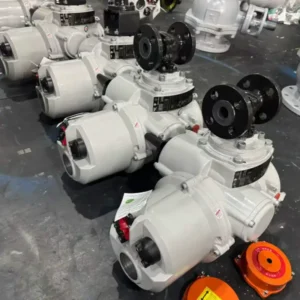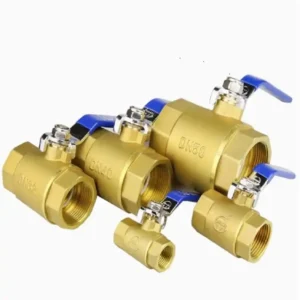

What is a stainless steel ball valve?
A stainless steel ball valve is a ball valve that uses stainless steel (commonly 304, 316, 316L grades) as the core material of the valve body. It uses the 90° rotation of the ball to open and close the pipeline medium. It is a very commonly used on/off valve in fluid pipeline systems.
316 stainless steel ball valve and 304 stainless steel ball valve: Analysis of Mainstream Stainless Steel Ball Valve Materials
The two most common types of stainless steel ball valves on the market are the 304 stainless steel ball valve and the 316 stainless steel ball valve. The difference in their chemical composition directly determines their applicable working conditions.
The 304 stainless steel ball valve is resistant to corrosion in ordinary atmosphere and clean water environments, and has high overall cost-effectiveness. It is mostly used in neutral media pipelines such as drinking water, ordinary industrial water, and dry gases. The 316 stainless steel ball valve adds molybdenum, giving it stronger resistance to chloride ions and weak acid/alkali media corrosion. It is suitable for harsh conditions such as seawater, mildly corrosive chemical media, and food processing.
Both have two-piece and three-piece structures, and can be developed into the full port stainless steel ball valve.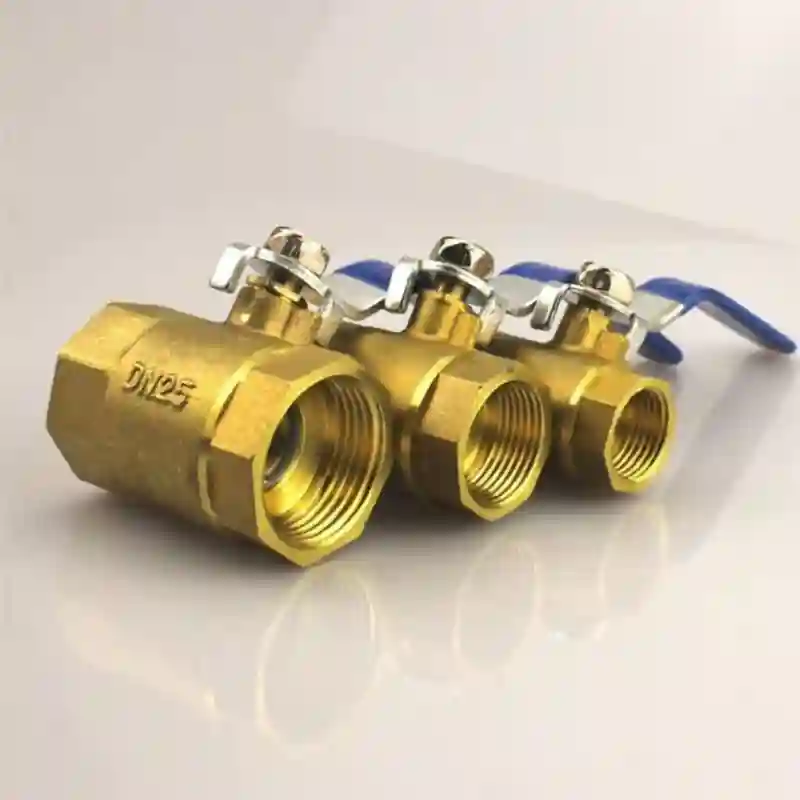
full port stainless steel ball valve: Performance Characteristics of Full Port Stainless Steel Ball Valves
In a full port stainless steel ball valve, the inner diameter of the ball through-hole is basically consistent with the inner diameter of the pipeline. When the medium flows through the valve, pressure loss is extremely low, and there will be no obvious flow reduction.
Summary of the Overall Core Characteristics of Stainless Steel Ball Valves
-
Outstanding corrosion resistance: The stainless steel body does not easily rust. Compared with brass, it has an obvious advantage in rust and corrosion resistance when facing humid environments, chloride-containing media, and weakly corrosive media; 316 material can handle seawater and some chemical fluids.
-
Wider temperature and pressure range: It can be suitable for high-temperature media, and the valve body structure has strong stability under high-pressure conditions. Many high-pressure industrial pipelines choose stainless steel ball valves.
-
Wide media compatibility: It can be used for water, oil and gas, some chemical liquids, and food and beverage media; food-grade stainless steel ball valves can be used in brewing and pharmaceutical fluid pipelines.
-
High mechanical strength: The valve body is impact-resistant and not easily deformed. Its service life is less affected by water quality corrosion.
-
Shortcomings: Higher material cost; thermal conductivity is weaker than brass; there is still a corrosion risk for high-concentration strong acids and bases, requiring upgraded material selection.
stainless steel 3way ball valve: Special Application Scenarios of Stainless Steel 3way Ball Valves
The stainless steel 3way ball valve is a ball valve with a special passage structure. It is divided into L-type and T-type flow paths, and can achieve medium diversion, mixing, and pipeline switching.
Compared with brass three-way ball valves, stainless steel 3way ball valves have significantly better corrosion resistance in corrosive media pipeline switching and multi-passage fluid systems. They are commonly found in small chemical equipment and water treatment systems.
Are stainless steel valves better?
There is no absolute conclusion that “stainless steel ball valves are comprehensively better than brass ball valves.” Whether a valve is good depends on the project’s media, budget, and usage environment.
Stainless steel ball valves have outstanding advantages in corrosive environments and high-temperature conditions; however, brass ball valves also have irreplaceable value in ordinary cold water pipelines and civil water supply and drainage scenarios.
Through a multi-dimensional comparison, we help you distinguish between stainless steel ball valves and brass ball valves and make a reasonable selection.
Stainless Steel Ball Valve VS Brass Ball Valve Selection Comparison
| Comparison Dimension | Stainless Steel Ball Valve (304 /316) | Brass Ball Valve |
|---|---|---|
| Corrosion resistance | 316 can withstand chloride ions, weak acids/bases, and is not easily corroded in humid environments | Suitable for neutral clean water; prone to dezincification corrosion when exposed to seawater, chlorine-containing water, and acidic media |
| Temperature and pressure resistance | High upper limits for temperature and pressure, suitable for industrial high-pressure and high-temperature fluids | Suitable for medium/low-pressure room-temperature civil water supply and drainage; performance is limited under high-temperature and high-pressure conditions |
| Media compatibility | Clean water, seawater, oil and gas, food media, weakly corrosive chemical media | Tap water, ordinary gas; not suitable for corrosive media |
| Mechanical strength | High valve body strength, resistant to external impact, not easily deformed | Relatively low hardness; under long-term harsh conditions, valve body cracking and dezincification are likely |
| Cost | Raw materials are expensive, procurement cost is high | Raw material cost is lower, budget-friendly for civil projects |
| Thermal conductivity | Poor thermal conductivity | Excellent thermal conductivity, good performance in gas pipeline applications |
| Hygiene performance | Food-grade grades can be used in food and pharmaceutical pipelines, with no heavy metal leaching risk | Compliant lead-free brass can be used in drinking water pipelines; inferior brass has hidden risks of heavy metal leaching |
When to Prioritize Stainless Steel Ball Valves
-
The medium contains corrosive fluids such as seawater, brine, weak acids/bases, etc.;
-
The working conditions involve high temperature, high pressure, and industrial fluid equipment;
-
Food, brewing, and pharmaceutical pipelines have strict requirements for material hygiene grade;
-
Outdoor humid environments, valves are exposed for a long time, and anti-rust requirements are high;
-
Special structure valves such as stainless steel 3way ball valve and full port stainless steel ball valve are needed, while the pipeline medium has a corrosion risk.
When to Prioritize Brass Ball Valves
-
Ordinary civil cold water supply and indoor gas pipelines, where the medium is neutral tap water or natural gas;
-
The project budget is limited, normal temperature and pressure, and there is no corrosive medium;
-
Indoor buried pipes, dry environment, and no need to resist chloride ion corrosion.
Conclusion
The 304 stainless steel ball valve and the full port stainless steel ball valve, with strong corrosion resistance and high strength, have a large number of applications in industry, water treatment, and the food industry; however, brass ball valves are still widely used in civil water supply and drainage and gas fields due to their advantages in price and thermal conductivity.
Do not simply believe in one material when selecting. You need to make a comprehensive judgment based on your medium composition, temperature and pressure, installation environment, and project budget. The ball valve that matches the working conditions is the more suitable ball valve for you.