
Brass Ball Valve Replacement Handles: How to Buy in Bulk?
For B2B buyers and wholesalers purchasing brass ball valve replacement handles, it is critical to confirm stem shape, square hole dimension, handle length and fastening method. Otherwise, problems such as poor fitting, slipping, loosening, returns and customer complaints will easily occur.
What are brass ball valve replacement handles?
brass ball valve replacement handles are manual operating components mounted on the stem of brass ball valves. They do not include valve body, ball, valve seat or sealing parts. They are used to resolve issues including broken, lost, slipping, seized, locked handles or insufficient operating space.
Common applications include plumbing maintenance, irrigation systems, water meter assemblies, water heaters, air conditioning water circuits, industrial pipelines and spare parts wholesale.
In B2B scenarios, replacement handles are generally supplied in three forms:
- Standard universal handles, manufactured to fit common stem sizes.
- Brand-specific handles, matched to a specific ball valve series or stem structure.
- OEM custom handles, with custom colour, LOGO, length, hole profile and packaging made according to customer drawings.
When purchasing, you must distinguish between “ball valve nominal bore” and “handle connection dimension”. 1/2″, 3/4″, 1″, 2″ refer to pipe nominal size, which does NOT mean the stem square hole shares the same dimension. For the same 1/2″ brass ball valve, different manufacturers may adopt 9×9 mm, 10×10 mm or double-D stems.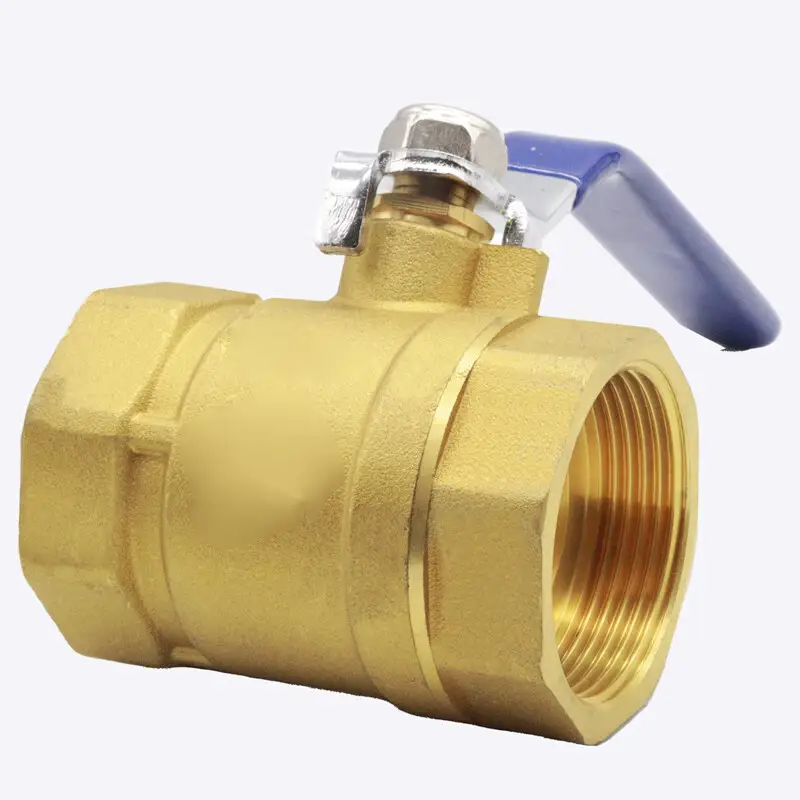
Handle Types & Materials: Brass / Stainless Steel
Common handle types:
- Lever handle: most widely used, suitable for ball valves requiring higher torque.
- Butterfly handle: for tight spaces and low-frequency operation.
- T-handle: for instruments, panel mounting and small-size valves.
- Locking handle: for safety locking to prevent unintended operation.
- Spring return handle: returns to preset position once released.
- Extended handle: for buried valves, valves behind insulation layers, elevated locations or confined spaces.
For materials, brass and stainless steel are the key options for procurement. Brass handles commonly use HPb59-1, CW617N, CW511L, DZR and other grades. Brass handles have moderate cost, good water resistance and corrosion resistance for HVAC systems, ideal for indoor plumbing, irrigation, water meter and water heater matching. Surface finishes can be raw brass, nickel plating, paint coating or rubber overmolding. For potable water applications, verify low-lead or lead-free brass and compliance with standards such as NSF/61.
Stainless steel handles mainly use grade 304 and 316. Stainless steel features high strength, good salt spray resistance, moisture resistance and chemical corrosion resistance, suited for outdoor, marine, chemical, high-cycle operation and 2″+ high-torque ball valves. Grade 316 performs better under chloride environments. Stainless steel handles cost more than brass and have stricter requirements for machining and surface treatment.
Do not select purely based on raw material price. Handle length, thickness, stop lug strength, nut thread and hole depth all affect performance. A short handle fitted on a 2″ brass ball valve will lead to excessive operating torque, which may bend the handle or wear out the valve stem.
handles for brass ball valves: How to Distinguish Universal vs. Brand-Specific Models
Universal handles only fit common stem types, e.g. 9×9 mm, 10×10 mm, 11×11 mm square holes, or double-D / flat-sided round stems. Brand-specific handles are matched by brand, series, stem length and stop angle. Wholesalers serving the repair market may stock universal handles.
How to Measure Stem & Handle Dimensions?
Measurement is the most critical step for purchasing replacement handles. Follow the procedure below:
- Close the ball valve, release pressure, remove the handle nut or screw.
- Take off the old handle and clean rust and burrs from the top of valve stem.
- Use vernier caliper to measure stem across-flat dimension, across-corner dimension, stem length and thread specification.
- Measure the old handle’s bore size, bore depth, square hole geometry, overall length, stop angle and position of limit plate.
- Check fastening type: nut thread, screw centre distance, circlip groove and counterbore depth.
- Take photos: stem top, stem side profile, rear side of old handle, valve nameplate and valve installation position.
Common stem connection styles:
- Square hole: 9×9 mm, 10×10 mm, 11×11 mm, 12×12 mm, 14×14 mm.
- Double-D hole: round stem with two flat sides, widely used for small bore ball valves.
- Round hole with flat edge: for positioning to avoid handle slipping.
- Spline / serrated profile: mostly used for specific brands or actuator connections.
Fastening nuts: M5, M6, M8, M10 etc. Fastening screws: confirm centre distance, thread size and counterbore depth.
Other handle dimensions to verify:
- Overall length: determines operating torque and space requirement.
- Stop angle: commonly 90 degrees for on-off operation.
- Stop lug position: prevents over-rotation.
- Handle thickness: impacts structural strength.
- Nut counterbore: insufficient depth fails to clamp the stem top.
- Surface treatment: nickel plating, painting, rubber coating, laser marking.
Suppliers cannot provide accurate quotations if you only specify “1/2 brass ball valve handle”. Valve stem drawings or physical samples are required.
replacement handle for 1 inch brass ball valve: Sizing for 1″ Specification
1″ brass ball valves commonly adopt 10×10 mm or 11×11 mm stems, with handle length generally ranging from 70–100 mm. Confirm square hole depth and nut thread during procurement. 1″ plumbing ball valves feature medium torque; lever handles normally work well. Butterfly handles can be selected for confined spaces, provided operating torque is acceptable.
3/4” ball valve replacement handle: Common bore profiles for 3/4″
3/4″ ball valves typically have 9×9 mm or 10×10 mm square holes, with handle length 60–80 mm. Brass handles are usually paired with M5 or M6 nuts. The top reason for returns on this size is insufficient bore depth so the nut cannot fully seat on the stem, or incorrect stop lug position leading to limited handle rotation angle.
replacement handle for 2″ brass ball valve: High Torque Handles for 2″
2″ brass ball valves require high operating torque; handle length ranges from 120–200 mm, usually manufactured from stainless steel or thickened brass. Stems may be 12×12 mm, 14×14 mm or larger. Fastening nuts may be M8 or M10. When sourcing, confirm operating torque, stop block strength and whether the handle is reinforced. Stainless steel handles are recommended for frequently operated pipelines.
brass ball valve with butterfly handle: Butterfly Handles
Butterfly handles are designed for space-restricted locations, such as inside equipment, behind panels and densely piped areas. They deliver lower operating torque than lever handles and are mainly applied to small bore valves with infrequent operation. Available materials: brass, stainless steel or plastic. Custom colour, LOGO and packaging can be specified in B2B OEM orders.
brass ball valve handle extension: Extended Handles
Extended handles are used for buried valves, valves behind insulation, elevated valves and tight spaces. When purchasing, confirm extension rod length, connection method, support structure, stop angle and anti-corrosion treatment. Extended handles change operating torque and impose higher strength requirements on the stem, nut and stop components. For outdoor service, stainless steel or nickel-plated brass is recommended.
When purchasing brass ball valve replacement handles, valve stem and handle dimensions must be confirmed. B2B wholesalers may stock standard universal handles while offering OEM service based on customer samples. For materials, brass is suitable for bulk plumbing orders, and stainless steel for outdoor, high-cycle and high-torque applications. Confirm MOQ, packaging, lead time and certifications in advance to reduce return and after-sales costs.
CHCV supplies standard and OEM brass ball valve replacement handles in brass and stainless steel material options. Please provide valve stem drawings, photos of old handles, annual consumption and packaging requirements upon inquiry for fast quotation.