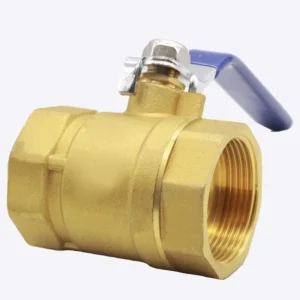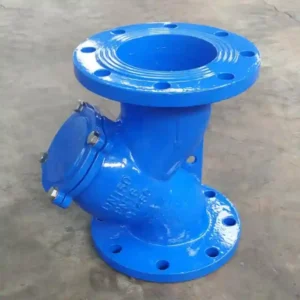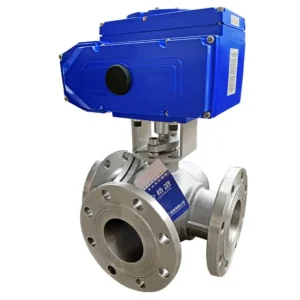

In industrial pipelines, building water supply and drainage, HVAC, and oil and gas systems, ball valves and gate valves are both common isolation valves.
When selecting valves, people ask: Are ball valves better than gate valves?
The short answer is: In working conditions requiring rapid opening and closing, reliable isolation, frequent operation, and automatic control, ball valves are usually more suitable than gate valves.
This is also the core logic of Why use a ball valve instead of a gate valve?
This article is organized around “ball valve vs gate valve comparison → in which working conditions should a ball valve be selected instead of a gate valve,” to help engineering contractors, procurement, and end users make clearer judgments.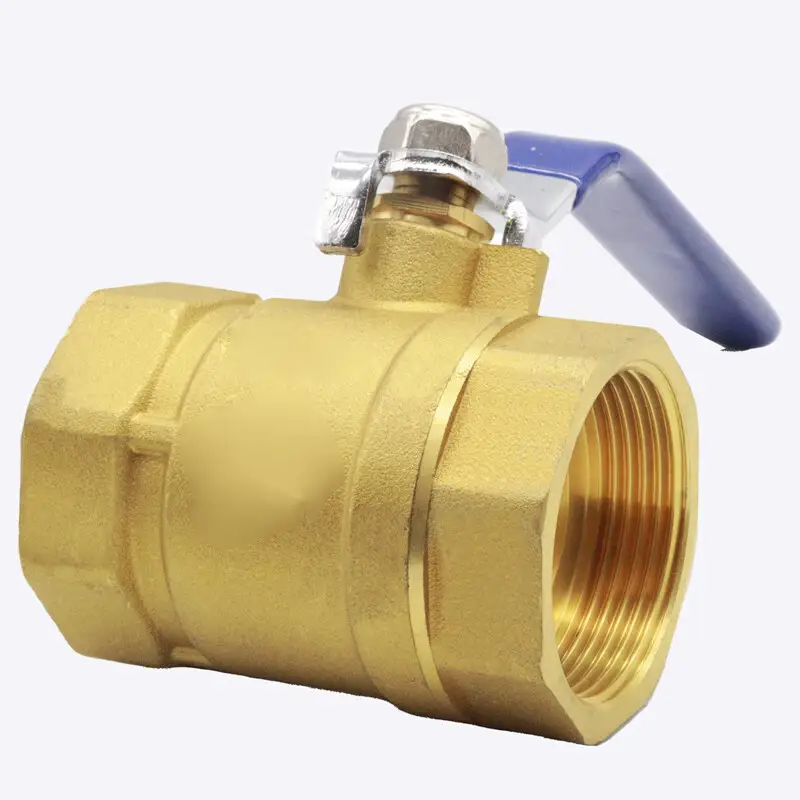
Ball valve vs gate valve difference
To determine whether a ball valve is better than a gate valve, you first need to understand Ball valve vs gate valve difference. The core of a ball valve is a ball with a through bore, which opens and closes by rotating 90°. When the handle is parallel to the pipeline, it is usually open; when perpendicular, it is usually closed. A gate valve, by contrast, uses multi-turn rotation of a handwheel to move the gate up and down along the stem, thereby cutting off or connecting the medium.
Structurally, ball valves are more oriented toward “quick shutoff,” while gate valves are more oriented toward “full open and full close.” Ball valves can use PTFE, RPTFE, PEEK, or metal hard seals, and can form a relatively tight seal when closed; gate valves have very low flow resistance when fully open, but during closing the sealing surfaces are susceptible to medium scouring and wear. Ball valves are generally more suitable for frequent operation, while gate valves are more suitable for isolation points that do not operate often.
At the standard level, ball valves commonly refer to API 608, API 6D, ASME B16.34, API 598, ISO 5208, API 607/6FA, etc.; gate valves commonly refer to API 600, API 602, etc. Different standards correspond to different pressure ratings, materials, tests, and fire safety requirements. When selecting a valve, you cannot look only at the valve name.
Advantages of ball valve over gate valve
When discussing Advantages of ball valve over gate valve, they can be summarized as follows:
-
Fast opening and closing: A ball valve requires only 1/4 turn, making it suitable for emergency shutoff and frequent operation. A gate valve requires multi-turn rotation, resulting in long operation time.
-
More reliable sealing: Ball valves can achieve bubble-level sealing through soft seals or metal hard seals, depending on pressure and temperature.
-
Bidirectional sealing capability: Most ball valves can be used bidirectionally, and the installation direction is usually more flexible.
-
Easier automation: Ball valves can be directly fitted with electric or pneumatic actuators and are often designed with a mounting platform according to ISO 5211, making them suitable for remote control and interlock systems.
-
Relatively stable operating torque: The torque variation of a ball valve during opening and closing is relatively controllable, making actuator selection simpler.
-
More convenient maintenance and replacement: Two-piece and three-piece ball valves can be disassembled to replace seats, balls, and seals, making them suitable for applications requiring inline maintenance.
-
Lower pressure drop: A full-bore ball valve, when fully open, is close to a straight pipe section, with a high Cv value and low energy loss.
Therefore, in scenarios involving frequent opening and closing, rapid isolation, and automatic control, ball valves often have more advantages than gate valves.
Ball valve vs gate valve for water shut off valve
In water supply and drainage systems, Ball valve vs gate valve for water shut off valve is a very practical selection issue. For household main water valves, equipment branch lines, pump outlets, water meters, and heat exchanger isolation, ball valves are usually more popular because users can quickly determine the open/closed status from the handle direction, and a 1/4 turn can shut off the water flow.
Gate valves were used in main water supply pipes in the past because pressure drop is low when fully open. However, after long periods without operation, gate valves are prone to sticking due to corrosion, scale, and impurities, and they may also fail to fully seal when closed.
Ball valves are more suitable for applications requiring frequent opening and closing, rapid isolation, and clear open/closed indication. However, in long pipelines or high-velocity water systems, rapid closing of a ball valve may cause water hammer. It is recommended to use gear operation, slow-closing actuators, or reasonably control the closing speed.
Ball valve vs gate valve for isolation
When discussing Ball valve vs gate valve for isolation, the isolation advantages of ball valves are mainly reflected in tight closing and bidirectional sealing. For working conditions requiring double block and bleed, fire safety, anti-static, and low fugitive emissions, ball valves meeting requirements such as API 607, API 6FA, and API 6D can be selected. Metal hard-seated ball valves can also be used for higher temperatures and more demanding media.
Gate valves also have applications in isolation, especially in high-temperature steam, large-diameter pipelines, and cost-sensitive projects. However, the sealing surfaces of gate valves are more prone to wear after repeated opening and closing, and partial opening can produce vibration and scouring. If the working conditions require frequent isolation, rapid action, or automatic control, ball valves are usually more suitable than gate valves.
Ball valve vs gate valve pressure drop
Ball valve vs gate valve pressure drop is an indicator that engineers care about greatly. A full-bore ball valve has a large flow area and low local resistance when fully open, with a high Cv value, so pressure drop is usually very low. A gate valve also has relatively low flow resistance when fully open, but when partially open it produces severe turbulence and vibration.
It should be emphasized that neither ball valves nor gate valves are recommended for precise throttling. Partial opening of a ball valve will cause biased-flow scouring of the sealing surface, and partial opening of a gate valve will cause gate vibration and wear. If flow regulation is required, valves more suitable for regulation such as globe valves, control valves, or V-port ball valves should be selected.
In which working conditions should a ball valve be selected instead of a gate valve
Combined with Why use a ball valve instead of a gate valve?, the following working conditions usually give priority to ball valves instead of gate valves:
-
Pipelines requiring rapid opening and closing and emergency shutoff;
-
Isolation points requiring frequent operation;
-
Systems requiring tight sealing and bubble-level leakage requirements;
-
Applications requiring electric and pneumatic actuators and remote control;
-
Applications with limited space, limited operating force, or requiring low-torque operation;
-
Water systems, gas systems, oil products, chemicals, and general industrial isolation;
-
Isolation points requiring locking, safety interlocking, and position feedback;
-
Two-piece or three-piece ball valve structures requiring inline maintenance and replacement of seats and seals;
-
Pipelines requiring full bore, low pressure drop, and high Cv value;
-
Ball valves requiring fire-safe and anti-static design, refer to API 607, API 6FA.
In steam systems, if metal hard-seated ball valves are used and matched with high-temperature materials, they can also replace gate valves in frequent operation and automatic control applications.
Conclusion
Why use a ball valve instead of a gate valve? Because ball valves usually have more advantages in rapid opening and closing, sealing reliability, automation compatibility, operating convenience, and lifecycle maintenance. For water systems, gas systems, oil products, chemicals, and general industrial isolation, ball valves are often a more modern and more efficient choice.
Gate valves still have application value in large-diameter, infrequent operation, full open/full close, and some high-temperature steam working conditions, but if the core requirements are rapid isolation, frequent operation, and automatic control, ball valves are usually more suitable than gate valves.
CHCV valves can provide a variety of ball valve structures and sealing solutions, and perform shell, sealing, and torque tests according to relevant standards, helping users make more reliable valve choices under different working conditions.