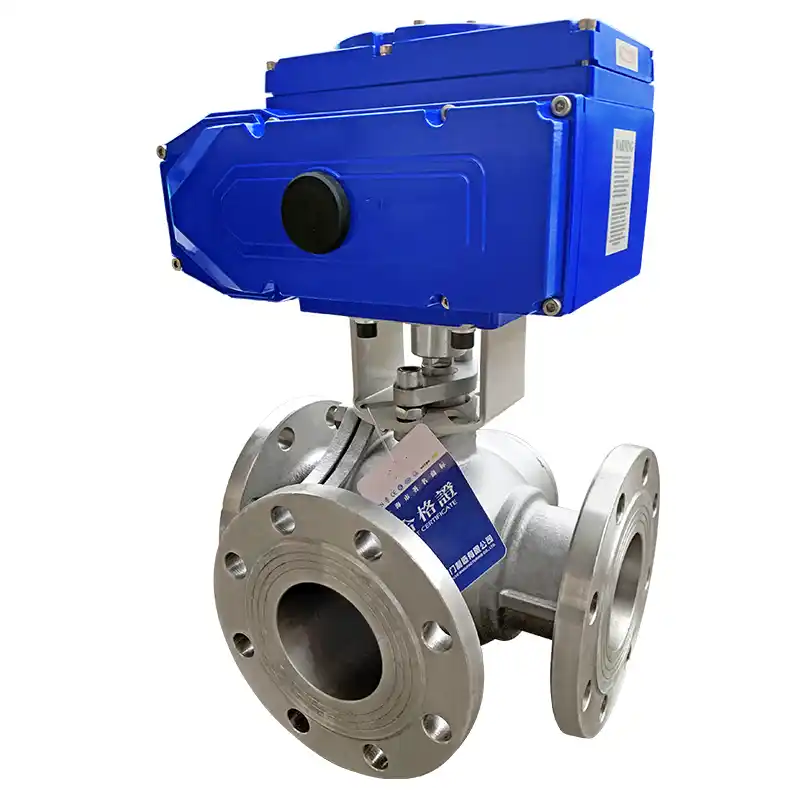

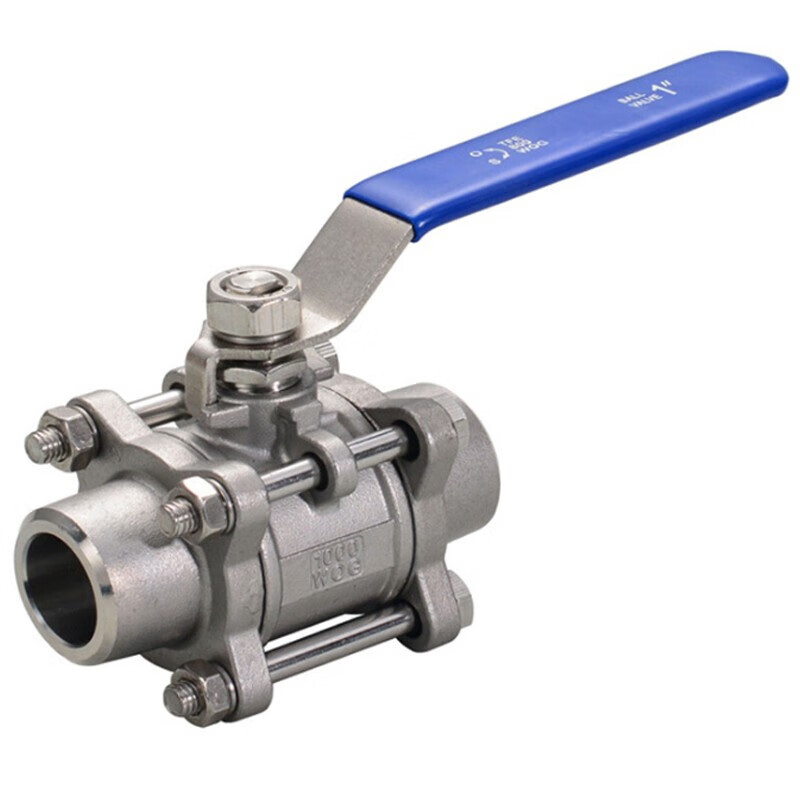
2 Piece Stainless Steel Threaded Ball Valve – NPT/BSPT Ends
2 piece stainless steel threaded ball valve with NPT/BSPT ends, 304/316 body, PTFE seats. Quick installation without welding, corrosion resistant for chemical and food lines.
Description
A two piece stainless steel ball valve is assembled by screwing together two main components: the primary valve body and bonnet. The ball component is inserted through the end of the main body and secured by the bonnet. Threaded end connections (NPT / BSPT / BSPP) enable direct screwing onto matching pipe fittings, eliminating welding operations and flange‑bolt tightening requirements. Constructed from SS304 or SS316 stainless steel, the valve delivers sound corrosion resistance against weak acids, weak alkalis, food‑grade fluids and humid ambient conditions.
A 90‑degree stem‑driven ball rotation performs flow shut‑off and opening functions. Its two‑piece construction permits disassembly between main body and bonnet for ball and seat replacement, granting field repairability. Although full‑valve removal from piping is required for servicing, threaded connections greatly simplify dismounting and reassembly procedures. This stainless steel threaded ball valve ranks among the most versatile shut‑off devices for chemical processing, food‑processing, water treatment and pneumatic circuit applications.
Material and Technical Specifications
| Parameter Item | Specification Range |
|---|---|
| Valve Body Material | SS304 (ASTM A351 CF8) / SS316 (CF8M), complying with material standards for 2 pc stainless steel ball valve |
| Ball Material | SS304 / SS316 |
| Stem Material | SS304 / SS316 |
| Seat Material | PTFE / RPTFE |
| Nominal Size | 1/4″ ~ 2″ (DN8 ~ DN50) |
| Pressure Rating | 600 WOG / 1000 WOG / Class 150 / 300 / 600 |
| End Thread Standard | NPT (American tapered pipe thread) / BSPT (British tapered pipe thread) / BSPP (British parallel pipe thread), covering NPT threaded ball valve and BSPT ball valve configurations |
| Applicable Temperature Range | ‑20 ℃ ~ 180 ℃ (PTFE seat) |
| Body Structure | Floating type |
| Anti‑blow‑out Stem Design | Standard provision |
| Handle Type | Galvanized steel handle / Standard stainless‑steel handle / Aluminium handle |
| Surface Treatment | Pickling and passivation |
| Material Certificate | EN 10204 3.1 (available upon request) |
Structural Highlights: Fast Installation & Corrosion Resistance
The rapid‑assembly capability and anti‑corrosion performance of the two‑piece stainless steel threaded ball valve stem from its threaded end layout and carefully selected stainless‑steel alloys.
‑ Fast installation: welding‑free and flange‑bolt‑free assembly: Threaded ends represent one of the fastest connection alternatives available. Fitters simply wrap thread seal tape or apply thread sealant onto male threads, then screw the valve into mating pipe fittings using pipe wrenches. No hot‑work permits, certified welders or post‑weld non‑destructive testing are demanded. Flange‑related work such as bolt torquing and flange alignment is also unnecessary. For hygienic zones such as food‑processing and pharmaceutical workshops, as well as retrofits on live‑process pipelines, threaded joints bypass hot‑work approval workflows and mitigate contamination risks from welding spatter. Individual valve installation can generally be finished within 5 minutes.
‑ Corrosion resistance: stainless‑steel alloy combats media and atmospheric degradation: SS304 stainless steel contains a minimum of 18 % chromium. A dense chromium‑rich passive film forms on exposed surfaces under oxidising‑fluid exposure, inhibiting further metallic substrate corrosion. It suits food‑beverage streams, potable water, mild acid and alkali services. SS316 incorporates additional molybdenum (Mo ≥ 2.5 %), substantially boosting resistance to chloride‑induced pitting and crevice corrosion, making it suitable for seawater, salt‑laden fluids and high‑humidity surroundings. For corrosive process fluids or damp plant environments, this two piece stainless steel threaded ball valve delivers long‑term operational stability without extra coatings or liners.
‑ Repairable construction: Unlike non‑serviceable one‑piece ball valves, the two‑piece layout enables technicians to separate the threaded joint between main body and bonnet to extract and replace ball and seat internals. Even though the whole valve must be unscrewed off piping for maintenance, threaded connections simplify disassembly. Components can be overhauled, cleaned and re‑seated in a workshop before being reinstalled onto process lines.
Application Scope
The stainless steel threaded ball valve finds broad deployment across multiple sectors:
‑ Chemical & petrochemical medium‑low‑pressure piping: Isolation for acid, alkali and solvent circuits (Class 150‑600)
‑ Food and beverage production: Shut‑off for juice, dairy products, beer and edible‑oil pipelines
‑ Water treatment & municipal water supply: Isolation for RO reverse‑osmosis, water‑softening and chemical‑dosing lines
‑ HVAC & refrigeration: Circuit isolation for chilled‑water and cooling‑water loops
‑ Instrument and pneumatic piping: Root valves for pressure‑gauge take‑off points and compressed‑air branch circuits
‑ Natural gas & city gas distribution: Branch‑line shut‑off for low‑pressure gas networks
Field Reference Case
Two piece stainless steel threaded ball valve units were adopted as branch‑line shut‑off components during compressed‑air piping retrofits within the small‑pack‑edible‑oil filling workshop of Yihai Kerry (Shanghai) Food Industry Co., Ltd. (No.118 Gaodong Road, Pudong New Area, Shanghai). Eight filling production lines operate inside this workshop; each line is fitted with 10‑15 pneumatic actuators, cylinders and purge nozzles. The main compressed‑air piping is stainless‑steel, with threaded interfaces reserved for all branch take‑off points.
Hot‑work operations are strictly forbidden within this hygienic filling workshop, since welding fumes and spatter pose contamination threats to edible‑oil products. These two‑piece stainless‑steel threaded ball valves (3/8″‑1″ size range, NPT thread, SS304 body, PTFE seat, stainless‑steel handle) thread directly into existing female pipe connections.
No welding or hot‑work permits are required. The plant engineering team completed installation for all 12 valves during weekend production shutdowns. Each unit took roughly 4‑6 minutes to mount. Project engineers noted that flange‑type alternatives would multiply installation time and call for extra procurement of flange gaskets and bolt sets.
Regarding corrosion performance, the filling workshop maintains relatively high ambient humidity together with trace edible‑oil mist. Carbon‑steel valves would suffer accelerated corrosion triggered by oil‑film adsorption and moist conditions. SS304 stainless‑steel hardware retains smooth surface integrity in such surroundings, resisting rust formation.
This prevents rust‑particle detachment into compressed‑air streams, which would otherwise contaminate filling equipment. Commissioned more than six years ago, this valve population exhibits zero body rust or corrosion‑driven seal failure. Thanks to improved compressed‑air cleanliness, failure frequency of filling‑line pneumatic actuators has dropped by approximately 40 % versus pre‑retrofit conditions.