
3 Piece Brass Ball Valve – Lead-Free for Potable Water Systems
3 piece brass ball valve in lead-free CW617N brass with antimicrobial copper alloy properties. Threaded/sweat ends for plumbing, HVAC, and hot water systems.
Description
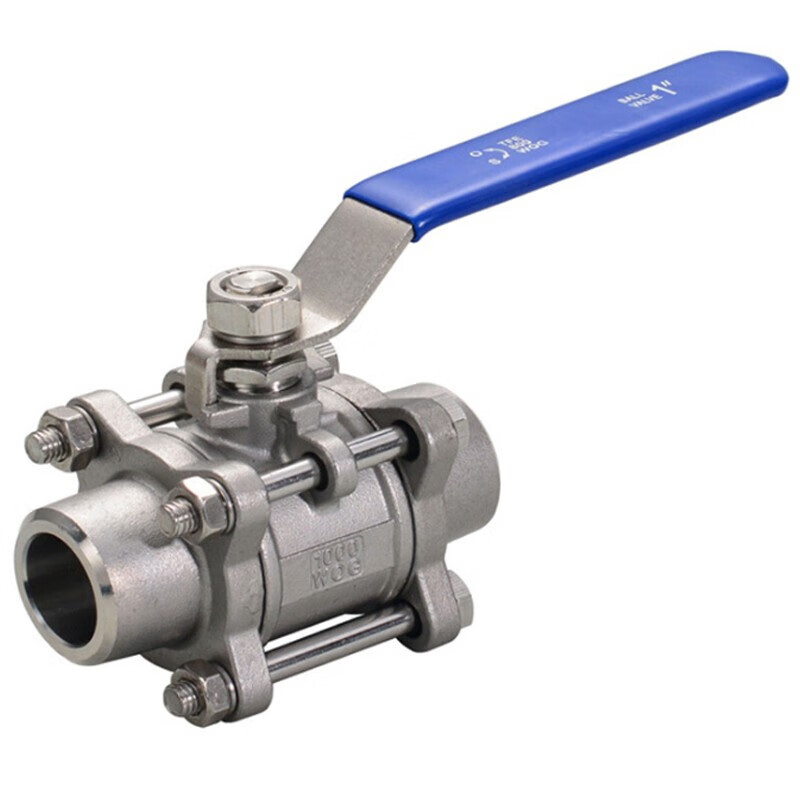
A 3 piece brass ball valve consists of three independent components: left‑hand body, central body, and right‑hand flanged body. These sections are secured together via threads or bolts. The ball is supported inside the valve cavity in a floating‑type configuration, and 90° rotation of the ball driven by the stem opens or shuts off pipeline flow. End connections adopt threaded ends (NPT/BSPT) or sweat connections for copper tubing, compatible with galvanized steel pipes, copper tubes and other common piping systems.
Fabricated from CW617N / C37700 brass, the valve forms a stable surface oxide film when exposed to water media, delivering reliable resistance against water‑borne erosion and atmospheric corrosion. Copper ions also bring inherent bacteriostatic properties to suppress microbial growth within piping networks. This lead free brass ball valve complies with NSF/ANSI 61 and RoHS standards, making it suitable for potable‑water, hot‑water and HVAC applications. Thanks to its three‑piece layout, technicians can extract the central section on‑site to replace balls and valve seats without detaching end‑of‑line pipe connections, eliminating destructive maintenance work.
Material & Specifications
| Parameter Item | Specification Range |
|---|---|
| Body Material | CW617N / C37700 brass, lead free brass ball valve (lead content meets NSF/ANSI 61 / RoHS) |
| Ball Material | Brass / Chrome‑plated brass |
| Stem Material | Brass / Stainless steel |
| Seat Material | PTFE / RPTFE / EPDM |
| Nominal Size | 1/4″ ~ 2″ (DN8 ~ DN50) |
| Pressure Rating | 600 WOG / 1000 WOG |
| Operating Temperature | ‑20℃ ~ 120℃ (water service) |
| End Connection | Thread (NPT / BSPT) / Sweat for copper tube / Press‑fit |
| Bacteriostatic Performance | Inherent bacteriostatic effect via copper ions (effective against Escherichia coli, Legionella) |
| Structure Type | floating type, namely ball valve three piece design |
| Blowout‑proof Stem | Standard configuration |
| Handle Type | Galvanized steel handle / Stainless‑steel handle / Aluminum handle |
| Surface Finish | Raw brass / Chrome‑plated / Nickel‑plated |
Structural Features: Bacteriostatic Performance & In‑Line Serviceability
The bacteriostatic capability and maintainable performance of the three piece brass ball valve originate from the intrinsic properties of brass material and its three‑piece body construction.
Bacteriostatic properties of copper‑alloy material
Copper‑brass alloys deliver natural bacteriostatic effects. Cupric ions (Cu²⁺) penetrate bacterial cell walls, reacting with intracellular proteins and enzymes to disrupt metabolic functions and induce cell death. Within water piping systems, trace copper ions released from brass valve and tube surfaces (typically kept below the drinking‑water threshold of 1.0 mg/L) restrain biofilm colonization by aquatic pathogens including Escherichia coli, Legionella pneumophila and Pseudomonas aeruginosa. For hot‑water circuits (40℃‑60℃, the temperature band where Legionella proliferates), the copper‑derived bacteriostatic effect provides extra microbial safety protection. This brass ball valve offers passive, continuous protection without extra energy input or routine servicing.
Drinking‑water safety of lead‑free brass
CW617N brass maintains lead content below 0.2 % (certain low‑lead grades reach 0.1 %). It satisfies NSF/ANSI 61 for drinking‑water system components and RoHS hazardous‑substance restrictions. Low‑lead formulation prevents excessive lead leaching into potable water during long‑term contact and safeguards water‑supply safety.
Maintenance advantages of three‑piece construction
In building plumbing and HVAC installations, valves are frequently concealed behind walls or ceiling cavities with permanently fixed pipework. One‑piece or two‑piece ball valves demand full‑valve removal and pipe disconnection for seat replacement, which often requires demolition of finished wall or ceiling surfaces in occupied buildings. By contrast, the three‑piece configuration allows service crews to pull out the central body section and swap seats and balls while keeping both end‑side pipe joints intact. This design greatly simplifies inspection and repair tasks for building‑service piping.
Application Scope
The three piece brass ball valve is widely deployed across the following scenarios:
‑ Civil & commercial water supply: Isolation and service valves for cold‑ and hot‑water pipelines in residences, hotels and office premises
‑ HVAC & heating systems: Branch isolation valves for chilled‑water circuits and floor‑radiant heating networks
‑ Potable‑water installations: Piping for direct‑drinking water and inlet/outlet ports of water‑treatment equipment
‑ Gas piping: Branch shut‑off valves for low‑pressure natural gas and LPG distribution
‑ Compressed‑air systems: Isolation valves for main and branch compressed‑air lines inside factories
‑ Marine fresh‑water circuits: Shut‑off components for vessel potable‑water and cooling‑water pipelines
Application Case
During the hot‑water‑supply renovation project for the inpatient ward of a Grade‑A tertiary hospital located in Tianhe District, Guangzhou, 3 piece brass ball valve products were adopted to replace legacy carbon‑steel valves. This 20‑storey hospital building obtains domestic hot‑water from central boiler‑house heat sources, with hot‑water distributed to wash‑room terminals on every floor via vertical risers. Valve sizes range from 3/4″ to 2″, with BSPT threaded connections and PTFE seats, deployed for isolation and maintenance of floor‑level hot‑water branches.
Hospital hot‑water circuits operate at 45℃‑60℃, an environment conducive to Legionella reproduction. Thriving within pipeline biofilms between 20℃ and 50℃, Legionella may spread via shower aerosols and create infection risks for immunocompromised inpatients. Trace copper ions released from copper tubes and brass valves (measured at 0.2‑0.5 mg/L in water samples, well below the WHO drinking‑water guideline limit of 2.0 mg/L) continuously suppress biofilm‑bound Legionella.
Prior to renovation, monthly water‑quality audits from the hospital’s infection‑control department returned periodic positive Legionella results, with a detection rate of approximately 12 %. After replacing aged carbon‑steel valves (15‑year service life with widespread corrosion) with brass three‑piece ball valves in 2023, continuous 12‑month sampling at hot‑water outlets recorded zero positive Legionella findings. Engineering reports from the hospital’s general‑services department noted that brass’s bacteriostatic performance stood out as a core material‑selection factor for hot‑water‑system retrofits. Meanwhile, three‑piece‑design in‑situ maintenance eliminated ceiling demolition during future seat replacement, delivering maintenance efficiency aligned with hospital logistics‑department expectations.