
3 Piece Socket Weld Ball Valve – SW Ends Class 600-2500
3 piece socket weld ball valve with SW ends per ASME B16.11, Class 600-2500. Stainless/carbon steel, metal/PEEK seats. For high pressure instrumentation and chemical injection.
Description
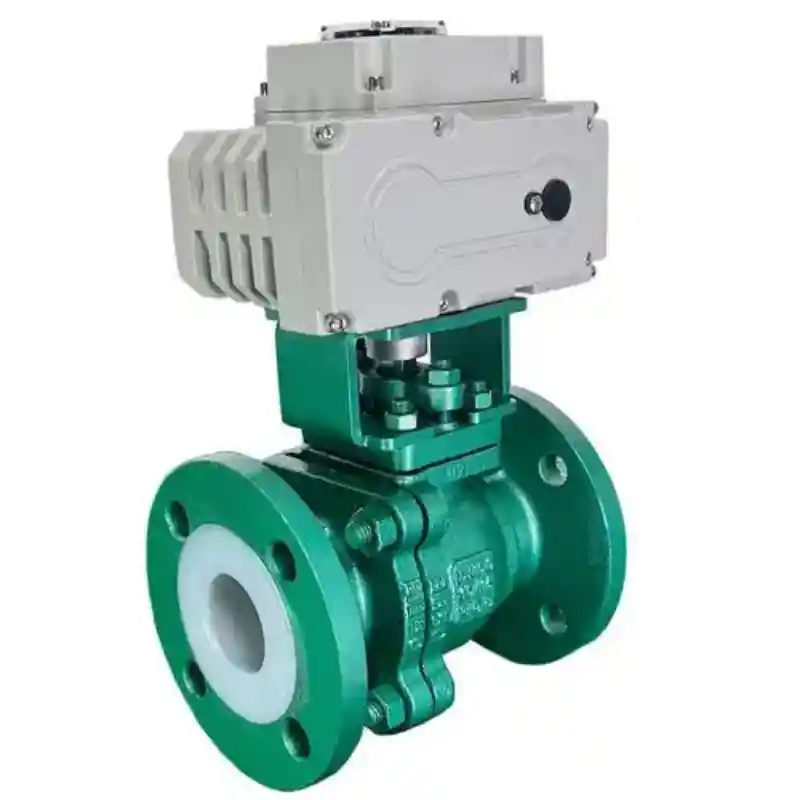
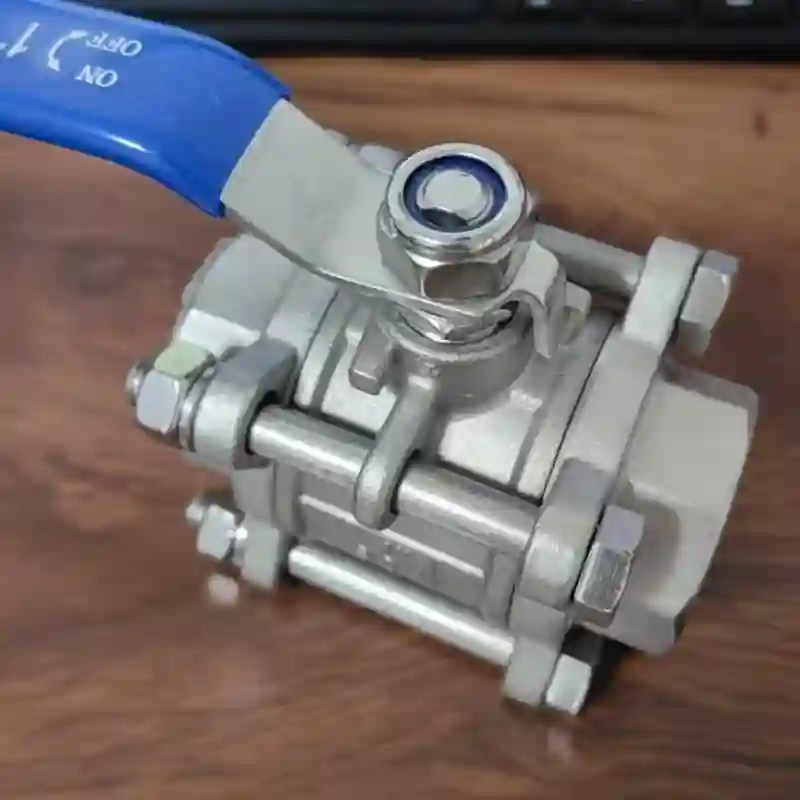
A 3 piece socket weld ball valve consists of three independent components: left‑hand body, central body, and right‑hand flanged body, fastened together by bolts. The ball is mounted inside the valve cavity in either floating‑type or trunnion‑supported configuration. Stem‑driven 90‑degree rotation of the ball opens or shuts off pipeline flow. It adopts Socket Weld end connections: pipe ends are inserted into valve socket bores, and circumferential fillet welds are applied to form permanent joints between the valve and piping.
Eliminating potential leak paths along threaded crevices, this socket weld ball valve fits high‑pressure service ranging from Class 600 up to Class 2500. Dimensional specifications for socket weld ends comply with ASME B16.11. Thanks to its three‑piece layout, technicians can remove the central body for ball and seat replacement without cutting existing welds, resolving the long‑standing maintenance limitation of fully welded valves. This sw ball valve targets small‑bore high‑pressure piping such as instrument impulse lines, chemical injection loops and steam tracing circuits.
Material & Specifications
| Parameter Item | Specification Range |
|---|---|
| Body Material | A105 (forged steel) / F316 / F316L (stainless steel) / LF2 (low‑temperature steel) / F91 (Cr‑Mo alloy steel) |
| Ball Material | Body‑matching alloy / 316L / Stellite hard‑faced overlay |
| Stem Material | 316L / 17‑4PH / Inconel 718 |
| Seat Material | PTFE / RPTFE / PEEK / Metallic seat (selected according to service temperature) |
| Nominal Size | 1/4″ ~ 2″ (DN8 ~ DN50) |
| Pressure Rating | Class 600 / 1500 / 2500, i.e. class 1500 socket weld ball valve and higher grades |
| End Connection | Socket Weld, conforming to ASME B16.11 |
| Socket Bore ID | In accordance with ASME B16.11 (insertion dimensions matched to pipe wall thickness for each nominal size) |
| Operating Temperature | ‑46℃ ~ 400℃ (subject to seat material selection) |
| Body Structure | floating type — DN ≤ 1″ / Class ≤ 600; trunnion — DN ≥ 1.5″ / Class ≥ 900 |
| Face‑to‑Face Standard | ASME B16.10 / Manufacturer’s standard |
| Blowout‑proof Stem | Standard configuration |
| Applicable Standards | ASME B16.34 / ASME B16.11 / API 6D |
| Material Certificates | EN 10204 3.1 / 3.2 (available upon request) |
| Non‑Destructive Testing | PT / RT performed per ASME Section V |
Structural Features: Minimized Leak Points & High‑Pressure Capability
The low‑leakage performance and high‑pressure endurance of the 3 piece socket weld ball valve stem from the combined merits of socket‑weld end design and pressure‑optimized body construction.
Socket weld joints remove threaded leakage pathways
NPT or BSPT threaded joints rely on thread seal tape or compound for sealing. Under high‑pressure, thermal‑cycling or vibrational operating conditions, sealing media will gradually age, shrink or abrade, creating micro‑leakage passages across thread crests and roots. Socket‑weld fillet welds permanently fuse the valve and pipe into one assembly, physically removing threaded‑joint leak paths. Threaded valves feature two potential leak points at inlet and outlet threaded ends respectively. By contrast, fully socket‑welded ends eliminate these two threaded leakage sources. Only the stem packing gland and two central‑body gasket joints (inherent to three‑piece architecture) remain as external leakage interfaces, drastically cutting overall fugitive‑emission risk.
High‑pressure endurance of socket‑weld connections
For threaded connections under elevated pressure, shear stress and radial expansion may deform threads or extrude sealing compounds, restricting threaded‑end deployment above Class 1500. Socket‑weld joint strength does not depend on thread integrity; its pressure boundary performance is governed by body wall thickness and weld quality. The valve body is engineered to ASME B16.34, while socket end dimensions follow ASME B16.11. Weld joints undergo 100% penetrant testing (PT) or radiographic testing (RT) to rule out welding defects, enabling reliable long‑term operation up to Class 2500 (approximately 42 MPa).
Practical field‑welding advantages
Unlike butt‑weld connections requiring machined pipe bevels, socket welds employ single‑sided fillet welds without end‑prep beveling. It lowers welder qualification requirements and accelerates site erection. Fillet‑weld geometry also simplifies visual‑aided surface‑defect inspection via penetrant testing.
Maintainability for welded‑in‑place valves
Once socket‑weld valves are welded onto piping, full valve removal becomes impractical. Two‑piece socket weld ball valves demand pipe cutting whenever seats wear out. The three‑piece variant allows maintenance crews to unfasten body bolts, extract the central cartridge, and replace worn seats without severing welds. This design brings comparable serviceability to welded‑in hardware as normally seen on threaded valves.
Application Scope
The 3 piece socket weld ball valve is widely adopted for the following use‑cases:
‑ High‑pressure instrument & sampling piping: Root valves for impulse and sampling lines of pressure transmitters, temperature transmitters and analytical instruments
‑ Chemical‑injection systems: Isolation valves for corrosion inhibitor, scale inhibitor and antioxidant dosing lines in refineries and chemical plants
‑ High‑pressure hydraulic circuits: Shut‑off valves for high‑pressure oil piping at hydraulic power units and test benches ‑ Steam‑tracing piping: Branch isolation valves for trace‑heating networks inside chemical facilities
‑ Nuclear‑balance‑of‑plant piping: Small‑bore high‑pressure isolation valves for auxiliary nuclear‑island systems
‑ High‑pressure gas lines: Instrument and sampling valves for natural‑gas compressor stations and hydrogen refuelling stations
Application Case
During impulse‑line retrofits for a natural‑gas transmission substation located in Dantu District, Zhenjiang, Jiangsu Province (operated by PipeChina West‑to‑East Gas Pipeline Company; exact station name withheld per client confidentiality requirements), existing threaded ball valves were superseded by 3 piece socket weld ball valve. This substation executes metering and distribution for West‑to‑East gas transmission pipelines. The impulse lines measure process pipeline pressure, with operating pressure at roughly 9.0 MPa and design pressure Class 900. Each valve is sized 1/2″, built with A105 forged steel body, PTFE seat and socket‑weld ends.
This unattended substation previously deployed NPT threaded ball valves on impulse lines. Long‑term exposure to pipeline pulsation triggered by compressor cycling, plus wide ambient temperature swings (‑5℃ in winter up to 38℃ in summer across Jiangsu), caused gradual degradation of thread sealing tape and consequent micro‑leaks. Site combustible‑gas detectors registered 20~50 ppm background hydrocarbon readings. Socket‑weld integration permanently bonds valves to impulse tubing and removes the two threaded‑end leak points (inlet and outlet). External leakage interfaces are reduced from four on the threaded configuration (two threaded ends + one central‑body joint + one stem gland) down to three on the welded version (two central‑body gaskets + one stem packing).
For high‑pressure compliance, A105 forged‑steel bodies are engineered per ASME B16.34 Class 900, and socket‑end dimensions follow ASME B16.11. Welding Procedure Qualification records (PQR) and Welder Performance Qualification (WPQ) comply with ASME Section IX. Post‑installation, 100% PT inspection is performed on weld joints to screen for porosity, cracking and incomplete fusion. After retrofitting sixteen impulse‑point valves, the substation’s combustible‑gas detector background reading dropped from 15~30 ppm down to 0 ppm. Commissioned in 2022, this batch of valves has accumulated over four consecutive years of trouble‑free runtime under 9.0 MPa high‑pressure natural‑gas service with zero recorded leakage incidents.